How can you ensure that 3D-printed components meet industrial quality standards and function reliably in critical applications?
This question is increasingly occupying companies, as additive technologies have long outgrown pure prototyping. The following article examines the systematic qualification of additive manufacturing processes and shows which steps are necessary to demonstrably guarantee process reliability and component quality.
This involves far more than simple final inspection. The validation of AM technologies covers the entire process chain – from material selection through process parameters to post-processing.
Things become particularly interesting when it comes to the question of how established testing methods must be adapted to the special properties of additively manufactured components. Experts show that systematic qualification not only creates technical safety but also opens up entirely new fields of application in economic terms.
- Additive production processes have evolved from prototyping tools into fully fledged manufacturing technologies
- Systematic qualification covers the entire value chain from materials to final inspection
- Process reliability and reproducibility are decisive for industrial use
- Validation creates trust and enables access to safety-critical fields of application
- Established standards and testing methods are continuously adapted to additive technologies
- Qualification opens up economic opportunities through function-integrating designs
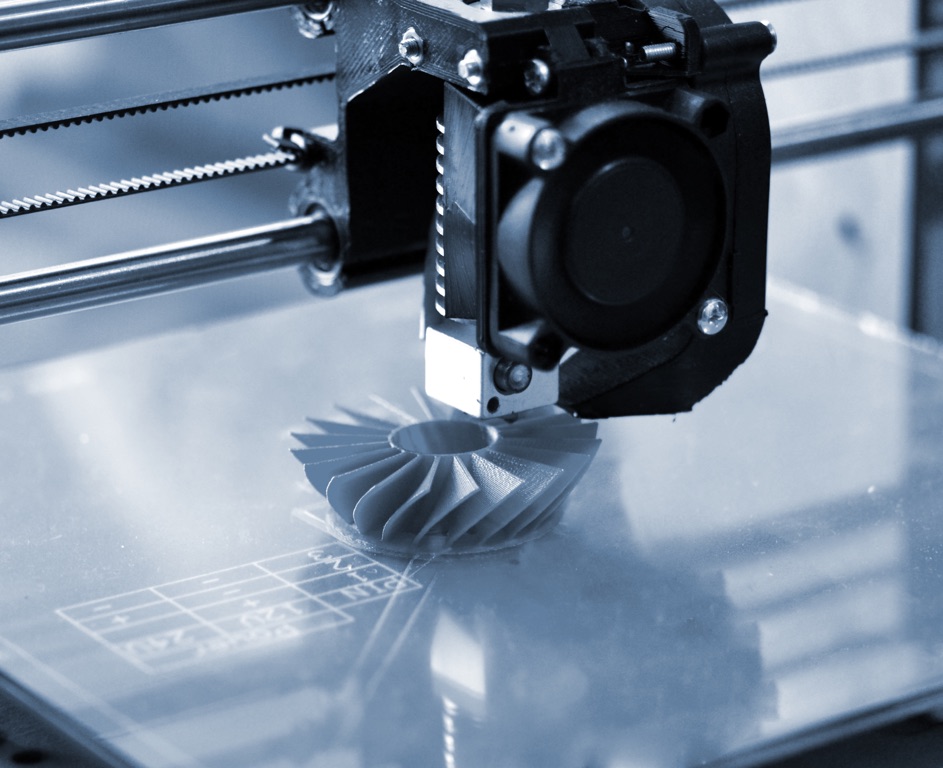
Additive manufacturing and the path to industrial maturity
Additive manufacturing processes are continuously evolving from pure rapid prototyping tools into fully fledged production methods. This shift brings new requirements for process reliability and component quality. Companies face the task of mastering the technology to the point where it becomes suitable for series production.
The path to industrial maturity requires more than technical know-how. It calls for structured processes, reliable documentation and demonstrable quality. This is precisely where AM qualification processes come in, enabling the transition from experimental to production-ready methods.
The special characteristics of additive technologies
The layer-by-layer build-up fundamentally distinguishes additive processes from conventional manufacturing methods. Each layer is created individually and bonded to the previous one. This is achieved through various technologies such as laser melting, material extrusion or powder bed processes.
The greatest strength lies in geometric freedom. Complex internal structures, organic shapes and function-integrating designs can be realised that would be impossible with conventional processes. Hollow components with integrated cooling channels or lattice structures for weight reduction are typical examples.
Design for Additive Manufacturing (DfAM) summarises the special design rules. These include:
- Topology optimisation for material-efficient design
- Generative design for function-optimised geometries
- Lattice structures with defined mechanical properties
- Thermal simulations to predict distortion and residual stresses
A further advantage lies in flexibility. Changes to the design require no new tools or moulds. The digital file is adapted, and the next print already contains the modification. This significantly accelerates development cycles.
Function integration reaches new dimensions in additive manufacturing. Several individual parts can be combined into a single component. This reduces assembly effort and eliminates potential sources of error caused by joints.
Hurdles on the path to series readiness
Process variability represents a central challenge. Even with identical settings, successive print runs can deliver different results. Small fluctuations in powder quality, ambient temperature or laser power influence the final result.
Material behaviour during the printing process is complex. Rapid temperature changes generate residual stresses in the component. These can lead to distortion or reduce the mechanical load capacity. Each material reacts differently to the process conditions.
Porosity is one of the most critical quality problems. Trapped gas bubbles or incompletely fused areas weaken the structure. They are often invisible and require non-destructive testing methods for detection. In safety-critical applications they can lead to component failure.
Surface quality does not automatically reach the smoothness of conventionally manufactured parts. Staircase effects caused by the layering are characteristic. For many applications, post-processing is required, which means additional process steps.
Each machine exhibits individual behaviour. Two identical printers do not necessarily produce identical components. Parameter sets can only be transferred between machines to a limited extent. This complicates the scaling of production.
The dependence on numerous process parameters is enormous. Laser power, scanning speed, layer thickness, hatch distance and many other parameters must be precisely coordinated with one another. The interactions between these variables are complex and not fully understood.
Geometry influences come into play as well. A parameter set that works for simple prismatic shapes can fail with delicate structures. Overhangs, thin walls and large surfaces represent different thermal conditions.
The necessity of structured qualification
Without systematic qualification of additive manufacturing processes, component quality remains unpredictable. Regulated industries such as aviation or medical technology require demonstrable process reliability. Approval authorities demand documented evidence of reproducibility.
Structured qualification processes create the necessary process stability. They identify critical parameters and define their permissible tolerances. In doing so, the printing process is transformed from an experimental approach into a controlled manufacturing process.
Trust in the technology arises from comprehensible results. Customers and supervisory authorities need certainty that every manufactured component fulfils the required properties. The qualification of additive manufacturing processes provides this assurance through systematic testing and documentation.
Reproducibility is the central goal. A qualified process delivers the same result today as it does tomorrow or in a year’s time. This requires control of all influencing variables – from the base material through the machine parameters to post-processing.
The various qualification levels interlock. The material must be characterised. The machine must be calibrated and monitored. The process itself needs validated parameters. The finished component is tested. Only the interplay of all levels guarantees consistent quality.
Regulatory requirements can only be met with documented AM qualification processes. Standards and guidelines require evidence of process control. Every production step must be traceable. Deviations require defined responses.
The economic benefit of systematic qualification is reflected in reduced reject rates. Stable processes minimise faulty prints and rework. The plannability of production improves. Delivery times become more reliable.
Quality assurance begins as early as the design phase. DfAM rules are applied in such a way that manufacturing-compliant designs are created. Simulations help to predict critical areas. The integration of monitoring technologies enables in-process control.
The basis for approval in demanding industries is a comprehensive qualification dossier. It documents all tests carried out, the validated process parameters and the demonstrated component properties. Without this structured evidence, access to regulated markets remains closed.
Qualification of additive manufacturing processes: fundamentals and methods
A robust qualification process for additive technologies is built on clearly defined fundamentals and proven methods. The qualification of additive manufacturing processes pursues the goal of making every step of manufacturing transparent and comprehensible. Only in this way can components be produced that consistently meet high requirements.
The methodical approach combines engineering know-how with statistical methods. Research institutions convey practical, theoretically sound and manufacturer-neutral learning content in courses and seminars. This research knowledge for practice helps companies to develop their own qualification strategies.
The various levels of qualification
The validation of AM technologies does not take place in a single step but is divided into several levels that build on one another. Each stage delivers important insights and forms the basis for the next. This multi-stage structure ensures comprehensive assurance.
The first stage is material qualification. Here the base materials are examined – whether powder, filament or resin. Particle size distribution, flow behaviour and chemical composition are the focus. Only if the material meets defined specifications can it be released for manufacturing.
The next level is process qualification. This stage concentrates on the machine parameters and manufacturing strategies. Laser power, layer thickness, scanning speed and path control are systematically varied. The goal is to identify a stable parameter window that delivers reproducible results.
The third level is component qualification. Here the mechanical properties and geometric accuracy take centre stage. Tensile strength, elongation, hardness and surface quality are measured. The microstructure and any internal defects are also examined.
The highest stage is application qualification. It checks whether the component fulfils the required functions under real operating conditions. Load tests, long-term trials and functional tests are part of this step. Only after successful completion can the component be released for series use.
- Material qualification: testing of the base materials
- Process qualification: optimisation of the manufacturing parameters
- Component qualification: verification of mechanical and geometric properties
- Application qualification: proof of function under real conditions
Systematic approach in the qualification process
A structured qualification process begins with the precise definition of requirements. Which mechanical characteristic values must the component achieve? Which tolerances must be observed? These questions must be clarified from the outset.
The next step is the identification of critical parameters. Not all manufacturing parameters have the same influence on the final result. Experience and preliminary tests help to determine the truly important control variables.
The design of experiments uses statistical methods such as Design of Experiments (DoE). This technique makes it possible to gain a maximum of information with a manageable number of trials. Interactions between parameters are made visible.
The execution of test series is carried out according to a defined test plan. Test specimens are manufactured under controlled conditions. Each trial is documented precisely in order to be able to identify correlations later.
After manufacturing comes the statistical evaluation. Measurement results are analysed, trends identified and optimisation potential uncovered. Scatter and outliers provide indications of stability problems in the process.
Validation confirms that the qualified process actually delivers the required results. Repeated trials under identical conditions show whether reproducibility is given. Only afterwards does formal release take place.
- Define requirements clearly
- Identify critical parameters
- Create a test plan with DoE
- Carry out test series
- Evaluate results statistically
- Validate and release the process
Documentation and traceability throughout the entire process
Seamless records form the backbone of every qualification. Traceability begins as early as the raw material: batch number, supplier and incoming inspection are recorded. This data makes it possible to trace every component back to its material origin later.
During manufacturing, modern machines automatically record all relevant process data. Temperature profiles, energy input and layer times are stored digitally. This information is valuable for later analyses and troubleshooting.
All tests carried out result in detailed test reports. Measured values, test equipment, tester and test date are documented. In the event of a problem, these reports allow a complete root cause analysis.
Documentation serves not only internal quality assurance. In regulated industries it is legally required. Certifications and audits demand verifiable records over the entire life cycle of a component.
Modern digital systems make this task considerably easier. Manufacturing Execution Systems (MES) and Product Lifecycle Management (PLM) capture data automatically. Manual input errors are minimised, and searchability increases significantly.
- Record material batch and supplier data
- Automatically record machine logs
- Document test reports completely
- Use digital systems for data management
Standardisation of additive manufacturing processes and relevant standards
Clear sets of rules and standards form the basis for additive manufacturing processes to be used in safety-critical areas. The standardisation of additive manufacturing processes creates uniform framework conditions for manufacturers, testers and users. Without these standards, broad industrial acceptance would hardly be possible.
The development of suitable sets of rules is a continuous process. New technologies and materials require constant adaptation of existing standards. At the same time, the standards must remain practicable and reflect everyday production.
Important international sets of rules and guidelines
International standardisation organisations are driving the standardisation of additive technologies forward. ISO and ASTM have combined their activities to create uniform standards worldwide. This cooperation prevents contradictory regulations in different regions.
The joint ISO/ASTM standards cover various areas. They define technical terms, specify testing methods and describe requirements for processes. Standard series on terminology and quality assurance are particularly important.
The fundamental standard works include:
- ISO/ASTM 52900 for the uniform terminology and classification of the processes
- ISO/ASTM 52901 for the description of requirements for the entire process
- ISO/ASTM 52902 for testing methods to characterise feedstock materials
- ISO/ASTM 52920 for the qualification of machines and systems
Further standardisation activities concern specific testing methods and material characteristic values. They define how mechanical properties must be determined. This produces comparable results regardless of the testing laboratory.
Requirements in various industry sectors
Every industry places its own requirements on the certification of additive manufacturing. Aviation is regarded as a pioneer with the strictest regulations. Here all process steps must be seamlessly documented and verified.
In medical technology, regulatory approval procedures apply. Products require a conformity assessment under medical device law. The requirements include biocompatibility, sterilisability and long-term stability of the components.
The automotive industry concentrates on series production requirements. Here reproducibility and cost efficiency are paramount. Standards must ensure that every component exhibits identical properties.
Pressure equipment construction is subject to the PED 2014/68/EU directive. For pressure equipment, a design examination by a notified body must often be carried out. These experts assess the particularities of additive design and manufacturing.
Special challenges with pressure equipment include:
- Complex geometries with internal structures that could not be produced conventionally
- Possible porosity in the material, influenced by process parameters
- Residual stresses caused by the layer-by-layer build-up, which affect strength
- The need for FEM simulations to assess behaviour under operating conditions
After a successful design examination, the type examination follows. In this process, real prototypes are produced and tested. Only after a positive assessment of all evidence does the product receive approval.
Alignment and further development of existing specifications
The standardisation landscape is constantly evolving. Committees gather feedback from practice and integrate new findings. This exchange between users and standardisation institutions is important for practice-oriented standards.
Technological advances require regular revisions. New materials, improved machines and innovative processes must flow into the sets of rules. The speed of these adaptations is decisive for competitiveness.
International harmonisation remains a central goal. Differing national standards complicate global trade. That is why organisations are working to minimise regional differences and find common solutions.
Cooperation between different standardisation committees is intensifying. Industry associations contribute their specific requirements. Research institutions supply scientific foundations for new testing methods.
This dynamic process ensures that standards remain up to date. On the one hand they must safeguard proven practices. On the other hand they must not hinder innovation but should enable it and make it safe.
Quality assurance in 3D printing and process stability
Quality assurance in 3D printing presents companies with the challenge of controlling complex processes and keeping them stable. Unlike conventional manufacturing processes, every component is created layer by layer, with numerous influencing variables interacting. Only through consistent monitoring and control of these variables can consistent results be achieved.
Different printing technologies such as Metal 3D, FDM or SLS each bring their own requirements. The build volume of the machine, the base material used and technology-specific parameters determine which control measures are necessary. At the same time, the particularities of additive manufacturing must be taken into account: complex geometries, possible porosity and residual stresses in the material.
Keeping critical parameters in view
In powder bed-based metal processes, several variables decisively influence the manufacturing result. The laser power determines how much energy is introduced into the material. Scanning speed and layer thickness affect the penetration and bonding of the individual layers.
The hatch distance, that is the distance between the laser tracks, determines the density of the resulting component. The shielding gas atmosphere also plays an important role, as it prevents oxidation and protects the material quality. Even small deviations in these parameters can significantly change the mechanical properties.
Plastic processes require different priorities in monitoring. Temperature profiles must be precisely observed, from the melting point of the material to the cooling phase. The material flow must remain constant in order to ensure uniform layers.
Air conditioning of the build chamber prevents distortion and stress cracks during the printing process. Modern systems record these parameters continuously and document them for each individual layer. This data makes it possible to trace problems and implement improvements in a targeted manner.
Innovative monitoring technologies in use
In-situ monitoring refers to monitoring directly during the ongoing build process. Optical systems capture the quality of each powder layer before the laser fuses it. High-resolution cameras detect irregularities such as scratches in the powder bed or faulty coatings.
Thermographic monitoring analyses the melt pool in real time. Infrared cameras measure the temperature distribution and immediately detect deviations from the target value. Excessively high temperatures can lead to evaporation, too low temperatures prevent complete fusion.
Acoustic sensors complement the monitoring through noise analysis. Unusual sounds during coating or scanning indicate mechanical problems. Machine learning evaluates the collected data and recognises patterns that would not be discernible to human observers.
These modern approaches go far beyond mere logging. Intelligent systems can automatically initiate corrective measures when they detect deviations. The laser power is adjusted, scan patterns are optimised or the process is stopped in an emergency before costly errors arise.
Reliable repeatability through systematic measures
Process stability in 3D printing requires more than just technical monitoring. Regular machine calibration ensures that all components work precisely. Lasers, mirrors and coating systems must be checked and adjusted at defined intervals.
Material batch management prevents undesirable fluctuations caused by different raw materials. Every powder batch is documented and, if necessary, characterised. Critical applications even require batch-specific process adjustments in order to guarantee consistent results.
Standardised build preparation minimises human sources of error. Qualified process parameter sets are developed once, validated and then applied unchanged. Changes go through a controlled release process with corresponding documentation.
Environmental control covers temperature and humidity in the production area. Some materials react sensitively to fluctuations and absorb moisture. Maintenance plans define all necessary service work from filter cleaning to the replacement of wearing parts.
A holistic quality management system links technical controls with organisational regulations. Training enables employees to operate processes correctly and to recognise deviations. Checklists and work instructions standardise recurring activities and create transparency.
The combination of these measures creates the basis for long-term process stability. In this way, companies can raise quality assurance in 3D printing to a level that meets industrial requirements. Reproducible results arise from the interplay of technology, documentation and a systematic approach.
Material qualification for additive manufacturing and testing methods
Materials science fundamentals and precise testing methods determine whether an additive manufacturing process delivers reliable and reproducible results. Material qualification for additive manufacturing covers two central areas: the thorough analysis of the base materials and the comprehensive testing of the finished components. Only through this systematic approach can consistent quality standards be achieved.
The initial effort pays off in the long term. Reduced reject rates lower costs. Expanded application possibilities open up new markets. Access to regulated industries opens up through demonstrated conformity with standards.
The continuous further development of testing methods and monitoring technologies brings additive methods on a par with conventional production processes. Research institutions accompany the complete value chain from 3D data models through manufacturing to final processing and inspection.
Knowledge transfer between research, standardisation and industry accelerates the establishment of proven methods. This cooperation translates new findings quickly into practical application.
As the qualification of additive manufacturing processes progresses, these technologies unfold their full potential. Entirely new product designs become possible. Innovative business models emerge. The investment in qualification creates higher component quality, greater trust among customers and approval authorities as well as access to the technical and economic possibilities of the future.