Why do metallic components often fail earlier than expected, even though they were designed for high loads?
The answer often lies in the dangerous combination of mechanical stress and aggressive environmental conditions. This article explains the complex relationships between corrosion and mechanical forces, which together lead to the formation and growth of cracks.
You will learn how even the smallest surface changes can turn into critical damage processes. The interactions between material structure, tensile stresses and chemical attacks are far more dangerous than the sum of their individual effects.
Particularly interesting: research findings on modern magnesium alloys reveal surprising damage mechanisms. Understanding these processes is the key to predicting and effectively preventing component failure – a capability that saves real money and protects lives in practice.
- Corrosive environments and mechanical loads reinforce one another and lead to faster material failure
- Crack formation arises from complex interactions between material structure, stresses and chemical processes
- Even the smallest surface damage can lead to critical cracks under corrosive conditions
- The combination of tensile stresses and aggressive media produces damage that goes beyond individual effects
- Understanding these mechanisms enables reliable predictions of component failure
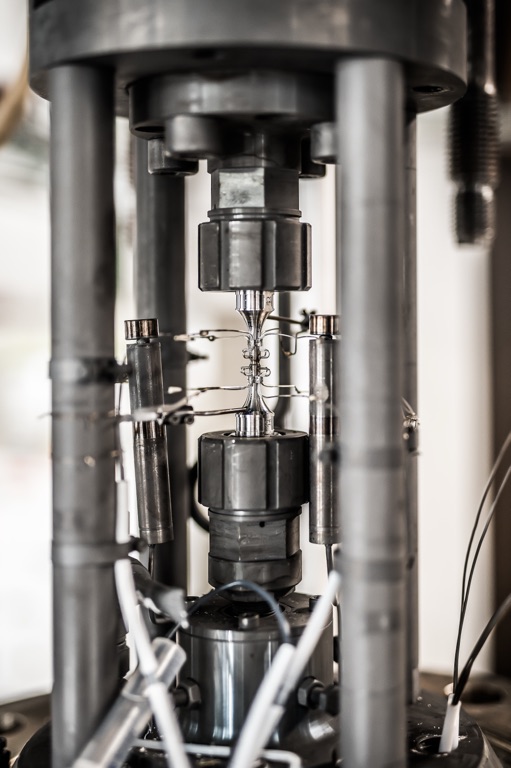
When corrosion meets material stress
When two types of load meet, the result is often more than the sum of their individual effects. In practice, components are rarely exposed to just a single problem. Mechanical loads and corrosive environments usually act on the material structure simultaneously.
Corrosion mechanics investigates precisely these dangerous interactions. It becomes clear that the combination creates entirely new damage patterns. These cannot be predicted by simply adding up the individual effects.
Mechanical stresses can break open existing protective layers. This gives aggressive media direct access to the underlying material. An example makes this clear: an intact oxide layer effectively protects metals against attack.
However, as soon as tensile forces crack this layer, acids or salt solutions penetrate. The material now lies exposed and unprotected. Corrosion sets in particularly intensely at these locations.
Conversely, the corrosive attack weakens the mechanical strength. Local material removal creates notches and stress concentrations. At these points, the actual load rises far above the average value.
Research confirms that under combined stress, damage mechanisms occur that would not be expected when considered in isolation. Material failure occurs significantly earlier than calculated. Some components fail after only a fraction of their planned service life. These synergy effects make prediction difficult. Classic calculation methods considerably underestimate the actual danger. Engineers must therefore consider both influences together.
But understanding these processes also opens up opportunities. Anyone who knows the interactions can develop targeted protective measures. Optimised material selection and design adaptations can significantly reduce the risks.
The following sections show in detail how corrosion triggers material failure and which mechanisms are involved.
Corrosion as a trigger for material failure
The gradual destruction of metallic components through corrosive influences often begins unnoticed but develops into a critical safety risk. Material failure due to corrosion is one of the most common causes of unexpected damage in technical applications. When aggressive media meet metal structures, complex processes set in that lastingly endanger the material integrity.
The interaction between chemical and mechanical influences makes this phenomenon particularly insidious. While pure corrosion or mechanical load alone often remain manageable, their interplay creates a dangerous reinforcing effect. This mechanism leads to damage that is far more severe than the sum of the individual effects would suggest.
Chemical attack mechanisms on metallic materials
Aggressive media attack metal surfaces at the atomic level and trigger electrochemical reactions. These processes lead to the dissolution of the metal, and metal ions pass into the surrounding liquid. Corrosion products form on the material surface, the material is locally weakened and structural irregularities are created.
The intensity of these attacks depends on various environmental conditions. Studies show that four factors in particular play a central role:
- The pH value of the surrounding solution considerably influences the reaction rate
- Higher temperatures significantly accelerate the electrochemical processes
- The concentration of aggressive ions decisively determines the strength of the attack
- Anions that damage the passive layer, such as chlorides, break through natural protective barriers
The situation becomes particularly critical when protective oxide layers are broken through. These natural barriers normally slow down the corrosion attack considerably. Aggressive anions such as chlorides, however, can exploit local weak points and destroy the protective layer at specific spots.
At these exposed areas, intensified metal dissolution sets in. The exposed, reactive metal reacts intensely with the surrounding medium. The resulting depressions concentrate the further attack and progressively accelerate the material damage.
Synergy effects between mechanical stress and aggressive media
Mechanical stresses and corrosive attacks do not act in isolation from one another but reinforce each other considerably. This interaction makes material failure due to corrosion particularly dangerous and difficult to predict. The combined effect clearly exceeds the added effect of both individual factors.
Mechanical loads break open existing protective layers and expose bare metal surfaces. These reactive areas offer aggressive media ideal points of attack. At the same time, corrosive processes lead to local material loss, which reduces the remaining load-bearing cross-sectional area.
This cross-section reduction automatically increases the local stresses in the remaining material. Higher stresses in turn accelerate further corrosion processes and crack formation. A self-reinforcing vicious circle arises that dramatically accelerates component failure.
The practical consequences become apparent in various scenarios:
- Tensile stresses open microcracks and allow deeper penetration of aggressive media
- Corrosion products in cracks generate additional mechanical wedging action
- Alternating loads repeatedly remove protective layers and expose bare metal
- Local stress peaks at corrosion pits concentrate further damage
This synergy effect explains why components in corrosive environments often fail earlier than expected. Designers must consider both factors together in order to create realistic service life forecasts. Only through an integrated approach can the actual component safety be reliably assessed.
Crack initiation & crack growth: mechanisms of damage development
Cracks do not arise by chance but through clearly defined mechanisms that develop step by step. Crack formation in aggressive media follows a predictable pattern that begins with tiny weak points and expands into serious damage. Anyone who understands these processes can take targeted preventive action and protect components better.
Damage development can be divided into three essential phases. First, an incipient crack forms at a critical location. This crack then continues to grow through the ongoing environmental influence. Finally, the material structure itself can become the preferred path of attack.
Crack formation in aggressive media at the microscopic level
The initial phase of damage takes place at the microscopic level. This is where it is decided whether a component withstands the load in the long term or fails. Even the smallest irregularities can become the starting point for serious problems.
Mechanical stresses concentrate at these tiny weak points. The local stress thereby rises significantly above the average load. At the same time, aggressive media preferentially attack precisely where the material is already weakened.
Surface defects as starting points
Scratches, pores and geometric notches form ideal starting points for cracks. These surface irregularities lead to stress concentrations that quickly exceed critical values. Research findings impressively demonstrate the importance of surface quality.
In cast components with a rough surface, particular risks become apparent. Component edges and casting burr edges were identified as the most common crack initiation sites. At these locations, cracks formed that grew with high crack propagation rates.
A fascinating comparison illustrates the difference: ground samples showed no stress cracks under identical conditions. The explanation lies in the considerably smoother surface without notch-sharp unevenness. This observation underlines how important surface finishing is for component safety.
The following surface features increase the risk particularly strongly:
- Sharp edges from casting processes with high roughness
- Mechanical damage caused by tools or transport
- Casting defects such as shrinkage cavities, pores or inclusions
- Weld seams with an uneven surface structure
Localised corrosion attacks and pitting
Pitting represents a particularly insidious form of damage. At weak points in the protective passive layer, aggressive ions penetrate. There, small but deep corrosion pits form that act like introduced notches.
These localised attacks concentrate on tiny areas. The aggressive medium specifically dissolves material there, while the surroundings initially remain intact. The resulting pits considerably increase the stress concentration.
Chloride ions are considered particularly aggressive in pit formation. They can penetrate even stable passive layers and initiate local metal dissolution. Once started, the attack deepens independently, since particularly corrosive conditions prevail inside the pit.
Progressive crack propagation through environmental influence on crack formation
Once a crack has formed, a new phase of damage begins. The environmental influence on crack formation significantly accelerates growth. The interaction between mechanical load and chemical processes drives the damage forward.
Special conditions prevail in the crack gap that favour progression. Aggressive media accumulate there and cannot easily be transported away. At the same time, the crack opens under load and allows further access of corrosive substances.
Transport processes in the crack gap
Mass exchange in the crack plays a central role in further growth. Aggressive ions must reach the crack tip in order to cause damage there. At the same time, corrosion products must be transported away so that the attack can continue.
Diffusion decisively determines the speed of these processes. In narrow crack gaps, the exchange slows down considerably. As a result, extreme pH values and ion concentrations can build up locally.
Under cyclic loading, the crack literally pumps: when opening, fresh medium flows in, when closing, corrosion products are squeezed out. This mechanism keeps aggressive conditions constantly maintained and accelerates crack growth.
Electrochemical processes at the crack tip
Electrochemical reactions preferentially take place at the crack tip. The mechanical stress makes the material particularly reactive there. Fresh, unprotected metal surfaces are constantly created through plastic deformation.
The crack tip acts as an anode, where metal dissolution takes place. Other areas of the crack or the component surface act as a cathode. This separation of the partial reactions continuously drives the corrosion forward.
The following factors intensify the processes at the crack tip:
- High mechanical stresses activate the metal
- Fresh surfaces without protective top layers are created
- Local pH shifts intensify the dissolution
- Hydrogen formation can additionally damage the material
Microstructural corrosion attack within the microstructure
The internal material structure considerably influences crack propagation. The microstructure is not homogeneous but consists of different areas with different properties. Corrosion specifically exploits these differences.
Grain boundaries represent preferred paths of attack. At these interfaces between the crystal grains, the bonding is weaker. Aggressive media advance particularly quickly along these paths.
Precipitates and phase boundaries can also be problematic. When different phases touch, local galvanic cells form. One phase dissolves preferentially while the other remains protected.
Intergranular corrosion follows the grain boundaries and weakens the microstructure from within. From the outside, the component still looks intact, while it is already severely damaged internally. This hidden damage makes prediction particularly difficult.
Certain alloying elements strongly influence the microstructural susceptibility. Chromium depletion at grain boundaries makes stainless steels susceptible. Copper precipitates in aluminium alloys can trigger local corrosion.
Stress corrosion cracking as a critical damage pattern
One of the most insidious types of failure in metallic components often develops unnoticed beneath the surface. Stress corrosion cracking belongs to those damage mechanisms that challenge even experienced engineers. This form of damage is particularly treacherous because it can also occur under static loads below the yield strength.
Unlike pure corrosion, this type of failure shows no clear external signs. Components can appear seemingly intact and yet be on the verge of failure. This hidden danger makes a deep understanding of the underlying mechanisms particularly important.
Necessary conditions for stress-induced crack formation
For stress corrosion cracking to arise at all, three factors must be present simultaneously. If even one of these factors is missing, the component remains safe. This insight opens up various starting points for effective protective measures.
The three necessary conditions form a critical triangle:
- A susceptible material with a corresponding microstructure
- Sufficiently high tensile stresses in the material
- A specifically aggressive corrosive environment
Only when all three components come together does an actual danger exist. This dependency simultaneously offers opportunities for targeted avoidance by changing at least one condition.
Tensile stresses and threshold values
Not every mechanical load leads to crack formation under corrosive conditions. Research findings show material-specific threshold values very clearly. With the magnesium alloy AZ91, for example, a critical limit exists from about 70 percent of the yield strength. Tests in Harrison solution with a pH value of 10 clearly confirmed this danger threshold.
The insight into different stress sources is particularly important. Not only external loads can contribute to the critical tensile stress. Residual stresses from manufacturing processes such as welding, forming or heat treatment add up to the operating loads.
Stress corrosion cracking shows a highly specific nature in material-medium pairings. Not every material is susceptible in every corrosive medium. The combination must, so to speak, match in order for damage to occur.
Comparative studies on magnesium alloys impressively demonstrate this specificity. While AZ91 shows clear susceptibility under certain conditions, AM50 proved to be resistant in the same environments. Despite a similar basic composition, both alloys behaved completely differently.
Aggressive anions play a central role in the development of stress corrosion cracking. Chlorides, sulphates and hydroxides can damage passive layers. Slow strain rate tensile tests with ammonium sulphate demonstrated its damaging effect particularly clearly.
However, the presence of anions that damage the passive layer is not sufficient. Even if such ions are present, this does not yet guarantee a risk of stress cracking. Further factors such as pH value, concentration and temperature considerably influence the damage potential.
Typical damage cases and affected material systems
The practical relevance is evident in numerous documented damage cases across various industries. Certain material-environment combinations are particularly well known for their susceptibility. This knowledge enables targeted avoidance strategies already in the design phase.
Stainless steels can fail in chloride-containing environments at elevated temperatures. Aluminium alloys show susceptibility in moist, salt-laden atmospheres. Copper alloys react sensitively to ammonia-containing media.
Magnesium alloys require special attention in alkaline solutions. The aforementioned research findings on AZ91 and AM50 illustrate the necessity of alloy-specific assessments. Blanket statements about material groups fall short here.
Through a systematic understanding of these critical combinations, effective protection concepts can be developed. The selection of suitable materials for specific operating environments forms the basis for durable and safe designs.
Fatigue crack propagation in a corrosive atmosphere
When components are repeatedly loaded and at the same time exposed to corrosion, a dangerous interplay arises. Fatigue crack propagation describes precisely this process: cracks continuously grow further under repeated load cycles. In aggressive environments, this effect intensifies dramatically.
Under outdoor weathering conditions, this problem becomes particularly apparent. At welded joints it was observed how mechanical stress and corrosion interact. The consequences are often more far-reaching than many engineers would initially assume.
Interaction between cyclic loading and corrosion
The cyclic load opens and closes existing cracks in a rhythmic pattern. Each individual load cycle stretches the crack minimally. In this brief moment, the corrosive medium penetrates into the crack gap.
The freshly exposed metal surfaces at the crack tip are particularly susceptible. Without a protective oxide layer, aggressive substances attack the material directly. This chemical attack takes place anew with each cycle.
The continuous corrosion prevents important protective mechanisms. Normally, stable oxide layers form that shield the material. In a corrosive atmosphere, however, these layers are constantly broken open.
The synergy effects can be summarised in several points:
- Mechanical breaking open of protective surface layers with each cycle
- Penetration of corrosive media into the opening crack gap
- Chemical attack on unprotected metal surfaces at the crack tip
- Prevention of repassivation through constant mechanical disturbance
Accelerated crack growth through corrosion mechanics
The combination of fatigue and corrosion leads to measurable changes. Crack growth accelerates considerably compared to pure fatigue. This acceleration has practical consequences for component safety.
Corrosive environments fundamentally influence the fatigue properties. What would last for years under normal conditions fails significantly earlier under corrosive influences. Fatigue crack propagation thereby follows changed laws.
Roughening of the fracture surfaces
The fracture morphology changes visibly through corrosive influences. Instead of the typical smooth fatigue fracture surfaces, rough, irregular structures arise. This change can also be recognisable with the naked eye.
The roughness arises through superimposed corrosion attack during crack growth. Local pitting and intergranular corrosion contribute to the uneven surface structure. Experts can draw important conclusions from the fracture surface analysis.
The characteristic features of roughened fracture surfaces include:
- Irregular surface topography instead of smooth striations
- Corrosion pits and depressions on the fracture facets
- Secondary cracks caused by local corrosion attacks
- Discolouration through corrosion products on the fracture surfaces
Reduction of the service life
The most drastic consequence is the considerable reduction of the component service life. Corrosive atmospheres can shorten the expected service life by orders of magnitude. Years become months, months sometimes only weeks.
This temporal reduction makes clear how important environmental influences are. In design and service life forecasting, corrosive conditions must absolutely be taken into account. If these factors are neglected, unexpected failures threaten.
The quantification of the service life reduction depends on several factors. The type of corrosive medium plays a role as does the loading frequency. Temperature and humidity also influence the extent of the damage.
Nevertheless, there are effective countermeasures. Through suitable testing methods, endangered areas can be identified at an early stage. Modern protection concepts enable safe operation even under demanding conditions. Knowledge of fatigue crack propagation in a corrosive atmosphere is the first step towards successful damage prevention.
Determining parameters for corrosion-related material damage
Numerous factors jointly determine how strongly and how quickly corrosion-related material damage progresses in a component. These influencing variables can be divided into three large areas: the properties of the material itself, the chemical and physical conditions of the environment, and the mechanical loads in operation. All three areas do not act independently of one another but influence each other in a complex way.
A systematic understanding of these factors helps to anticipate damage cases and develop effective protective measures. In the following, the most important determining parameters are examined in detail.
Material properties and microstructure
The internal structure and composition of a material fundamentally determine its resistance to corrosion. The course for the later behaviour under aggressive conditions is set as early as the microscopic level.
The chemical composition of an alloy often dramatically influences the corrosion resistance. Even small changes in the content of individual elements can cause large differences. Magnesium alloys show this particularly clearly: AM50 and AZ91 differ mainly in their aluminium content but exhibit clearly different susceptibilities to corrosion-related material damage.
Heat treatment changes the microstructure and thus also the electrochemical properties. Through controlled heating and cooling, different phases arise in the material. These phases can stabilise or destabilise the passive layer and thus influence the tendency to corrode.
Certain alloying elements promote the formation of protective oxide layers. Chromium in stainless steels, for example, forms a dense passive layer that shields the underlying material. Other elements, on the other hand, can create local galvanic cells that accelerate corrosion.
Grain boundaries mark the transitions between individual crystals in the microstructure. These areas often have a different chemical composition than the grain interior. This creates electrochemical potential differences that can form preferred paths of attack for corrosion. Precipitates are small areas with a deviating composition within the microstructure. They frequently act as local anodes or cathodes. When the surrounding material reacts electrochemically differently, galvanic elements form that favour local corrosion.
The distribution of these microstructural features directly influences where and how quickly cracks arise. Dense grain boundaries with unfavourable precipitates can form networks along which damage spreads particularly rapidly.
Chemical and physical environmental conditions
The environment in which a component operates decisively determines the type and speed of the corrosion processes. Various parameters act together and reinforce each other.
The pH value of the surrounding medium fundamentally determines its aggressiveness. Acidic solutions with a low pH value directly attack many metals. Alkaline conditions, on the other hand, can increase the susceptibility to stress corrosion cracking in certain materials. Research findings show, for example, that solutions conditioned at pH 10 pose particular risks for certain materials.
The temperature influences the reaction rate and the ability to passivate in equal measure. A temperature rise from 25°C to 60°C can lead to a complete change of mechanism. At lower temperatures, the surface often remains locally passivated, while higher temperatures can lead to areal, trough-like corrosion.
The concentration of aggressive ions determines the local attack intensity. Chloride ions are considered particularly critical, since they can penetrate passive layers and trigger pitting. The exact concentration thereby decides the speed and extent of the corrosion-related material damage.
Moving media influence the mass transport to the material surface and the removal of reaction products. High flow velocities can mechanically remove protective top layers and thus accelerate corrosion. Slow flow, on the other hand, sometimes enables the formation of stable passive layers.
The oxygen content plays a dual role. Oxygen acts as an oxidising agent and drives many corrosion processes. At the same time, certain passivation mechanisms require oxygen to form protective oxide layers. The balance between these opposing effects determines the actual corrosion behaviour.
In stagnant liquids, concentration cells can form. Areas with different oxygen content develop electrochemical potential differences that drive local corrosion, even under otherwise identical conditions.
Mechanical stress states in the component
Mechanical loads change the electrochemical conditions at the material surface and thereby intensify corrosion processes. This connection between mechanical and chemical damage makes corrosion-related material damage particularly dangerous.
Stress concentrations at notches, holes or other geometric features create local areas with increased stress. At these locations, the material surface can become particularly susceptible to crack initiation. The combination of increased stress and aggressive medium leads to accelerated damage there.
Residual stresses from manufacturing or processing remain often invisibly stored in the component. They are superimposed on operating loads and can cause unexpected damage cases. Especially in near-surface areas, residual stresses considerably influence the electrochemical processes.
Surface roughness additionally intensifies this effect. Rough surfaces, especially in the edge region, offer more points of attack and make the formation of uniform passive layers more difficult. The combination of mechanical notch effect and chemical reactivity makes these areas preferred starting points for damage.
Effective protection concepts against crack formation
Modern protective measures offer diverse possibilities to effectively prevent material damage through corrosion. Practice shows that an intelligent combination of various approaches offers the best protection. Three central strategies have proven particularly effective.
Optimised material selection for aggressive operating environments
The right material choice forms the first and most important line of defence against corrosion-related damage. Corrosion-resistant alloys better withstand aggressive media from the outset. Research findings impressively demonstrate that AM50 magnesium alloys are considerably more resistant in many chemically demanding environments than AZ91 variants.
The microstructure of the material plays a decisive role for the resistance. Homogeneous microstructures without pronounced weak points offer better protection. A microstructural corrosion attack preferentially takes place at grain boundaries and precipitates.
When selecting, the following criteria should be taken into account:
- Chemical resistance to the specific media in the area of use
- Microstructure with minimal susceptibility to grain boundary corrosion
- Passivation capability for the formation of protective oxide layers
- Mechanical properties under the expected loading conditions
Surface finishing and coating systems
Protective layers effectively prevent direct contact between the material and the aggressive medium. The surface quality considerably influences the corrosion resistance. Studies show that ground samples exhibited no stress cracks under identical conditions, while rough cast surfaces failed.
This difference can be attributed to two factors. Ground surfaces have fewer notch-sharp irregularities that could serve as crack starting points. In addition, the lower roughness enables better passivation through more uniform oxide layer formation.
Various coating systems offer additional protection:
- Conversion coatings for basic chemical protection
- Organic coatings as a barrier against aggressive media
- Metallic coatings for cathodic protection
- Multilayer systems for maximum resistance
Decisive here is the avoidance of coating defects. Pores or cracks in the protective layer can favour local corrosion attacks. Careful surface preparation and quality-assured application guarantee the effectiveness.
Design and operational measures
The component design decisively influences the corrosion resistance. Design solutions avoid critical stress concentrations that favour crack formation. Large radii instead of sharp notches significantly reduce local stress peaks.
Gaps and cavities in which aggressive media can accumulate should be avoided. Well-thought-out designs also enable good accessibility for inspections. This considerably facilitates the early detection of damage.
Operational protective measures effectively complement design approaches:
- pH stabilisation of the surrounding media through suitable buffering
- Temperature control to slow down corrosive processes
- Inhibitor addition to passivate critical surfaces
- Regular inspections for condition monitoring
Electrochemical methods such as impedance spectroscopy enable the continuous testing of the susceptibility to stress corrosion cracking. These procedures can be used in combination with load step methods. Passivation and repassivation processes under changing mechanical load can thereby be recorded precisely.
The intelligent combination of all three protection strategies guarantees safe operation even under demanding conditions. Material selection, surface protection and well-thought-out design complement each other to form a holistic protection concept. In this way, corrosion-related damage can be reliably avoided.
Surface condition, temperature, pH value and alloy composition decisively determine the damage potential. The systematic consideration of various mechanisms shows the practical relevance for technical applications. Stress corrosion cracking and fatigue-related crack propagation pose particular challenges here.
Understanding corrosion mechanics enables the development of targeted protection concepts. Material selection taking the operating environment into account forms the basis for lasting functional reliability. Surface treatments considerably improve the resistance. Design and operational measures create additional safety reserves.
Modern investigation methods such as electrochemical impedance spectroscopy support the early detection of critical conditions. Through ongoing research and the systematic application of existing knowledge, components can be operated safely and durably even under demanding conditions. Effective approaches to mastering corrosion-related crack formation are available.