Why do two metal parts with identical chemical composition often show completely different properties in practical use?
This article explains how the internal structure of materials determines their behaviour and which methods are used to investigate it. The microscopic world of crystals, grains and phases reveals secrets that remain invisible to the naked eye.
Every metal part carries the story of its origin within it. Alloying elements such as chromium, nickel or manganese shape the structure just as much as thermal or mechanical treatments during manufacturing.
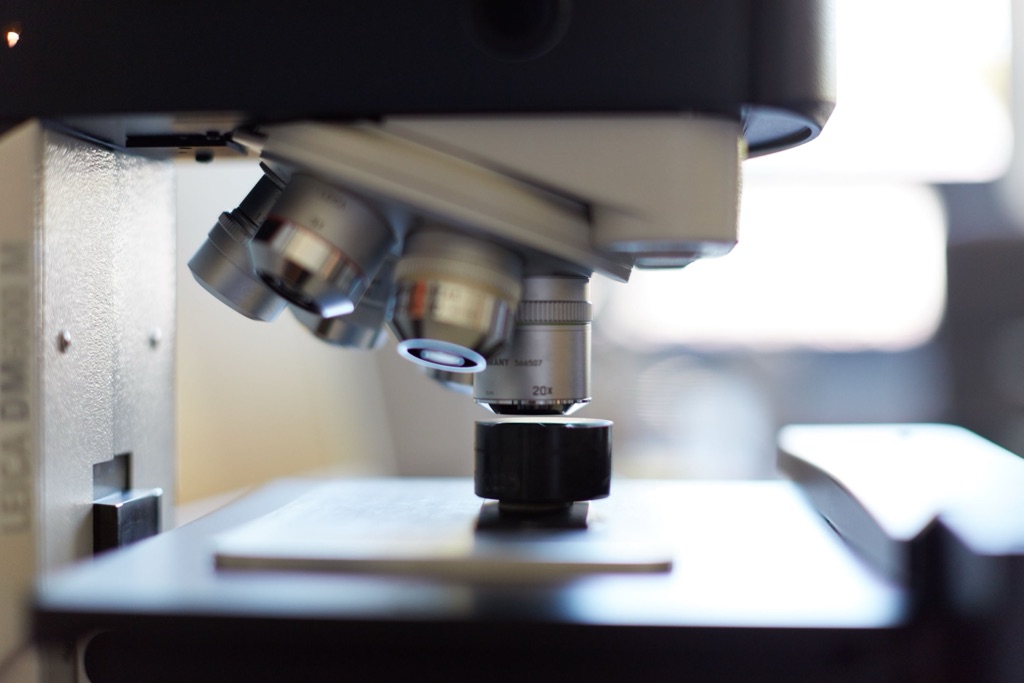
Modern materials engineering uses high-quality light microscopes with 50x to 1000x magnification. This technique makes visible what truly gives quality control and failure analysis their significance.
The systematic investigation of metallic and non-metallic materials combines science with practical application. From materials science to industrial production, this analysis method delivers reliable answers to critical questions about material quality.
- The internal microstructure largely determines the mechanical and chemical properties of metals
- Alloy composition, heat treatment and deformation significantly influence the microstructure
- Light microscopy examinations at 50x to 1000x magnification are part of the standard repertoire of materials testing
- The microstructure documents the complete manufacturing history of a material
- Quantitative and qualitative analyses enable precise predictions of material behaviour
- Both methods are indispensable in research, development and industrial production
What lies behind metallography & microstructure analysis?
Behind the term metallography lies a scientific discipline that makes microscopic structures in metals and other materials visible. The method deals with the visualisation of microstructures and provides valuable information about the internal composition of materials. Through special techniques, properties that are decisive for quality and performance become recognisable.
Microstructure analysis describes material structures both qualitatively and quantitatively. Macroscopic and microscopic methods are used for this purpose. The interplay of these techniques enables a comprehensive understanding of material composition.
Fundamentals of microscopic material analysis
Metals consist of countless tiny crystals known as grains. These grains have a specific arrangement, shape and size. To the naked eye, however, these structures remain completely invisible.
Only through special preparation techniques do the microstructures become accessible. Microscopic material analysis uses various methods to visualise the crystal structure and its special features. A carefully prepared section forms the basis for meaningful examinations.
Stereology plays an important role in this context. This mathematical tool allows conclusions to be drawn from two-dimensional section images about three-dimensional volume ratios. Spatial structures can be reconstructed from planar images.
In material characterisation, various microstructural constituents are identified. Grain shapes, grain boundaries and different phases stand out clearly under the microscope. The crystal structure reveals itself in characteristic patterns and contrasts.
Modern microscopic techniques achieve resolutions down to the nanometre range. Light microscopes cover the lower magnification range. Electron microscopes provide insights into even finer structural details.
Objectives and fields of application of microstructure examination
Microstructure examination always pursues specific questions. It does not serve as an end in itself but answers specific questions about material quality. Various industries use this analysis method for different purposes.
In quality assurance, routine checks are made as to whether materials comply with the defined standards. Production companies use it to monitor compliance with customer specifications. Microstructure examination ensures that materials exhibit the required properties.
- Was the heat treatment carried out correctly?
- Does the grain size distribution meet the specifications?
- Are undesirable phases or inclusions present?
- Are there any signs of material defects?
In research and development, material characterisation investigates the relationship between microstructural features and process parameters. Scientists explore how manufacturing conditions affect the material structure. These findings feed into process optimisation.
New alloys are systematically developed and characterised. Microstructure examination shows which microscopic structures produce the desired properties. Innovative materials emerge through the targeted adjustment of microstructural states.
Failure analyses after component failure also use metallographic examinations. Experts use them to identify the causes of material failure. Cracks, fractures or signs of corrosion can be traced in the microstructure.
The range of applications extends from the automotive industry through mechanical engineering to aerospace. Wherever metallic materials must meet high requirements, microstructure analysis comes into play. Non-metallic materials such as ceramics or composites are also examined using similar methods.
Why microstructure examinations are so valuable for material characterisation
Every metal microstructure tells the story of its origin and reveals future performance. The microscopic structure of a material documents every single processing stage. From casting through rolling to welding, every process step leaves characteristic traces.
This information stored in the microstructure makes material characterisation particularly valuable. Materials testers can read from the microstructural image which thermal and mechanical treatments a material has undergone. Even more importantly: they recognise how the material will behave in the future.
Insights into the internal material structure
The internal structure of a metal determines its performance far more strongly than the chemical composition alone. Two steel grades with identical alloy composition can exhibit completely different microstructural properties. The difference lies in the shape, size and distribution of the crystals.
Fine-grained microstructures typically lead to higher strength and toughness. Coarse-grained structures, on the other hand, offer advantages at high temperatures.
Heat treatments deliberately alter the microstructure. A microstructure examination immediately shows whether the desired changes have occurred. Unintended phases become just as visible as incomplete transformations.
The homogeneity of the microstructural distribution provides information about the quality of casting or forging processes. Segregations and inhomogeneities can mark weak points. The orientation of the crystals reveals whether the material has anisotropic properties.
Quality assurance through materials testing
Modern materials testing through microstructure analysis prevents costly component failures before they occur. The early detection of deviations saves considerable costs. Identifying a defective component in production costs a fraction of what a failure in service causes.
Production processes can be precisely monitored through regular microstructure checks. Deviations from target values become immediately apparent. The process parameters can then be adjusted promptly.
The quantitative analysis of microstructural parameters enables reliable forecasts. Grain sizes can correlate with strength values. Phase fractions influence hardness and wear resistance. Inclusion content and distribution can affect fatigue strength.
The correlation between microstructure and mechanical properties allows precise predictions about component behaviour under load. Fracture mechanics characteristic values can be estimated / correlated in conjunction with microstructural parameters. Creep resistance at high temperatures depends, among other things, on grain size.
Microstructure examinations also uncover manufacturing defects. Overheating during welding changes the microstructure in a characteristic way. Insufficient heat treatment does not remain hidden. Material mix-ups can be identified.
The preventive nature of modern materials testing pays off economically. Investments in microstructure analyses pay for themselves many times over through avoided damage. Quality assurance turns from a cost factor into a competitive advantage.
Section preparation as the basis for successful analyses
High-quality microstructural images only emerge through careful metallographic preparation. The entire process requires several coordinated steps, each of which must be carried out with precision. Only if every phase of the preparation succeeds will the microscope ultimately deliver meaningful images.
The quality of the analysis depends directly on the surface condition. Faulty preparation makes a reliable assessment impossible even at the highest magnification. That is why every microstructure examination begins with systematic sample preparation.
From the component to the sample ready for analysis
The first work step consists of cutting the sample from the larger workpiece. Gentle cutting methods are used here that do not alter the microstructure through heat or mechanical deformation. Water-cooled precision cutting machines prevent thermal damage during cutting.
After cutting, embedding in plastic often follows. This step stabilises small or unwieldy samples and creates a flat working surface.
Embedding offers several practical advantages:
- Safe handling even of the smallest sample pieces
- Protection of the sample edges against edge breakout
- Reproducible positioning during further processing
- Simplified grinding and polishing thanks to a defined geometry
The path to the mirror-like surface
Grinding begins with coarse grits that remove larger unevenness. Step by step, finer abrasives are used until all coarse scratches have disappeared. Each grinding step removes the traces of the previous operation.
The grit decreases progressively, typically from 220 through 500 and 1000 to 2400 or finer. Between the individual steps, the sample must be thoroughly cleaned. Otherwise coarser particles are carried over into the next stage and cause new scratches.
After fine grinding, polishing with special pastes or suspensions follows. Diamond pastes with grain sizes between 6 and 1 micrometre produce a brightly polished surface. Finally, oxide polishing pastes may be used.
This multi-stage process requires patience and care. Only perfectly polished surfaces later allow an unambiguous microstructure assessment. Any remaining impurity or scratch can conceal important details or cause misinterpretations.
Making visible through targeted etching
The polished sample initially shows a uniform surface without recognisable structures. Only through etching do grain boundaries, phase boundaries and other microstructural features become visible. Etching techniques use chemical or electrolytic reactions to create contrasts in a targeted way.
Different etchants react differently with the microstructural constituents. Acids, alkalis or special solutions attack grain boundaries more strongly than the grain interior. This creates small depressions or discolorations that appear as dark lines under the microscope.
The selection of the appropriate etchant is based on several criteria:
- Material group (steel, aluminium, copper alloys)
- Specific alloy composition
- Desired microstructural features (grain boundaries, phases, precipitates)
- Targeted contrast and image quality
The etching time must be precisely controlled. Too short an etch produces weak contrasts, while too long an etch over-etches the surface and obscures details. Experienced specialists adjust the time and concentration individually for each sample.
After successful etching, the sample is ready for the microscopic image. The usual magnifications range from 25x to 1000x. At 100x to 200x magnification, most relevant microstructural features can be clearly recognised and documented.
The entire sample preparation, from the first cut to the finished etch, determines the significance of the subsequent analysis. Those who master these fundamentals create the prerequisite for reliable materials testing and well-founded quality assessments.
Methods of metallographic preparation at a glance
Different microscopic techniques make it possible to analyse material structures at various levels of detail. The choice of the appropriate method depends on the desired magnification, the required resolution and the type of information sought. Modern laboratories often combine several methods to obtain a complete picture of the material structure.
Each technique brings its own strengths and is particularly well suited to certain questions. While optical methods provide a quick overview, electron microscopy methods enable deeper insights into the finest structural details. Digital image analysis complements these microscopic methods with objective, quantifiable results.
Optical methods for routine examination
Light microscopy forms the foundation of most microstructure examinations. With magnifications between 25x and 1000x, it covers a broad range of applications. The technique scores with its speed, ease of handling and the ability to examine larger samples as well.
Different illumination methods bring out different microstructural features. Bright-field illumination serves as the standard technique for most examinations and clearly reveals grain structures as well as phase boundaries. Dark-field illumination, on the other hand, can particularly highlight special structures such as inclusions or fine precipitates.
Polarised light is excellently suited for multi-phase alloys, since different crystal structures refract the light differently. Interference contrast makes the smallest height differences on the sample surface visible and helps in assessing the grinding quality. This versatility makes light microscopy the indispensable tool in every metallographic laboratory.
Modern digital cameras with high resolution today capture even the finest details. The direct connection with computer systems enables immediate documentation and further processing of the images. High-quality optics and sensors guarantee colour-accurate, sharp images across the entire magnification range.
High-resolution electron microscopy techniques
When the limits of optical microscopy are reached, electron microscopy methods come into play. Scanning electron microscopy uses electron beams instead of light and thereby achieves significantly higher magnifications and resolutions. Structures down to the nanometre range thus become visible and analysable.
A further advantage lies in the enormous depth of field of this technique. Even rough or uneven surfaces appear sharply imaged across the entire image area. This considerably facilitates the examination of fracture surfaces, corrosion damage or three-dimensional microstructural features.
Electron backscatter diffraction (EBSD) extends pure imaging with crystallographic information. This method provides data on grain orientations, textures and local deformations in the material. Colour-coded orientation maps make complex crystallographic relationships understandable at a glance.
Correlative microscopy combines the strengths of various techniques. For complex materials, a single method is often not sufficient to obtain all relevant information. The combination of optical microscopy, scanning electron microscopy and further methods compensates for the respective disadvantages and delivers comprehensive findings.
For highly specialised questions, transmission electron microscopy or atom probe tomography can also be integrated. These methods enable insights down to the atomic level and clarify even the most difficult materials science questions. The effort is justified for critical components or innovative material developments.
Software-supported evaluation and quantification
Digital image analysis converts microscopic images into objective, measurable data. Specialised software automatically detects grain boundaries, measures area fractions and performs statistical evaluations. This automation saves time and increases the reproducibility of the results.
The most important applications include grain size analysis, phase analysis and pore analysis. Layer thickness measurements, particle analyses and the determination of microstructural fractions can also be carried out reliably. The software generates meaningful statistics and distribution curves that manual evaluations can hardly achieve.
However, automatic systems reach their limits with complex microstructures. Overlapping structures, weak contrasts or unusual microstructural shapes can present challenges to the algorithms. The combination of automated image analysis and the expertise of experienced testers therefore often delivers the most reliable results.
Modern software solutions also offer options for data archiving and comparison with reference databases. This supports quality assurance and enables the detection of trends over longer periods. Digital documentation also meets the strict requirements for traceability in regulated industries.
Grain boundary analysis and phase identification in detail
Once high-quality microstructural images are available, the systematic evaluation of the visible structures begins. Quantitative analysis provides precise key figures on grain sizes, phase fractions and possible defects in the material. This data enables well-founded statements about mechanical properties and the suitability of a material for certain applications.
Grain boundary analysis forms a central component of microstructure assessment. Grain boundaries significantly influence the behaviour of metals under load. Their precise characterisation helps to predict and optimise material properties.
Component metallography and on-site examinations in practice
When pipelines, pressure vessels or bridge girders need to be examined, mobile metallography methods come into play. Large-volume plants and components often cannot be removed or transported to the laboratory. That is why component metallography has established itself as a practical solution that enables examinations directly on the installed component.
These on-site examinations save time and costs. They avoid elaborate dismantling and longer downtimes. At the same time, they deliver reliable results for failure analyses and material characterisation.
Flexible deployment through portable devices
Mobile metallography uses specially developed portable equipment. Compact grinding and polishing devices prepare small areas of the component surface. These devices usually weigh less than 15 kilograms and operate on battery or mains power.
After preparation, portable microscopes or microscope cameras come into play. Modern digital cameras with high resolution transmit images directly to tablets or laptops. The microstructure thus becomes immediately visible and can be assessed on site.
- Power plant components such as turbine blades and steam pipes
- Chemical plants with pressure vessels and reactors
- Steel bridge structures
- Pipelines in the oil and gas industry
- Weld seams on large steel structures
The examination is carried out during ongoing operation or during planned maintenance windows. Specialists can thus quickly decide whether a component may continue to be operated or must be replaced.
Replica methods for difficult locations
The replication method offers a clever alternative to direct examination. Instead of placing the component itself under a microscope, an impression of the surface is created. This technique works particularly well for hard-to-reach areas.
Special plastic films are wetted with a solvent and applied to the prepared and etched surface. The film hardens within a few minutes and faithfully captures the surface structure in the process. After hardening, the replica can be carefully peeled off.
- Grain boundaries and grain shapes remain visible
- Phase distributions are transferred
- Cracks and defects appear in the impression
- Surface roughness is captured
The replica can then be examined under a microscope directly on site or in the laboratory under optimal conditions. Replication methods are particularly suitable for the inner surfaces of pipes or weld seams in confined spaces.
The technique also enables comparative examinations over longer periods, which is relevant for creep-loaded components, among others. Several impressions of the same location reliably document changes in the material.
Practical advantages of minimally invasive methods
Non-destructive or low-destructive analyses offer considerable practical advantages. The component remains fully functional after the examination. Only a small surface is ground and polished – the mechanical properties of the component are generally not affected as a result.
Economically, this approach quickly pays off. Costly dismantling is completely eliminated. Production losses are minimised because examinations can be carried out during short maintenance breaks.
- Repeated examinations at the same location possible
- Monitoring of material changes over time (creep)
- Rapid basis for decisions in cases of damage
- Documentation of the current material condition
However, there are also limitations that must be named honestly. The examination quality does not always reach the level of laboratory analyses. Mobile devices may have a lower resolution than stationary microscopes.
Some analyses still require classical sampling. Complex phase analyses or the determination of very small inclusions succeed only to a limited extent with on-site examinations. In such cases, the mobile examination serves as a quick preliminary check, which is then supplemented by a detailed laboratory analysis.
In power plant technology, steam pipes are regularly monitored using mobile methods. Creep damage caused by high temperatures can thus be detected at an early stage. In chemical plant engineering, replication methods help in checking corrosion damage on reactor inner surfaces.
Bridge structures also benefit from this technique. Hard-to-reach weld seams can be examined without erecting scaffolding. Traffic safety is thus continuously monitored without the bridge having to be closed.
Evaluation and interpretation of metallographic examination results
High-quality microstructural images alone are not enough – proper interpretation and documentation turn images into valuable test results. After the microscopic image acquisition, a phase begins that combines manual skill with theoretical knowledge. Only through systematic microstructure evaluation do meaningful findings arise that actually help in quality assurance and materials testing.
Traceable processes through structured documentation
Every metallographic examination requires complete documentation of all work steps. Sample identification forms the starting point: without unambiguous assignment, even perfect microstructural images lose their value. Preparation parameters such as grinding and polishing steps are recorded just as much as the etchants used and their exposure time.
Modern software supports image archiving with all relevant metadata. Magnification, illumination type, camera settings and recording date are saved automatically. This information later enables complete traceability.
Measurement results from digital image analysis are linked directly to the corresponding images. In doing so, the microstructure evaluation goes through several steps:
- Greyscale image processing to optimise image quality and improve contrast
- Threshold determination for selecting the microstructures to be analysed
- Binary processing with grain size classification and removal of interfering elements
- Field measurement and object measurement for the quantitative recording of microstructural fractions
Statistical processing converts measurement data into meaningful characteristic values. Histograms show grain size distributions, often with class distribution according to normal distribution (Gauss). Tables summarise phase fractions and their mathematical proportions.
The reporting is carried out in standardised form as a test report. Results are printed, sent as PDF or exported directly into ERP systems. This integration considerably accelerates approval processes and quality decisions.
Understanding and correctly classifying microstructures
The interpretation of metallographic images requires experience and sound materials knowledge. Normal microstructures differ clearly from anomalous structures – those who master this distinction recognise material problems at an early stage. Characteristic features reveal much about manufacturing processes and heat treatment.
Equiaxed grains with a homogeneous size distribution indicate controlled recrystallisation. Coarse-grained or inhomogeneous structures can point to unsuitable annealing parameters. Cast structures typically show dendritic growth with segregation zones.
Weld seam microstructures present particular challenges in interpretation. Base material, heat-affected zone and weld metal each exhibit characteristic microstructural features. The correct assignment of observed structures to material conditions requires comparative knowledge.
- Grain shape and grain size as an indicator of mechanical properties and the manufacturing process
- Phase fractions for assessing the heat treatment condition
- Precipitates and their distribution in the microstructure
- Microstructural defects such as pores, cracks or inclusions
Correlative characterisation combines elaborate, high-resolution methods with simpler procedures. Findings from electron microscopy examinations are transferred to faster light microscopy routine inspections. This approach increases efficiency without loss of quality.
Typical pitfalls in microstructure evaluation
Even experienced metallographers must actively recognise and rule out sources of error. Insufficient polishing produces scratches and grinding marks that can influence a microstructure assessment. Such preparation artefacts considerably distort the overall picture.
Etching directly influences the interpretation. Too weak an etch makes grain boundaries barely visible, too strong an etch overemphasises certain phases. The right balance requires experience and sometimes several attempts.
Automatic image analysis indeed offers speed and objectivity but reaches its limits with complex microstructures. Experienced testers estimate the accuracy at around 80 percent, depending on the microstructural complexity. Particularly with multi-phase materials or overlapping grain structures, critical review by human expertise is needed.
- Avoid confusing grinding marks with genuine microstructural features through more careful polishing
- Correct incorrect threshold settings in image analysis through manual checking
- Compensate for incomplete grain capture at the image edge through sufficient measuring fields
- Minimise illumination artefacts through optimal microscope settings
The combination of conscientious preparation, appropriate measurement technology and well-founded interpretation ensures reliable results. Documentation and reporting create traceability over years. Metallography combines manual skill with scientific understanding – both sides deserve equal attention for meaningful material analyses.
Modern materials testing combines classical preparation techniques with digital image processing. Correlative microscopy combines various analysis techniques and delivers a comprehensive picture of the material structure. This development continuously expands the possibilities of quality assurance.
With the increasing complexity of modern high-performance materials, the requirements for microstructure examination grow. Careful sample preparation and well-founded interpretation remain central in this respect. Automation supports the work but does not replace the expertise of experienced testers.
The value lies in the ability to draw reliable conclusions about material properties and component safety from microscopic observations. Elaborate methods open up new findings that can later be transferred to simpler procedures. From routine inspection to failure analysis, metallographic examination remains a key to understanding internal material structures.