How can material joints be designed so that they meet the highest quality requirements while remaining economical?
This question arises in almost all areas of the manufacturing industry, from microelectronics to power plant construction.
This article examines the fundamental relationships between process development and quality assurance in joining technology. It shows which methods are available for optimising welding processes and brazing-soldering procedures.
Thermal joining techniques are constantly evolving, as new materials require special approaches. Systematic process design opens up considerable opportunities for increasing productivity and material utilisation.
- Thermal joining techniques form the foundation of modern manufacturing processes in all industrial sectors
- Scientific progress leads to more productive welding processes and innovative brazing-soldering procedures
- New material composites require specialised process variants and adapted welding technologies
- Process design and quality assurance are closely interlinked activities
- Systematic optimisation improves both joint quality and cost-effectiveness alike
[/su_note]
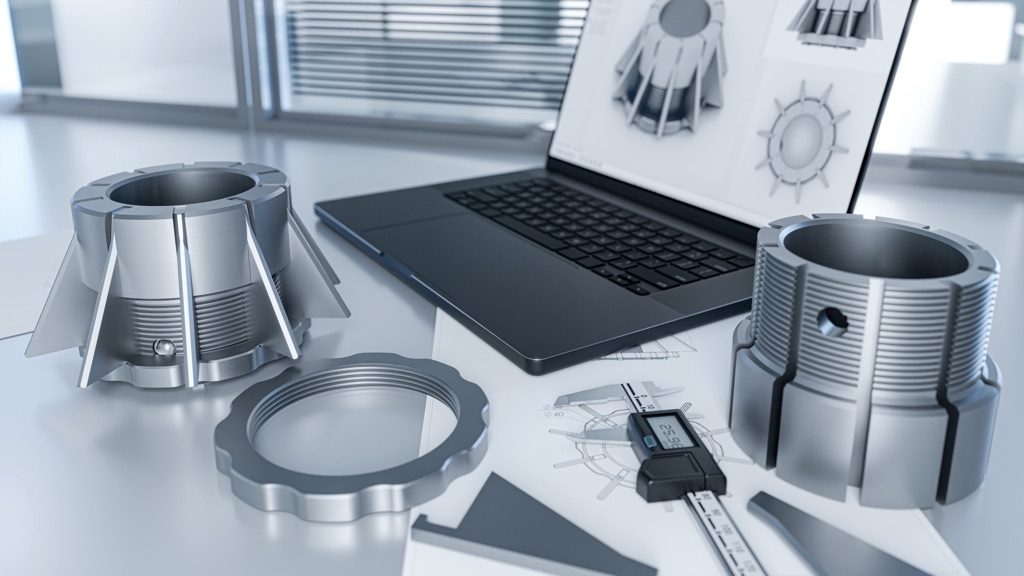
Fundamentals of thermal joining processes in industrial use
Metal joining processes using thermal energy enable the production of complex components in almost all industries. Through targeted heat input, permanently stable and load-bearing metal joints are created.
Thermal joining processes are used wherever mechanical joining techniques reach their limits. The range of applications extends from tiny electronic components to massive steel structures. The right method determines the quality and durability of the joint.
Two main groups have become established in modern manufacturing: welding processes and brazing-soldering procedures. Both use heat but differ fundamentally in how they work. The choice between the two depends on many technical requirements.
The fundamental difference between the two joining techniques
In welding, the workpieces to be joined are heated to melting point. The heated areas fuse with one another and, after cooling, form a solid unit. The material of the base metals thereby becomes a direct part of the joint zone.
Brazing-soldering works on a different principle. Here the base metals remain solid, while only a special filler material melts. This filler flows into the gap between the components through capillary action. After solidification, a stable joint is created.
The temperature differences between the two processes are considerable. Welding processes can locally reach temperatures above 1,500 °C. Brazing-soldering procedures, by contrast, mostly work – with the exception of high-temperature brazing (here up to 1150 °C) – at lower temperatures between 450 °C and 900 °C.
These different temperature ranges have important consequences. During welding, the microstructure and properties of the base metals can change. Brazing-soldering protects the workpieces thermally and is therefore suitable for sensitive components.
For practical application, this means various possible uses. Welded joints usually achieve the strength of the base material. Brazed-soldered joints, by contrast, offer more flexibility in the combination of materials.
Where different joining processes show their strengths
The diversity of modern metal joining processes enables tailored solutions for the most varied requirements. Every industry poses its own challenges to joining technology. The choice ranges from high-precision micro-joints to robust large structures.
In microelectronics, soldering is the dominant technology. Printed circuit boards, sensors and semiconductor components are precisely joined together. The low process temperatures protect sensitive electronic components. Without this technique, modern smartphones and computers would be unthinkable.
The automotive industry relies on a combination of various processes:
- Resistance welding for body panels and structural components
- Gas-shielded welding for frame components and reinforcements
- Laser beam welding for precise seam joints on visible areas
- Soldering for heat exchangers, radiators and electrical contacts
In plant engineering, welding processes dominate for load-bearing structures. Pipelines, pressure vessels and steel girders require high-strength joints. Arc welding processes such as gas-shielded welding guarantee the necessary stability here. Plasma welding is frequently used for piping systems in process engineering.
Power plant technology uses both welding and brazing-soldering procedures. Boiler tubes are welded, while heat exchangers are often brazed. Furnace brazing in a protective gas atmosphere enables the serial production of complex assemblies. This combination ensures high reliability under extreme operating conditions.
Further important fields of application include:
- Aerospace: electron beam welding for turbine blades and structural components
- Medical technology: precision brazing for instruments and implants
- Household appliances: induction brazing for cooling circuits and heat exchangers
- Tool making: hardfacing for wear-resistant surfaces
- Electrical engineering: flame soldering and resistance soldering for joints
Complex decision-making in practice
Choosing the optimal joining process presents engineers with multifaceted tasks. Numerous technical and economic considerations feed into this decision. A blanket solution does not exist.
The material combination forms the starting point of every consideration. Some materials can be welded excellently, others can only be soldered. Aluminium and copper, for example, require different approaches. The chemical composition influences the melting behaviour and the wetting properties.
Component geometries further restrict the choice of process. Narrow gaps favour soldering processes through capillary action. Thick cross-sections often require the energy input of welding processes. Accessibility and component size likewise play an important role.
The required mechanical properties set further boundary conditions. High-strength joints argue for welding processes. With lower strength requirements, soldering offers advantages through gentle process control. Dynamic loads or vibrations require particular attention.
Thermal loads during later operation significantly influence the choice of process. Components with high operating temperatures need temperature-resistant joints. The thermal expansion of different materials must be taken into account. Brazed-soldered joints can score points here through their ductility.
Economic considerations must not be ignored. Investment costs for equipment, energy consumption and process times vary greatly. The quantity influences the amortisation of automated systems. Qualified personnel and their availability are also to be taken into account.
The existing manufacturing infrastructure sets practical limits. Not every company has all welding technologies. Existing equipment and know-how influence feasibility. Sometimes an adjustment of the design leads to better results than the acquisition of new equipment.
Quality assurance and the testability of the joints round off the decision picture. Some processes allow simpler non-destructive testing. Documentation requirements in regulated industries can be decisive. The reproducibility of the processes ensures consistent quality.
Methods of process development in joining technology
Process development in joining technology requires well-conceived strategies in order to create reliable and economical joining solutions. Structured methods help to master the complexity of modern joining processes. They shorten development time and at the same time increase the quality of the results.
Successful process development combines theoretical knowledge with practical experience. Both material knowledge and an understanding of the process sequences play a central role. Modern workshops with optimal equipment considerably support this further development of welding processes.
Structured development of new joining processes
Development always begins with a precise definition of the task. Which materials are to be joined? Which mechanical properties must the joint exhibit? These questions form the foundation for all further steps.
After the requirements definition, the preselection of suitable process variants follows. Experts consider both technical and economic aspects. Not every theoretically possible process is suitable for later series production.
Theoretical considerations and simulations further narrow down the options. These digital tools make it possible to predict temperature fields and weld pool dynamics. This makes it possible to identify and exclude hopeless approaches at an early stage.
Practical validation forms the conclusion of the development phase. Series of trials under real conditions confirm the theoretical predictions. Particularly important here is the consideration of the later manufacturing conditions.
A process must not only work in the laboratory. It must also work reliably under production conditions and deliver reproducible results. This practical suitability ultimately decides the success of the development.
Optimal settings for high-quality joints
Determining the parameters represents a complex task. Numerous influencing variables work together and affect the joining result. A systematic welding-technology process analysis helps to understand these relationships.
The most important parameters include:
- Temperature control and heat input during the process
- Feed rate and process speed of the joining tools
- Protective gas atmosphere and its composition
- Surface preparation of the components to be joined
- Selection of the appropriate filler material
Modern statistical design-of-experiments methods capture the complex interactions. These methods significantly reduce the necessary number of trials. At the same time, they provide reliable statements about optimal settings.
Specific factors play a role especially in brazing-soldering procedures. The availability and properties of solders significantly influence the process design. The solder-compatible construction and component design must also be considered at an early stage.
The generation of solderable surfaces requires particular attention. Oxide layers or contamination can prevent wetting. Suitable cleaning procedures and fluxes provide a remedy here.
Soldering processes with low soldering temperatures enable joints for high service temperatures. This seemingly paradoxical combination is achieved through clever material selection and phase transformations. Simulation tools help with the design and calculation of high-strength solder joints.
The combination of theoretical prediction and practical validation leads to robust results. The determined process parameters also work despite unavoidable fluctuations. This robustness is indispensable for industrial process development in joining technology.
Documentation and continuous monitoring ensure long-term process control. Only in this way can the applicability and reliability of the joint properties be predicted and assured. The interplay of all factors determines success in practical application.
Analysis methods for evaluating welded and brazed-soldered joints
Quality assurance in joining technology is based on various testing methods, each of which provides different information. Process development and analysis for welding and brazing-soldering processes requires systematic evaluation procedures. Only through thorough analysis can it be determined whether a joint meets the requirements set.
The prediction and assurance of the joint properties plays a central role in process control. Factors such as mechanical strength and corrosion resistance significantly influence service life. For this reason, different analysis methods that complement one another are used.
Metallographic examinations and microstructure analysis
The analysis of brazing-soldering procedures often requires a look inside the joint. Metallographic examinations provide detailed information about the microstructure of the joint. For this purpose, cross-sections are prepared and examined under the microscope.
This method reveals important microstructural features such as grain size, microstructural proportions and precipitates. Pores, inclusions and the formation of the transition zone between base material and joining material become visible. Through targeted etching procedures, different microstructural constituents can be distinguished.
The transition zone deserves particular attention. Here different materials meet and form specific microstructures. The quality of this zone significantly determines the strength and reliability of the entire joint.
Modern digital image analysis systems have revolutionised the evaluation. They enable quantitative measurements of microstructural parameters and statistical evaluations. Automated procedures accelerate the analysis and increase the reproducibility of the results.
Non-destructive testing methods at a glance
Non-destructive testing methods offer a decisive advantage: the examined components remain intact and can continue to be used. These methods allow the inspection of series parts without material loss. They form the backbone of industrial quality assurance.
The most important non-destructive methods include the following techniques:
- Visual inspection: detection of surface irregularities such as cracks, pores or undercuts through visual examination
- Radiographic testing: X-rays or gamma rays make internal defects such as cavities or inclusions visible
- Ultrasonic testing: sound waves detect lack of fusion, cracks and other discontinuities inside the material
- Magnetic particle testing: particularly suitable for ferromagnetic materials, reveals surface cracks and near-surface defects
- Dye penetrant testing: makes the finest surface cracks detectable through coloured penetrants even without optical aids
Each method has specific strengths and limits. Ultrasonic testing, for example, works quickly and cost-effectively but does not achieve the level of detail of radiographic testing. Specialists therefore frequently combine several methods for a comprehensive evaluation.
The selection of the appropriate testing method depends on the material, the component geometry and the expected types of defect. Modern testing techniques increasingly use digital evaluation systems. These enable more precise documentation and traceability of the results.
Mechanical testing methods for quality assurance
Mechanical testing methods evaluate the performance of joints under realistic loads. These destructive tests cannot, of course, be carried out on series parts. They do, however, provide indispensable insights for process validation and qualification.
The most important mechanical testing methods in the analysis of brazing-soldering procedures include:
- Tensile tests: determine the maximum load-bearing capacity and the fracture behaviour of the joint under tensile load
- Bend tests: test the ductility and deformability of the joint without fracture
- Hardness measurements: characterise local material properties in different areas of the joint
- Notched-bar impact tests: evaluate the toughness and impact resistance under dynamic load
- Fatigue tests: simulate cyclic operating loads and determine the service life under alternating load
Tensile tests are among the most fundamental tests. They show how much load a joint can take before it fails. The fracture surface provides additional indications of the joint quality.
Fatigue tests are increasingly gaining in importance. Many components are subject to repeated load cycles during operation. These can lead to fatigue fractures, even if the individual load is below the static strength.
The combination of various testing methods enables a holistic quality assessment. Non-destructive methods inspect series production. Metallographic and mechanical tests validate the process and ensure the long-term reliability of the joints.
Process development and analysis for welding and brazing-soldering processes in practical implementation
Successful metal joining processes arise through the skilful combination of development work and systematic analysis. Transferring theoretical concepts into productive manufacturing sequences requires structured methods and modern tools. Industrial contracts and publicly funded research projects benefit equally from optimised processes.
Manufacturing optimisation forms a central field of work in modern joining technology. Technology and process development for welding as well as cutting are part of the comprehensive range of services. Prototype and small-series production enable the practical testing of newly developed processes under realistic conditions.
Systematic experimental planning for process optimisation
Welding process optimisation gains considerably in efficiency through statistical methods. Instead of varying parameters individually, intelligent experimental plans investigate several influencing variables simultaneously. This approach not only saves time and material but also uncovers hidden interactions between different parameters.
With a manageable number of targeted trials, a mathematical model of the process is derived. This model enables precise predictions about the process behaviour for different parameter combinations. In this way, optimal settings can be identified and robust process windows defined.
The most important advantages of systematic experimental planning include:
- Reduction of the required number of trials by up to 70 percent
- Uncovering of interactions between process parameters
- Creation of mathematical process models for predictions
- Definition of stable process windows with guaranteed quality
Modern measurement techniques for brazing-soldering process analysis
The analysis of brazing-soldering procedures uses high-resolution temperature measurement systems to capture the temperature distribution throughout the entire process. Gap measurements precisely document the geometry of the solder joint. Wetting analyses characterise the flow behaviour of various solders under different conditions.
Real-time X-ray systems make capillary effects and pore formation visible during soldering. Gas analysers continuously monitor the protective gas atmosphere. These measurement techniques provide detailed insights into the ongoing processes and enable a deep understanding of the process.
Brazing-soldering procedures must be continuously developed further so that users can draw on the latest know-how. High-strength and economical solder joints form important development goals. Modern analysis methods support this progress through precise measurements.
Central measurement systems in the analysis of brazing-soldering procedures:
- High-resolution thermography systems for temperature fields
- Gap measuring devices with micrometre accuracy
- Wetting angle analysers for solder flow behaviour
- Real-time X-ray systems for process observation
- Gas analysers for atmosphere monitoring
Continuous improvement through structured documentation
Systematically recorded process data, test results and empirical values are collected and evaluated in central databases. Identified relationships flow directly into updated process guidelines. Deviations and their causes are analysed and lead to concrete improvement measures.
This control loop of execution, measurement, evaluation and optimisation ensures the steady further development of metal joining processes. Modern quality management systems support the continuous improvement process through structured procedures. Clear responsibilities ensure the consistent implementation of identified optimisations.
The process documentation safeguards valuable know-how and makes it available for subsequent projects. Neutral investment consulting as well as advice on the design of welding systems benefit from this accumulated wealth of experience. Special machinery construction can draw on proven process developments.
Elements of an effective documentation system:
- Central databases for process parameters and test results
- Standardised recording forms for reproducible data
- Automatic evaluation tools for trend analyses
- Versioned process guidelines with change history
Thermal joining processes are used in almost all areas. Their versatility is evident from electronic components to large steel structures. The systematic approach in the development of new processes ensures the best results.
Process control is at the centre of successful applications. The combination of structured development, statistical experimental planning and comprehensive analysis creates economical solutions. Non-destructive testing methods and metallographic examinations guarantee the required quality.
Welding process optimisation through modern measurement techniques opens up new possibilities. Continuous improvement adapts the processes to rising requirements. This dynamism characterises the joining technology of the future.
Those who consistently apply systematic methods achieve higher product quality and increased efficiency. The integration of technological advances provides competitive advantages in the demanding industrial environment. The development of these key technologies remains a decisive factor for innovative products and successful manufacturing processes.