How can companies ensure that their measuring instruments really deliver precise results?
This article explains the fundamental relationships between systematic equipment monitoring and reliable measurement results.
It presents practical examples from various industries that show why accuracy is no coincidence. The following sections reveal which processes underpin reliable quality results.
The systematic comparison of measuring instruments against recognised standards forms the foundation of precise work. Only through regular checks do instruments retain their reliability over longer periods.
The coordinated system for managing all measuring and test equipment encompasses far more than individual checks. From procurement through to decommissioning, equipment is documented and monitored.
In the automotive industry, coordinate measuring machines must maintain tolerances in the micrometre range. The food sector relies on calibrated temperature measuring devices to safeguard the cold chain. According to ISO 9001:2015, organisations must provide suitable resources for valid and reliable measurement results.
- Regular calibration of measuring instruments ensures precise results in all production processes
- Systematic management prevents the loss of equipment reliability over time
- ISO 9001:2015 requires demonstrable resources for reliable monitoring and measurement results
- Documentation and traceability form the basis of a functioning system
- Different industries have specific requirements for measurement accuracy and tolerances
- Maintenance and scheduled checks combine to form a closed quality loop
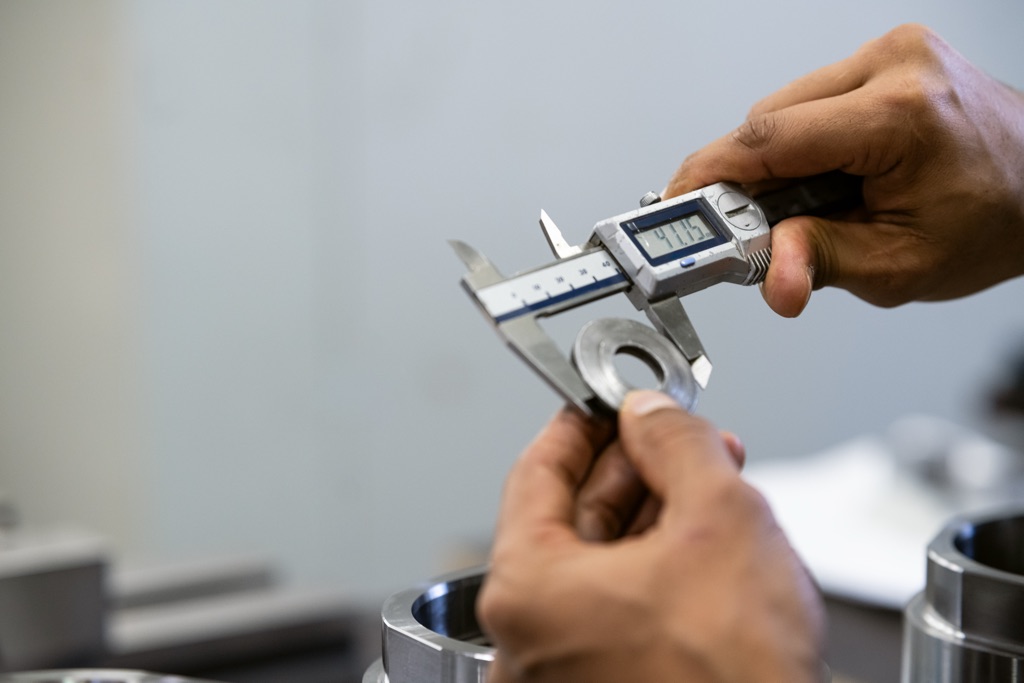
Why precise measurements are indispensable
At the same time, internal quality departments are placing ever higher demands on compliance with standards and guidelines. This development makes consistent quality assurance of test equipment an indispensable part of modern companies.
Inaccurate measurements have far-reaching consequences. Faulty measurement results lead to defective products being classified as flawless. Conversely, perfect products are wrongly rejected.
Both scenarios cause considerable financial damage. While the first leads to complaints and liability cases, the second creates unnecessary scrap costs.
The significance becomes clear through specific examples. A temperature gauge in pharmaceutical production that deviates by two degrees can render entire batches unusable. The resulting losses quickly reach six-figure sums.
In metalworking, inaccurate thickness measurements lead to components that do not fit together. Production stoppages are the immediate consequence, accompanied by delivery delays and dissatisfied customers.
The legal dimension must not be underestimated. Certifications according to international quality standards presuppose demonstrably correct measurements. During inspections, auditors systematically check the available calibration records.
If these records are missing, important certificates may be lost. This can in turn lead to exclusion from the supplier lists of major customers. Business relationships are thus at stake.
From an economic perspective, investments in precise measuring equipment monitoring quickly pay off. The cost of a professional calibration system is manageable compared with the damage that measurement errors can cause. Avoided error costs often amortise the expenditure within a few months.
Measurement accuracy is therefore not a luxury for quality-conscious companies. Rather, it represents an economic necessity that determines competitiveness and long-term success. Companies that invest consistently here secure sustainable advantages in the market.
What calibration of measuring instruments means
Every measuring instrument exhibits deviations over time – calibration makes these visible under defined conditions. In this process, a measuring instrument is compared with a known reference standard. The deviations determined are documented and form the basis for reliable measurement results.
Regular calibration forms the heart of test equipment management. Only through systematic comparisons can it be established whether a measuring instrument is still operating within the permissible tolerances. This check protects against faulty measurements and the resulting quality problems.
Understanding the fundamentals of measurement accuracy
No measuring instrument works with absolute precision. Every measurement carries a certain uncertainty resulting from various factors. Understanding these fundamentals helps to correctly classify and assess measurement results.
Two central terms characterise measurement accuracy: accuracy and precision. Accuracy describes how close a measured value lies to the true value. Precision, on the other hand, indicates how reproducible measurements are – that is, whether repeated measurements deliver similar results.
A vivid example makes the difference clear. A plastic ruler expands when the temperature changes and delivers inaccurate values. A scale can show systematic deviations despite good precision if, after years of intensive use, it is no longer correctly adjusted.
Various factors cause measurement deviations:
- Mechanical wear due to frequent use
- Environmental influences such as temperature, humidity or air pressure
- Mechanical loads and vibrations
- Ageing of electronic components
Measurement uncertainty quantifies these deviations. It indicates the range within which the true value lies with a certain probability. Modern calibration procedures capture this uncertainty precisely and document it for each measuring instrument.
How the calibration process works
The calibration process follows a clear scheme. First, the measuring instrument is clearly identified and its current condition documented. This initial documentation forms the basis for the traceability of the measuring equipment and the assessment of later calibration results.
In the next step, the actual comparison with a reference standard takes place. This standard has a smaller measurement uncertainty and is traceable to national or international standards. In a temperature calibration, for example, both thermometers are placed in a calibration bath with an exactly known temperature.
The deviations are recorded at several measuring points across the entire measuring range. A thermometer is not only checked at one temperature but at various points between the minimum and maximum values. This shows whether the deviations remain constant or vary across the entire range.
An important distinction: calibration is not the same as adjustment. During calibration, deviations are merely determined and documented. Adjustment, by contrast, means that the device is subsequently modified in order to minimise the deviations.
Not all devices can be adjusted. Some measuring instruments have no setting options. In such cases, calibration provides the necessary information to assess whether the measuring instrument is still suitable for the intended purpose or must be replaced.
After the calibration is complete, the device receives a visible marking. This marking usually contains the calibration date and a fixed date for the next calibration. A calibration certificate documents the measured deviations and the measurement uncertainty in detail.
This documentation is indispensable in test equipment management. It serves as evidence during audits and enables the seamless traceability of all measurement results. Without these records, the objective assessment and traceability of measurement results in the context of audits and quality assurance is not possible.
Calibration and test equipment management working together
Without well-conceived test equipment management, even a properly performed calibration remains an isolated snapshot. Only organised management turns individual calibration operations into a functioning system.
The two areas complement each other perfectly. Calibration provides the technical evidence of measurement deviations and measurement uncertainties of the measuring instruments used. Test equipment management ensures that this evidence is systematically created, documented and available when needed.
This interlinking creates security throughout the entire company. Every employee can rely on the measuring instruments used delivering reliable results.
The most important tasks in managing test equipment
Effective test equipment management begins with a complete record of all measuring instruments. Each item of test equipment receives a unique identification number that enables seamless traceability.
The management encompasses several core areas. First comes requirements planning: which measuring instruments are needed for which test tasks? This question clarifies whether existing devices suffice or new ones must be procured.
Procurement itself requires careful consideration. The selected device must offer sufficient accuracy for the intended applications. Equipment that is too inaccurate jeopardises quality, while oversized precision causes unnecessary costs.
Procurement is followed by the planning of calibration intervals. A practical example illustrates the process: a company maintains a test equipment list in which all relevant information is stored.
This list contains the following details:
- Date of purchase and device designation
- Place of use and responsible person
- Last calibration date with result
- Next due date for calibration
- Area of use and measurement uncertainty
Modern software solutions automate this management considerably. They send reminders in good time when calibration dates are due. This prevents deadlines from being overlooked.
Documenting repairs, failures or special incidents is also part of the management. These records help with error analysis and with decisions about replacement procurement.
Without this systematic structure, you quickly lose track. Companies then no longer know which devices are currently usable and which have overdue calibrations.
How systematic monitoring of measuring equipment works
The monitoring of test equipment goes beyond periodic calibrations. It encompasses the continuous control of the measuring instruments during ongoing operation.
Intermediate checks usefully complement the regular calibrations. They are particularly important when devices are used frequently or operate under harsh conditions. Such checks are also recommended after transport operations or falls.
Various methods are available for monitoring. Plausibility checks through comparative measurements with suitable, monitored reference devices can reveal gross deviations. Functional checks before each use additionally safeguard critical applications.
Simple visual inspections for damage should become routine. Cracks in the housing, broken control elements or soiled sensors can impair the measuring function and thus the reliability of measurement results.
When defects are identified, a clear procedure takes effect. The affected device is taken out of service in accordance with a defined procedure and clearly marked. This marking prevents inadvertent further use.
All measurements carried out since the last successful calibration must be assessed. The central question is: were the deviations so large that measurement results could be invalid? In case of doubt, re-checks are unavoidable.
This monitoring of test equipment is not a one-off operation but a continuous process. It must be firmly integrated into daily work routines. Only then does it unfold its full effect.
The interplay becomes clear in this way: calibration creates transparency about the metrological condition of measuring instruments.
Test equipment management ensures that this transparency is maintained through systematic monitoring during ongoing operation – day after day, measurement after measurement.
Calibration procedures for different measured quantities
The variety of measured quantities in industrial practice makes different calibration procedures necessary. Each physical quantity requires specialised reference standards and adapted test methods. The standard ISO 10012:2003 describes requirements for a measurement management system and demands that measuring equipment – where metrological traceability is required – be traceable to suitable national or international standards.
The basic principle, however, always remains the same: a measuring instrument is compared with a known standard. The deviations identified are documented. This approach secures quality across all measuring ranges.
Standards and norms in the calibration of measuring instruments
Normative frameworks define how measuring instruments must be calibrated and monitored so that measurement results are recognised and reliable. These standards form the basis for functioning quality management and create trust between business partners. Companies that operate their measuring instruments in compliance with standards not only secure product quality but also meet legal and contractual requirements.
Various standards and sets of rules define the concrete requirements for calibration and test equipment management. The requirements differ depending on the industry and area of application. A solid understanding of the relevant standards helps companies to set up their processes correctly and to pass audits successfully.
Meeting ISO 9001 test equipment requirements
ISO 9001:2015 formulates clear requirements for monitoring and measuring resources in chapter 7.1.5. Organisations must demonstrate that their measuring instruments are suitable for the intended tasks and deliver valid results. This basic requirement applies to all industries that operate a quality management system according to ISO 9001.
The standard requires that measuring equipment be calibrated against standards at certain intervals. These standards must be traceable to international or national standards. Without this traceability, measurement accuracy cannot be reliably assessed.
A practical example illustrates the requirements: if a component has a tolerance of ±0.1 mm, the measuring equipment must be considerably more accurate. Typically, the measurement accuracy should be a factor of 4 to 10 better than the tolerance to be checked. Only in this way can measurement errors be minimised and reliable statements about product quality be made.
The ISO 9001 test equipment rules additionally require a clear marking of all measuring instruments. Every device must make it recognisable when it was last calibrated and when the next calibration is due. Many companies use coloured stickers with date information that show the calibration status at a glance.
The documentation obligation forms a further central aspect. Calibration certificates must be retained and be able to be presented during audits. These certificates document the measurement results, the measurement uncertainty and the traceability to standards.
Particular attention is required when dealing with measuring instruments outside their tolerances. The standard requires that all measurements carried out since the last successful calibration be checked for their validity. This can mean that products already released must be re-checked or even recalled.
Companies set the calibration intervals themselves. The decision is based on several factors:
- Manufacturer specifications for the measuring instrument
- Frequency of use in operation
- Criticality of the measurements carried out
- Empirical values from previous calibrations
- Environmental conditions at the place of use
DAkkS calibration and accredited procedures
The German accreditation body DAkkS accredits calibration laboratories according to DIN EN ISO/IEC 17025. This accreditation represents independent evidence that a laboratory works competently and meets defined standards. Accredited laboratories are subject to regular surveillance and must comply with strict requirements regarding personnel, equipment and procedures.
A DAkkS calibration offers the highest credibility on the market. The measurement uncertainty is calculated according to recognised methods and documented in the certificate. The DAkkS symbol on the calibration certificate signals that the calibration is internationally recognised via the ILAC-MRA agreement.
The difference between accredited and factory calibration is important to understand. Both calibrations can be technically equivalent and use the same measuring procedures. Only the accredited DAkkS calibration, however, bears the official symbol and enjoys international recognition without further evidence.
Industry-specific standards in some cases impose even stricter requirements. IATF 16949:2016 for the automotive industry stipulates that external calibration laboratories must be accredited according to ISO/IEC 17025. In addition, the relevant calibration service must be included in the scope of accreditation.
In pharmaceutical manufacturing, the EU GMP guideline requires that measuring, weighing, recording and control equipment be calibrated. Certain intervals for checks are prescribed. The pharmaceutical industry attaches great importance to seamless documentation and validated procedures.
When selecting a calibration service provider, companies should check several points. The accreditation must cover the required measured quantities and measuring ranges. A look at the accreditation certificate shows which specific calibrations the laboratory is authorised to perform. Not every accredited laboratory can calibrate every measured quantity.
Implementing test equipment monitoring in practice
Effective test equipment monitoring arises through the combination of well-conceived organisation and consistent execution. Companies benefit from clear processes that ensure an overview of all measuring instruments. Calibration of measuring instruments only works reliably when practical systems for planning and documentation are established.
Two central pillars form the foundation of successful test equipment monitoring. On the one hand, the scheduling of calibrations, on the other, the seamless recording of all relevant information.
Planning calibration intervals sensibly
Determining suitable calibration intervals is one of the most important decisions in test equipment monitoring. There is no universal answer to the question of the right time interval. Instead, several factors influence the optimal planning.
Manufacturer specifications provide an initial reference point for sensible intervals. Many producers recommend certain periods that can serve as a starting basis. However, the actual frequency of use plays an equally important role.
Measuring instruments used daily are subject to greater stress than those used occasionally. The criticality of the measurements carried out forms the third essential criterion. For safety-relevant or quality-critical applications, shorter intervals are recommended.
A structured approach considerably facilitates the planning. First comes the recording of all test equipment with subsequent classification by importance. Critical devices receive shorter intervals, less critical ones longer intervals.
Practice shows proven categorisation models:
- Category A: Critical for product safety – calibration every 6 months
- Category B: Important for quality assurance – calibration every 12 months
- Category C: Non-critical monitoring measurements – calibration every 24 months
Interval optimisation offers additional potential for increasing efficiency. After several calibration cycles, the results show whether a device remains stable or tends to deviate. Devices with consistently minimal deviations may, under certain circumstances, permit longer intervals.
If, on the other hand, increasing deviations occur, the recommended interval is shortened accordingly. This data-based adjustment optimises both costs and measurement accuracy.
Ensuring seamless documentation
Documentation forms the backbone of every functioning test equipment monitoring system. Complete and traceable records are decisive during audits. They prove the systematic monitoring of all measuring instruments used.
Every item of test equipment needs a unique identification number as the basis of management. The following information belongs to the minimum documentation:
- Designation, type, manufacturer and serial number
- Date of purchase and current location
- Responsible employee and intended use
- Defined calibration interval
- History of all calibrations with date and result
- Retained calibration certificates
For smaller operations, a structured Excel table can suffice. Larger companies benefit from specialised test equipment management software with advanced functions.
Modern software solutions offer practical advantages. Automatic reminder functions report upcoming calibration dates in good time. Digital management of the calibration certificates simplifies access. Evaluations and reports for audits are produced at the touch of a button.
The physical marking of the devices usefully complements the digital documentation. Test seals or stickers should be affixed clearly visibly. The next calibration date must remain clearly recognisable.
Colour codes enable quick status checks at a glance. Green signals validly calibrated devices, yellow indicates dates due soon, red marks overdue or blocked measuring instruments.
Documentation does not serve a purpose in itself. In an emergency – in the event of complaints, audits or product liability cases – it provides the important evidence. It proves that all measurements were carried out with suitable, calibrated devices.
Ensuring quality assurance with test equipment
Systematic quality assurance with test equipment protects against costly errors and secures competitiveness. Periodic calibration alone is not sufficient to guarantee constant measurement quality. Companies need a well-conceived overall system that combines technical calibration procedures with strategic quality objectives.
Control plans define precisely which test steps are required and how to react to anomalies. These plans form the basis for all quality activities. They determine when which measurements are carried out and which tolerances apply.
Establishing monitoring systems
An effective monitoring system works on several levels in parallel. The first level is operator monitoring: the person who uses the device pays attention to anomalies. Unusual readings or mechanical problems should be reported immediately.
Daily functional checks ensure that measuring instruments work properly. Many companies carry out a zero-point check on scales before the start of a shift. Others check measuring instruments with a reference object of known dimension.
The second monitoring level consists of systematic intermediate checks. These are carried out at shorter intervals than the official calibration. They make it possible to detect deviations early before critical limit values are reached.
The third level is regular calibration by accredited laboratories. This combines all calibration procedures with traceable documentation. This creates a seamless monitoring network.
Measurement system analyses (MSA) assess the suitability of test equipment for specific applications. In the automotive industry, these analyses are standard. An MSA examines various influences:
- Repeatability – how reproducibly does the same device measure the same object?
- Reproducibility – do different people obtain the same results with the same device?
- Linearity – does the accuracy remain constant across the entire measuring range?
- Stability – does the accuracy change over time?
A Gage R&R study works systematically: several inspectors measure the same parts multiple times with the same measuring instrument. From the results, it is calculated how large the spread caused by the measuring system itself is. This is compared with the spread of the parts.
If the measurement spread is too large, the system is unsuitable for this application. The device must then be replaced by a more precise one. These studies prevent unsuitable measuring instruments from being used in the production process.
Detecting and handling deviations
Trend analyses of the calibration results make creeping deteriorations visible. Graphical representations show whether deviations increase over several calibration cycles. In this way, problems can be detected before a device lies outside the tolerances.
Continuous monitoring through plausibility checks complements these analyses. Experienced employees often intuitively recognise when measured values do not appear plausible. Such observations should always be taken seriously.
When deviations are identified, a defined process begins:
- Immediate blocking of the device through appropriate marking
- Assessment of the effects – which measurements were carried out since the last successful calibration?
- Risk assessment – could the deviations have led to wrong decisions?
- In critical cases: re-checking of affected products
- Decision on repair, recalibration or decommissioning
A concrete example illustrates the process: at one company, a thickness measuring device shows a deviation of 0.05 mm during the scheduled calibration. The measured parts have a tolerance of ±0.1 mm.
The quality team analyses that all parts measured since the last calibration could be affected. This calibration was six months ago. It is decided to re-measure samples from the affected batches with a calibrated reference device.
Fortunately, all parts are still within the tolerances. No complaints are necessary. The faulty device is repaired and recalibrated.
The incident is fully documented. The calibration interval for this specific device is shortened from twelve to six months. This adjustment is based on the insights gained.
A well-established monitoring system not only detects problems. It contributes to continuous improvement by learning from incidents. Processes are adjusted, intervals optimised and training carried out. In this way, the quality assurance of the test equipment is constantly developing further.
Digitalisation opens up new perspectives for efficient test equipment management. IoT-connected measuring instruments transmit their status data automatically. AI-supported systems analyse usage patterns and calculate optimal maintenance intervals. Cloud-based solutions enable the central management of distributed test equipment across several locations.
Modern technologies make advanced calibration and test equipment management solutions accessible even for smaller companies. The continuous further development of these systems ensures that measurement accuracy and documentation quality keep pace with rising requirements.
Companies that set up their test equipment management professionally secure measurable competitive advantages. Demonstrable quality, stable processes and satisfied customers are the results of a well-conceived system. The concepts and methods presented serve as practical guidance for individual implementation in your own operation.