How can critical components be prevented from failing at decisive moments?
Fracture mechanics assessment provides effective answers here and helps to systematically test the fracture strength and crack resistance of materials. This article explains in an accessible way which methods are available and how they are used across different industries.
From aerospace to construction: wherever safety is the top priority, these test methods are applied. Modern designs rely on precise analyses to detect cracks early and prevent disasters.
The following sections show how experts can predict the behavior of components under extreme loads. Complex technical concepts are presented in such a way that even beginners can easily follow the connections.
- Fracture mechanics methods systematically assess the fracture strength and crack resistance of components
- These procedures are used in aerospace, power generation, vehicle construction and the building sector
- Early crack detection prevents critical failure and considerably increases safety
- Precise analyses help to extend the service life of structures
- Accessible explanations make complex materials engineering approachable even for beginners
- Modern test methods enable reliable predictions about material behavior under load
- The highest safety standards are ensured through continuous fracture mechanics testing
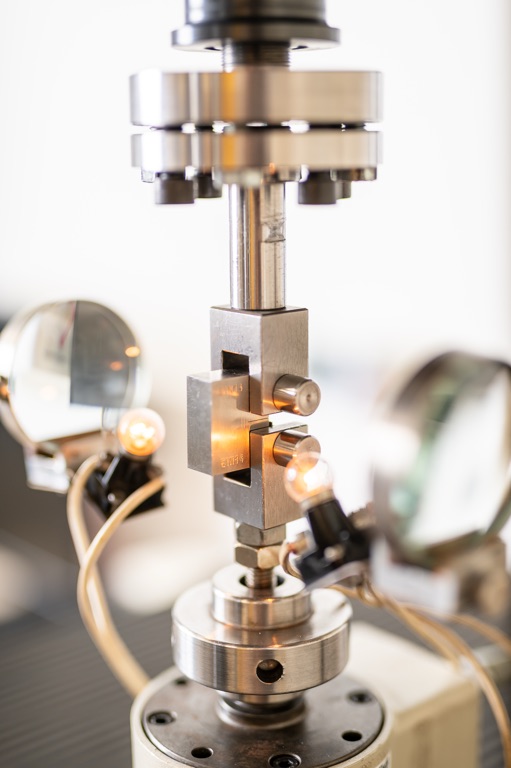
Understanding the fundamentals of fracture mechanics
Materials respond to external forces according to specific physical laws that form the heart of fracture mechanics analysis. Every material has a characteristic ability to absorb and resist loads. When these limits are exceeded, complex damage processes begin.
Fracture mechanics systematically investigates how materials behave under different force actions. It explains the relationships between microstructure, mechanical properties and the safety of components. These fundamentals enable engineers to dimension structures reliably.
Mechanical failure processes under different force actions
Material failure does not occur spontaneously but passes through several characteristic phases. Initially, a material responds elastically to acting forces and returns to its original shape. However, under sustained or increasing load, plastic deformation begins.
In this phase, the internal structures of the material change permanently. Atoms shift, crystal lattices are disrupted and microscopically small defects develop. These changes gradually weaken the material.
- Ductile failure: The material first deforms considerably before it finally fractures. Metals such as steel typically exhibit this behavior.
- Brittle failure: The material breaks suddenly without prior visible deformation. Glass or ceramics fail according to this pattern.
- Fatigue failure: Repeated load cycles lead to slow damage, even when individual stresses lie below the critical limit.
Failure analysis identifies the respective type of failure and its causes. External factors such as temperature, corrosion or the speed of force action significantly influence the damage process. Existing material defects from manufacturing also play a decisive role.
From visible damage to microscopic defects
A macroscopic fracture is the final stage of a long damage process that begins in the micrometer range. Long before a component fails completely, tiny microcracks form at weak points in the microstructure. These microscopic defects are not visible to the naked eye.
Crack formation often starts at material inhomogeneities such as inclusions or pores. Stresses also concentrate particularly strongly at surfaces with notches or damage. These areas form preferred starting points for material failure.
As loading progresses, the microcracks grow gradually. They combine to form larger cracks and penetrate more and more material. This process accelerates the greater the damage becomes.
- Nanometer level: Atomic bonds break and dislocations move through the crystal lattice.
- Micrometer level: Small voids and microcracks develop at grain boundaries or material defects.
- Millimeter level: Cracks become measurable and begin to impair structural integrity.
- Macroscopic level: Visible cracks and finally the complete fracture of the component occur.
Modern examination methods enable the observation of these processes at all levels. Scanning electron microscopes show details in the nanometer range, while non-destructive testing methods capture larger damage. Crack formation follows certain patterns that depend on the material structure and the loading conditions.
The practical significance of systematic material examinations
Fracture mechanics examinations are indispensable for the safety of modern structures. They enable the early detection of potential weak points before critical damage occurs. Without this systematic failure analysis, many risks would remain undetected.
The test methods follow established standards and norms that ensure uniform assessment. They provide quantitative characteristic values about the resistance of materials. This data forms the basis for safe design decisions.
Particularly in safety-critical areas, fracture mechanics assessment is legally required. Aircraft components, pressure vessels or bridge structures must be tested regularly. The examinations document the current condition and forecast the remaining service life.
Through preventive analyses, costly failures can be avoided. Planned maintenance replaces unplanned emergency repairs. Failure analysis also helps to understand the causes of damage that has already occurred and to prevent future problems.
The findings from fracture mechanics studies feed directly into materials development. New materials are specifically optimized for higher load-bearing capacity and damage tolerance. Manufacturers can thus design components that are lighter, more efficient and at the same time safer.
In summary, fracture mechanics creates the scientific foundation for reliable component integrity. It combines theoretical knowledge about material failure with practical test methods. Only through this comprehensive understanding can engineers develop structures that meet the highest safety requirements.
Important characteristic values of fracture mechanics assessment
Central characteristic values enable engineers to precisely determine the fracture behavior of materials. These material parameters provide important information about the safety and reliability of components. They help to detect potential weak points early and to take appropriate measures.
Fracture mechanics assessment is based on several key parameters. These include, among others, fracture toughness, stress intensity and damage tolerance. Each of these values contributes to drawing a complete picture of the material properties.
The ability of a material to resist cracks
Fracture toughness describes how well a material can counteract the propagation of cracks. The higher this value, the more resistant the material is to sudden failure. This property plays a central role in assessing component safety.
Various test methods are used to determine fracture toughness. The notched-bar impact bending test primarily captures impact toughness. This method is particularly easy to perform and delivers quick results. The notched-bar impact bending test provides comparative indications of toughness behavior, but does not replace a standard-compliant determination of fracture mechanics characteristic values of fracture toughness such as KIC, JIC or CTOD.
For more precise analyses, the J-integral method is often used. It is particularly suitable for materials that deform plastically before fracture. This method enables a precise assessment of the material parameters under various loading conditions.
In addition to these methods, further concepts exist for characterizing fracture toughness. The K-concept describes the stress distribution at the crack tip. The CTOD concept (Crack Tip Opening Displacement) measures the crack opening directly at the crack tip and provides additional insights into material behavior.
Concentration of the load at the crack tip
For linear-elastic behavior and a plane stress state, the stress intensity factor indicates how strongly stresses concentrate at the tip of a crack. This value is decisive for predicting when a crack begins to grow. At the crack tip, the stresses can reach a multiple of the external load.
Every material has a critical crack length. From this length onward, the crack grows uncontrollably and the component fails. The critical crack length depends on the geometry of the component, the loading and the material properties.
The interplay between stress intensity and crack length determines the safety of a structure. Engineers use these parameters to define inspection intervals. This ensures that cracks are detected before they reach critical dimensions.
Safety despite existing damage
Modern materials are specifically designed for damage tolerance. This means that a component still functions safely even with existing cracks. This property is particularly relevant in areas where regular monitoring is possible.
Damage tolerance does not mean that damage can be ignored. Rather, it enables planned use until the next inspection or maintenance. This approach considerably increases safety, since sudden failures are avoided.
In aerospace and plant engineering, damage tolerance is an indispensable concept. Components are developed so that they fulfill their function even with fatigue cracks. Regular non-destructive testing ensures that damage is discovered and remedied in good time.
The assessment of damage tolerance is based on extensive calculations and tests. Findings on fracture toughness and crack growth behavior are incorporated. The result is a maintenance plan that optimally combines safety and economic efficiency.
Methods of materials testing and failure analysis
The right test method determines how precisely we can predict material behavior. In materials testing, various approaches are used, each with different strengths. Some test methods destroy the specimen in order to gain deep insights.
Others examine components without damaging them. Modern failure analysis also uses digital tools for virtual tests. Together, these methods form a comprehensive system for assessing materials.
Classic laboratory tests deliver precise characteristic values
Experimental test methods in the laboratory are the foundation of materials testing. In tensile tests, a specimen is stretched in a controlled manner until it breaks. In doing so, engineers determine important data such as tensile strength and elongation at break.
The notched-bar impact bending test is one of the proven methods of failure analysis. A notched specimen is loaded abruptly with a pendulum hammer. The result shows how much energy the material can absorb under sudden loading.
Cyclic load tests simulate repeated load changes. These test methods are particularly important for components that are exposed to constant vibrations. They show when and how cracks develop and grow.
Microfractographic fracture surface analysis examines the fracture surface under the microscope. In doing so, structures become visible that allow conclusions about the failure mechanism. Was it brittle fracture or deformation fracture? This analysis provides answers.
- Static characteristic values such as fracture toughness and crack resistance
- Dynamic characteristic values for sudden loads
- Cyclic crack growth curves for fatigue analyses
Examining components without destroying them
Non-destructive testing techniques are ideal for components that are to continue being used. They detect defects without damaging the material. This saves costs and enables regular inspections.
Ultrasonic testing sends high-frequency sound waves through the material. Cracks and voids reflect these waves differently than intact material. This allows hidden defects to be located precisely.
Radiographic testing examines components with electromagnetic radiation. Areas with different densities appear in different shades of gray on the radiograph. This method is particularly suitable for thick-walled components.
Magnetic particle testing works with ferromagnetic materials. The component is magnetized and dusted with iron powder. The powder collects at cracks and makes even the finest surface cracks visible.
Eddy current testing uses electromagnetic induction. A coil generates eddy currents in the material. Cracks and defects change these currents measurably. The method works quickly and without contact.
This non-destructive testing enables monitoring during ongoing operation. Aircraft, power plants and bridges are thus regularly examined for damage. Problems are detected before they become critical.
Carrying out virtual tests on the computer
Computer-aided simulations are revolutionizing materials testing. With the finite element method (FEM), engineers create digital twins of components. These virtual models can be tested as often as desired.
In the simulation, the component is divided into tiny elements. For each element, the software calculates how it behaves under load. From millions of such calculations, an overall picture emerges.
The crack tip stress can be determined precisely. Engineers see where stresses concentrate and cracks are likely to develop. These findings feed directly into the design.
Various loading scenarios can be played through virtually. What happens in extreme cold? How does the material behave under continuous vibration? Simulations provide quick answers without elaborate physical tests.
The combination of simulation and real tests brings the best results. Computer models provide initial findings and help to plan tests in a targeted manner. Laboratory tests then validate the simulation results. This creates a reliable overall picture of material behavior.
Crack growth analysis and fatigue crack propagation
Understand how cracks grow, and you understand the behavior of entire structures. Crack growth analysis deals precisely with this fascinating question. It investigates how cracks develop under load and which factors play a role in this.
For engineers, this analysis is indispensable. It enables precise predictions about the service life of components. As a result, maintenance intervals can be optimally planned and safety risks minimized.
Phases of crack growth in detail
Cracks do not simply appear suddenly in full size. They pass through various developmental stages, each of which exhibits different properties. Understanding these phases is decisive for assessing component safety.
In the first phase, initiation, tiny microcracks form at weak points in the material. These often develop at notches, weld seams or material defects. They are often not visible to the naked eye.
The second phase is stable crack growth. Here the crack enlarges slowly and in a controlled manner. The crack propagation speed remains relatively constant and predictable in this phase.
Finally, the crack reaches a critical size. From this point on, growth accelerates dramatically. This unstable phase leads to complete failure of the component within a very short time.
Cyclic loads and their effects
Fatigue crack propagation is a particularly insidious phenomenon. It occurs when components are exposed to repeated loads. Even when each individual load lies far below the fracture limit, the sum of all load changes can lead to failure.
Imagine a paper clip that you repeatedly bend back and forth. After a few bends, it breaks, even though a single bend would be harmless. Material fatigue in technical components works exactly according to this principle.
Several factors influence how quickly cyclic loading leads to crack growth. The load amplitude plays a central role. The greater the fluctuation between minimum and maximum load, the faster the crack grows.
The loading frequency also has effects. At very high frequencies, the material cannot recover between cycles. Environmental conditions such as temperature or humidity additionally amplify the effect.
The crack length increases somewhat with each load change. This increase can be measured by special test methods. Engineers use cyclic load tests to simulate behavior under realistic conditions.
Prediction models for crack propagation
Mathematical models are the tool with which experts calculate the future of cracks. These prediction models connect material properties with loading parameters. This creates a reliable basis for safety assessments.
The Paris equation is the best known of these models and applies in the range of stable crack growth. It establishes a mathematical relationship between the crack propagation speed and the stress intensity factor. This elegant formula has proven itself millions of times in practice.
With such models, engineers can answer important questions. How long does it take until a crack reaches a dangerous size? When must the next inspection interval take place? What residual service life does an already damaged component have?
The calculation takes many parameters into account. These include the current crack length, the loading history and the material parameters. Modern software today enables very precise simulations.
These predictions are not only of theoretical interest. They have direct practical effects on maintenance plans and safety strategies. An aircraft operator can thus, for example, plan exactly when critical components must be replaced.
Ensuring component integrity through strength calculation
Industrial practice uses international codes and standards to reliably ensure component integrity. Fracture mechanics concepts form the basis for well-founded safety assessments. These systematic approaches enable a precise estimation of structural integrity throughout the entire service life.
Modern strength calculation combines theoretical findings with practical requirements. The assessment takes into account both existing defects and future loading scenarios. This produces realistic forecasts for safe operation management.
Systematically assessing structural integrity
International assessment regulations define clear philosophies for safety assessment. The “fitness for purpose” concept examines whether a component fulfills its purpose despite existing defects. This pragmatic approach avoids unnecessary repairs or replacement measures.
The “fail safe” principle guarantees system safety even when individual components fail. Redundant structures then take over the loads. The “safe life” concept, on the other hand, requires absolute reliability over the complete planned service life.
The SINTAP procedure has established itself as a unified European method. It comprises several systematic steps for defect assessment:
- Determination of K factors to describe the loading situation
- Determination of limit loads for critical loading conditions
- Consideration of the plasticity correction for ductile materials
- Application of the Failure Assessment Diagram (FAD)
- Integration of statistics and safety factors
The Failure Assessment Diagram visualizes the safety margins clearly. It represents the load in relation to the material strength by means of a two-criteria method. Engineers thus quickly recognize critical operating states.
The FKM guideline offers standardized procedures for the fracture mechanics strength verification. It harmonizes national and international requirements. This standardization considerably facilitates the exchange of information between companies and authorities.
Residual strength concepts for damaged components
The remaining load-bearing capacity of damaged components requires special calculation approaches. When inspections discover a crack, an important decision arises. The component can be reused, repaired or completely replaced.
The strength calculation for residual strength takes several influencing factors into account. External loads act on the already weakened structure. At the same time, residual stresses play an important role, having arisen from manufacturing processes.
Welded joints, for example, produce characteristic residual stress fields. These can considerably influence the residual strength. A precise analysis must quantify such internal stresses.
The distinction between primary and secondary stresses is decisive. Primary stresses result directly from external loads. Secondary stresses arise from residual stresses or thermal effects during operation.
This differentiation significantly influences the assessment of structural integrity. Secondary stresses can partly relieve themselves through plastic deformation. Primary stresses, on the other hand, remain constant and determine the basic load.
Creating service life forecasts
Fracture mechanics calculations enable reliable predictions about the remaining service life. These forecasts are based on the current damage and the expected operating loads. Companies can thus optimally plan maintenance work.
The definition of inspection intervals follows systematic criteria. Critical components receive shorter test cycles than non-critical components. This creates a risk-based maintenance concept.
Safety factors absorb uncertainties in the calculations. Material variations and unforeseen loads are thus taken into account. The service life is deliberately estimated conservatively.
This caution protects against unexpected failures. At the same time, it allows economic use of the components. The balance between safety and economic efficiency is the central focus.
Modern forecasting methods integrate statistical methods for reliability assessment. Probability statements supplement deterministic calculations. This creates a comprehensive picture of the actual component integrity.
Continuous monitoring during operation provides valuable feedback. Actual damage progressions can be compared with forecasts. This data continuously improves future service life predictions.
Practical fields of application of fracture mechanics examination
From aerospace to construction, various industries benefit from the findings of fracture mechanics analyses. Fracture mechanics assessment has established itself as an important tool in numerous applications. Engineers use these methods to ensure the safety of complex components and to optimize costs.
Particularly in safety-critical areas, such examinations are indispensable. They help to detect risks early and to avoid failures. The practical applications range from highly loaded components to durable structures.
Conclusion
The systematic assessment of materials and structures represents a central building block of modern engineering sciences. Fracture mechanics methods make it possible to analyze the behavior of materials under extreme conditions precisely and to detect potential weak points early.
The combination of different approaches creates a comprehensive basis for safe structures. Experimental test methods deliver concrete material parameters, while non-destructive techniques assess existing structures. Computer-aided simulations supplement these tools with prediction models for critical loading situations.
Material safety is based on a well-founded understanding of crack formation and failure mechanisms. These findings feed directly into the development of new materials and the optimization of existing components. Standards such as SINTAP ensure uniform assessment criteria across various industrial sectors.
The practical significance is shown in numerous applications. Aircraft components, power plant facilities, bridge structures and rail vehicles benefit from systematic examinations of their structural integrity. Component safety arises through the continuous further development of test methods and their consistent application in practice.
The future brings increasing demands on materials and structures. Fracture mechanics assessments remain indispensable in order to operate technical systems reliably and to ensure the safety of people.