How can manufacturing processes be optimised when joining techniques do not deliver the desired results?
This is a question faced by many companies in industry and the skilled trades that work with complex joining techniques.
This guide shows how specialised expert advice in the fields of welding and brazing consulting helps to improve production workflows sustainably. Professional support can reduce costs while at the same time increasing product quality.
Consulting services do not only act as a problem solver for existing challenges. They also help preventively by establishing the right processes from the outset.
From the automotive industry to the trade workshop, various sectors benefit from tailored expertise. The right advice makes the difference between average and outstanding joining results.
- Expert advice on joining technology sustainably improves production processes
- Welding and brazing each require specialised expertise
- Professional consulting reduces costs and increases manufacturing quality
- Preventive measures avoid costly errors in production
- Consulting services can be tailored to different industries
- Qualified support optimises both small and large operations
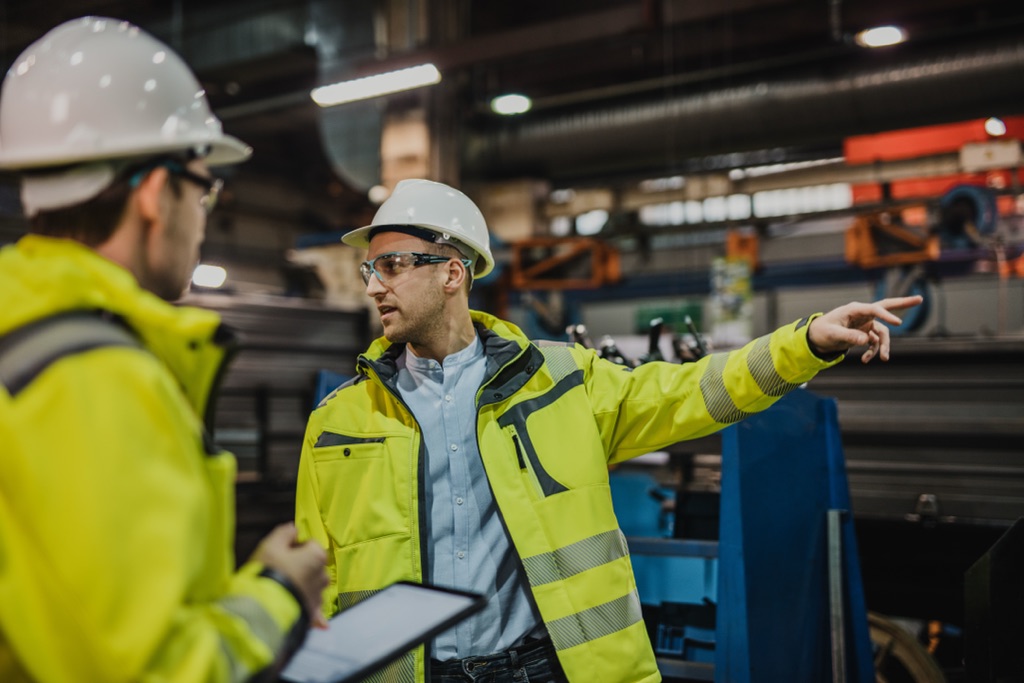
What professional consulting in joining technology covers
Sound advice on welding and brazing processes covers numerous technical and practical areas. Companies benefit from the joining technology expertise of experienced consultants who bring both theoretical knowledge and practical experience. Support ranges from the initial process selection to continuous process improvement.
Understanding the basic principles of welding consulting
Welding consulting begins with a thorough analysis of the materials to be joined. Consultants examine material properties such as strength, ductility and heat sensitivity. These properties largely determine which welding process can be used.
Various processes are available, including manual arc welding, MIG/MAG welding and TIG welding. Each process has specific advantages for particular applications. Manual arc welding, for example, is well suited to construction site use, while TIG welding enables highly precise joints.
In addition, experts consider the geometry of the workpieces and their mechanical loads. Thermal influences during welding can cause changes in the material. Competent welding consulting takes all these parameters into account in order to guarantee optimal results.
Brazing-soldering processes and expert support
Brazing-soldering is an alternative joining technique that works at lower temperatures than welding. This method protects sensitive components and is ideally suited to electronics applications. Brazing-soldering process advice helps to distinguish between the various types.
Brazing and soldering differ fundamentally in their working temperature and joint strength. Brazing creates stronger joints and is used at higher temperatures. Soldering, on the other hand, proves its worth with temperature-sensitive components such as electronic circuits.
The selection of suitable filler metals and fluxes requires expertise in chemical reactions and material combinations. Expert support through brazing-soldering process advice makes it possible to define precise process parameters. Temperature curves, holding times and cooling rates are precisely matched to the respective application.
Objectives and fields of application of the consulting
The objectives of professional joining technology consulting are varied and geared towards concrete improvements. Companies often strive for higher joint quality and lower reject rates. Shorter throughput times also significantly increase productivity.
Another important objective is compliance with industry-specific standards and certifications. Automotive standards, aerospace standards or medical engineering regulations require precisely documented processes. Joining technology expertise supports the fulfilment of these demanding requirements.
The fields of application extend across numerous industries with differing requirements. In automotive manufacturing, speed and reproducibility are paramount. The aerospace sector demands the highest quality standards and seamless documentation.
Medical technology and construction also place specific demands on joined connections. Biocompatibility plays a central role in medical technology. In construction, joints must withstand extreme weather conditions and mechanical loads.
Comprehensive welding consulting takes technical, economic and safety-relevant requirements equally into account. This holistic approach enables well-founded decisions for sustainable manufacturing processes. Companies thus obtain the basis for long-term successful production strategies.
Gains through joining technology expertise within the company
Technical support in the field of joining technology pays off through higher product quality and lower costs. Operations that integrate joining technology expertise into their workflows benefit from measurable improvements in several areas. Working with specialists enables more precise processes, fewer errors and a stronger competitive position.
Modern manufacturing environments place high demands on joined components. Professional consulting helps to meet these requirements reliably while operating economically.
Achieving quality improvement in manufacturing processes
The quality of joined connections determines the reliability of end products. Experienced consultants systematically analyse existing welding processes and identify weaknesses that can lead to problems.
Typical sources of defects include:
- Porosity due to insufficient gas shielding or contaminated surfaces
- Cracks caused by incorrect cooling rates or unsuitable material selection
- Incomplete weld penetration due to faulty process parameters
- Distortion caused by uneven heat input
Targeted adjustments to the process parameters significantly improve the results. The selection of suitable filler materials contributes to quality improvement just as much as modern testing methods.
Non-destructive testing such as ultrasonic or X-ray examinations detect defects at an early stage. This minimises rework and prevents the delivery of faulty parts.
Increasing cost-effectiveness through welding process optimisation
Optimised workflows noticeably reduce production costs. Welding process optimisation considerably reduces rejects and the associated material losses.
Economic advantages arise from several factors:
- Less rework saves working time and machine capacity
- Efficient material use reduces the consumption of expensive filler materials
- Shorter cycle times increase throughput without loss of quality
- Lower energy consumption through more precise heat control
Targeted welding process optimisation also extends the service life of equipment and tools. Precisely set processes place less strain on machines and reduce wear.
Operations can thus lower maintenance costs. At the same time, the availability of production equipment increases, which improves planning reliability.
Ensuring safety standards and compliance with norms
Joining technology processes are subject to strict regulations. Standards such as DIN EN ISO 3834 or EN 1090 define clear requirements for quality assurance and documentation.
Professional consulting ensures compliance with these standards. Consultants are familiar with industry-specific regulations and provide support in implementing the necessary measures.
Important compliance areas include:
- Proof of qualification for welding personnel in accordance with applicable guidelines
- Seamless documentation of welding parameters and test results
- Regular calibration and maintenance of welding equipment
- Traceability of materials and filler materials used
Compliance with these requirements protects against legal consequences. Correct certifications also open access to demanding markets and projects.
Safe products strengthen customer confidence in the long term. Companies that consistently comply with standards build a reputation for reliability that fosters long-term business relationships.
Welding and brazing consulting: services in detail
The range of consulting services in joining technology extends from systematic process improvement to individual problem solving. Companies benefit from a clearly structured offering that encompasses both technical optimisation and personnel development. Each service aims to achieve measurable progress in production and quality.
Process improvement for industrial applications
Welding process optimisation forms the heart of modern consulting services. Consultants systematically analyse existing manufacturing workflows and identify potential improvements in all areas. This thorough investigation often reveals untapped opportunities that lead to considerable productivity gains.
A central building block of optimisation is the selection of the right welding process. MIG/MAG welding, TIG welding or laser welding – each method brings specific advantages. The right choice depends on the material, the component geometry and the quality requirements.
Process parameters play a decisive role in the welding result. Amperage, voltage and feed speed must be precisely matched to one another. Even small adjustments can significantly improve seam quality and reduce rejects.
The selection of shielding gases and filler materials requires sound expertise. Argon, CO2 or mixed gases – each variant influences the arc and seam formation differently. Consultants recommend combinations that combine technical requirements with economic considerations.
Automated welding systems are becoming increasingly important in industrial manufacturing. Robots and mechanised fixtures considerably increase reproducibility. However, the integration of such systems requires careful planning and adaptation to existing production lines.
Training programmes and knowledge transfer
A brazing-soldering training course conveys far more than just theoretical knowledge. Practical skills develop through guided practice and repeated application. Training programmes therefore combine theory and practice in balanced proportions.
The teaching of various brazing-soldering processes is at the heart of every training course. Soldering, brazing and high-temperature brazing differ fundamentally in temperature and application. Participants learn which process is suitable for which materials and joints.
Materials science forms the foundation of successful brazed-soldered joints. Different metals react differently to heat and require specific additives. Understanding metallurgical fundamentals helps to avoid common errors from the outset.
Surface preparation is a decisive factor in joint quality. Oxide layers, contaminants and greases must be thoroughly removed before brazing-soldering. Training participants practise various cleaning methods and their correct application.
Temperature control requires a delicate touch and experience. Heating too quickly can damage components, while heating too slowly prevents good wetting. Practical exercises develop the necessary feel for optimal heat treatment.
Quality control completes the learning process. Participants learn to inspect brazed-soldered joints visually and with simple aids. This ability enables immediate error correction and continuous improvement.
Individual solutions for special requirements
Welding consulting addresses challenges that go beyond standard solutions. Some projects make exceptional demands due to unusual material combinations or extreme operating conditions. Specialised consultants develop tailor-made concepts for such cases.
Complex geometries often require creative joining techniques. Tight radii, hard-to-reach areas or intricate designs place special demands on tools and processes. Experienced specialists also find practicable solutions for difficult components.
Strict quality requirements characterise many industries such as aerospace or medical technology. Every weld seam must be documented and tested. Consultants provide support in the development of testing concepts and quality assurance systems.
The development of new welding processes can become necessary when established methods reach their limits. Experimental approaches and systematic trials lead to innovative solutions. This process requires time, patience and sound metallurgical understanding.
Welding trials provide clarity about the feasibility of planned joints. Test series under various parameters reveal optimal settings. The results feed directly into production instructions and minimise later problems.
Welding procedure specifications document all relevant specifications for manufacturing and inspection. They contain material specifications, process parameters and testing instructions. These documents ensure reproducible quality and serve as a reference for employees.
The investment in qualified consultants pays off through lower rejects and higher competitiveness. Well-trained employees work more efficiently. Modern welding processes are applied correctly. Production safety increases noticeably.
When selecting a consultant, qualifications and practical experience count. Successful reference projects provide information about competence. A comprehensive service offering ensures long-term support.
Companies that rely on welding consulting and brazing-soldering consulting create a stable basis for technological innovation. The right advice opens up paths to modern manufacturing methods. Production processes are continuously improved. Those who invest in joining technology expertise strengthen their market position sustainably and benefit from future-proof solutions.