How can defects in joints be prevented before they lead to costly quality problems?
Systematic process control during welding and brazing-soldering offers an effective solution here. This article shows which monitoring methods are used in metalworking and how they sustainably secure product quality.
Modern monitoring systems intervene during the process itself, not only at final inspection. From the automotive industry to aerospace, companies rely on continuous parameter monitoring.
The size and nature of the heat-affected zones in TIG and MIG processes require precise control of the parameters, comparable to the increased requirements for process monitoring with temperature-sensitive materials such as aluminium alloys. Both manual and automated solutions contribute to process optimisation and cost reduction.
Which technologies guarantee the highest weld seam quality, and when is the investment in automated systems worthwhile?
- Continuous process monitoring prevents defects during production and significantly reduces scrap costs
- Welding and brazing-soldering are among the most important joining processes in the metalworking industry, with high quality requirements
- Modern monitoring technologies are used in automotive manufacturing, mechanical engineering, aerospace and electronics production
- Heat-affected zones and process parameters must be precisely controlled in all welding processes
- Automated and manual systems complement each other depending on production volume and quality requirements
- Investments in monitoring systems pay off through higher product quality and process reliability
- The choice of the right monitoring system depends on specific requirements and economic considerations
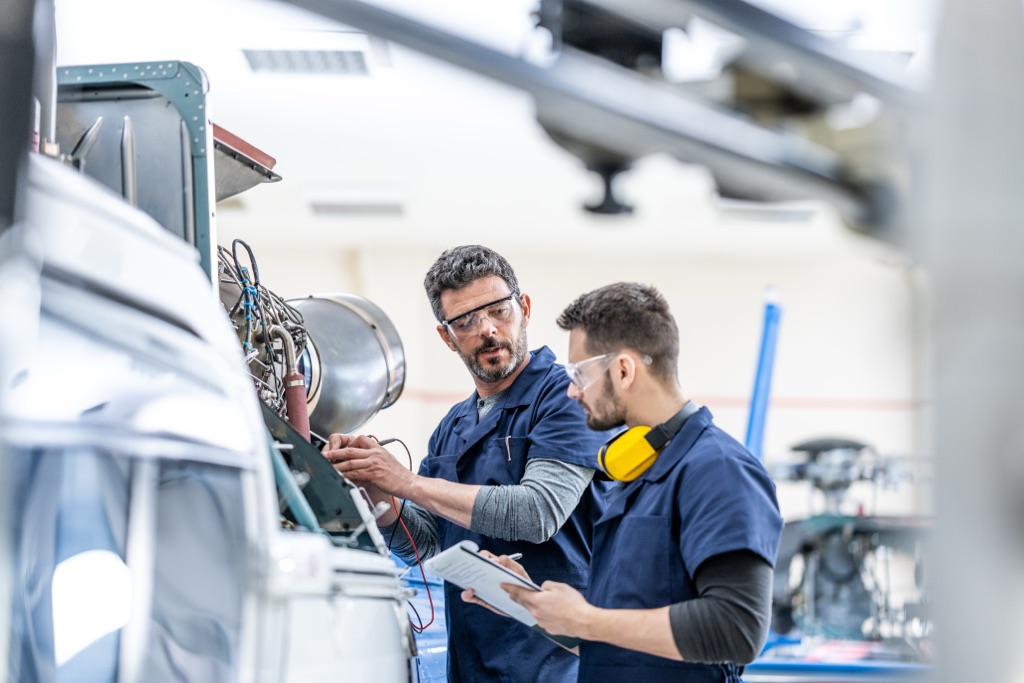
Fundamentals of monitoring in weld production and brazing-soldering technology
In weld production and brazing-soldering technology, continuous process monitoring plays a central role. Modern manufacturing operations no longer rely on spot checks or downstream inspections alone. Instead, they use intelligent systems that accompany and document every step of the manufacturing process.
Monitoring during production offers decisive advantages over final inspections alone. Defects are detected immediately and can often be corrected while the process is still running. This saves time and material and significantly reduces scrap.
Systematic capture of manufacturing parameters
Process monitoring in weld production refers to the systematic capture, evaluation and documentation of all relevant process parameters during ongoing production. This involves far more than simple measurement logging. The systems continuously analyse whether production is running within defined tolerances.
The physical quantities captured include temperature, current, voltage and welding speed. These parameters directly influence the quality of the resulting joint. In addition, quality characteristics such as seam geometry, surface condition and pore formation are monitored.
Modern monitoring systems for brazing-soldering processes work with several sensor technologies simultaneously. Thermographic cameras capture temperature distributions in real time. Force sensors measure mechanical loads during the joining process. Optical systems inspect the surface quality immediately after processing.
The collected data is not viewed in isolation but placed in context. A monitoring system detects, for example, when a reduced welding speed leads to increased heat input. This combination could negatively affect the mechanical properties of the component.
Objectives of permanent process supervision
Continuous monitoring pursues several important objectives at the same time. It not only ensures consistent product quality but also optimises the entire manufacturing sequence. The most important tasks can be clearly structured:
- Early defect detection: deviations are detected before they lead to critical defects
- Scrap avoidance: timely corrections prevent the production of faulty parts
- Process optimisation: analysis of the data enables targeted improvements to the parameters
- Increased process reliability: reproducible results through constant monitoring
- Standards conformity: meeting statutory and industry-specific quality standards
The proactive approach distinguishes modern systems from traditional methods. Instead of merely reacting to defects, they prevent them from occurring. Algorithms detect patterns in the process data and warn of critical developments.
The documentation of all process parameters creates complete traceability. In the event of later complaints, it can be reconstructed exactly under which conditions a component was manufactured. This transparency increases legal certainty and facilitates improvement measures.
Specific requirements of different joining processes
Welding and brazing-soldering differ fundamentally in their process characteristics. These differences require adapted monitoring strategies and specialised measurement methods. During welding, temperatures between 1,500 and 3,000 degrees Celsius arise. The joining partners are melted and form a metallurgical bond.
During the welding process, large heat-affected zones form around the weld seam. These areas change their mechanical properties due to the influence of temperature. Monitoring systems for welding processes must capture and document these heat-affected zones precisely. In brazing-soldering, by contrast, temperature profiles, wetting behaviour and intermetallic phase formation are the focus. The heat input largely determines the quality of the joint.
Brazing-soldering, on the other hand, works with considerably lower temperatures, typically between 180 and 900 degrees Celsius. The base materials are not melted. Instead, a filler material with a lower melting point flows between the joining partners and bonds them through adhesion and diffusion.
These differing process conditions require various monitoring parameters:
- Welding processes: arc voltage, welding current, wire feed speed, shielding gas flow
- Brazing-soldering processes: brazing-soldering temperature profile, wetting behaviour, flux distribution, capillary action
- Common parameters: surface quality, seam geometry, porosity, mechanical strength
In welding processes, acoustic sensors that analyse the characteristic sounds of the arc are frequently used. Infrared cameras monitor the temperature distribution in the heat-affected zone. These sensors are less suitable for brazing-soldering processes, where other measured quantities are more relevant.
For brazing-soldering processes, wetting tests and optical surface analyses play a greater role. The quality of the brazed-soldered joint depends strongly on how well the filler material wets the surfaces. Special camera systems assess this wetting based on reflection patterns and surface structures.
Both processes are subject to strict standard specifications and industry standards. DIN EN ISO 3834, for example, governs quality requirements for fusion welding. For brazing-soldering processes, DIN EN ISO 13585 and DIN 8505 apply, among others. Process monitoring in weld production must take these standards into account and document the required parameters without gaps.
The choice of the suitable monitoring system depends on the specific joining process, the materials and the quality requirements. A comprehensive analysis of the process requirements forms the basis for selecting appropriate sensor technologies and evaluation methods.
Technologies and methods for process monitoring
Various proven methods are available for reliable monitoring of welding and brazing-soldering processes. These technologies often work hand in hand to ensure comprehensive quality monitoring. Process monitoring in weld production uses a combination of different measurement systems, each of which captures specific process parameters.
The selection of the suitable monitoring technology depends on the respective process and the quality requirements. Modern manufacturing facilities integrate several systems to cover all relevant aspects of the process. This creates a holistic picture of process quality in real time.
Sensor-based monitoring systems for brazing-soldering processes
Monitoring systems for brazing-soldering processes are based on various sensor technologies that deliver precise measurement data. Temperature sensors form the heart of process monitoring. They ensure that the optimal temperature range for the selected solder is consistently maintained.
Thermocouples are used particularly frequently. They measure the temperature directly at the workpiece and respond quickly to changes. Pyrometers offer a non-contact alternative and capture the temperature via the infrared radiation of the heated surface.
Force sensors monitor the contact pressure throughout the entire brazing-soldering process. Even pressure ensures an optimal bond between the joining partners. Pressure that is too high or too low can impair the quality of the joint.
Time sensors monitor the dwell time in the critical temperature range. The right duration is decisive for complete wetting and a stable joint. Modern monitoring systems for brazing-soldering processes document all these parameters continuously.
These sensors are integrated directly into the brazing-soldering equipment. The captured data feeds into the process control in real time. In the event of deviations, adjustments can be made automatically before faulty joints occur.
Optical and camera-based inspection systems
Optical systems have fundamentally changed process monitoring in weld production. High-speed cameras observe the weld pool during welding and detect irregularities immediately. These systems operate at up to several thousand frames per second.
Laser line sensors capture the three-dimensional geometry of the weld seam. They project a laser beam onto the surface and analyse the reflection. This allows seam width, seam reinforcement and penetration depth to be measured precisely.
Various lighting techniques enable the detection of different types of defects. Incident-light illumination is suitable for surface defects such as pores or cracks. Transmitted-light illumination can be used with thin or transparent materials and simple geometries, but does not replace radiographic or transmission testing on metallic components.
Image processing algorithms analyse the camera images automatically. They detect patterns that indicate defects, such as incomplete wetting in brazing-soldering. The software compares the captured images with defined quality criteria.
Simple 2D inspection systems examine the surface from one perspective. They are suitable for basic quality controls and are cost-effective. Complex 3D scanners capture the workpiece from several angles and create a complete three-dimensional model.
Real-time evaluation enables an immediate response to defects. Modern camera systems can intervene directly in the machine control. Faulty production is thus stopped before larger quantities of scrap occur.
Ultrasonic and electromagnetic testing methods
Ultrasonic testing allows a look into the interior of the joint. Sound waves are sent through the material and reflected at interfaces. Flaws such as inclusions or cavities clearly change the reflection pattern.
The transit time of the sound waves provides information about the position of defects. An ultrasonic testing device emits short pulses and measures the time until the echo is received. From this information, the internal structure of the weld seam can be reconstructed.
There are various ultrasonic methods for different applications. Through-transmission testing works with a transmitter and a receiver on opposite sides. The pulse-echo method uses only one probe that both transmits and receives.
Eddy current testing is one of the electromagnetic methods. It is particularly suitable for conductive materials such as aluminium or copper. An alternating current in the test coil generates a magnetic field that induces eddy currents in the workpiece.
Surface cracks and near-surface defects influence these eddy currents. The changes are registered and evaluated by the test coil. This method works contactlessly and very quickly.
Integrating these testing methods into automated production lines increases efficiency. Robots guide the probes along the weld seams and systematically scan every joint. The captured data is stored centrally and linked with other process parameters.
Data networking creates the basis for holistic quality monitoring. All measurement systems communicate with each other and with the higher-level production control. This creates a complete picture of every single component across the entire manufacturing process.
Quality control in welding and weld seam testing
After the actual joining work, the decisive phase of quality assurance begins. Quality control in welding ensures that all joints meet the technical requirements. Various testing methods enable a comprehensive assessment of seam quality and reveal potential weak points.
Modern manufacturing operations combine several testing methods into a well-thought-out control system. This combination significantly increases the reliability of the quality statement. At the same time, it shortens the testing time through the targeted use of the respective methods.
Testing methods for welded joints
Weld seam testing is divided into two main categories: destructive and non-destructive methods. Both approaches provide important insights into the quality of the joint. The choice of method depends on the component and the testing objectives.
Destructive testing methods are used primarily for sample pieces and approval tests. They enable detailed statements about the mechanical properties. The following methods are among the standard procedures:
- Tensile tests determine the strength of the welded joint under load
- Bend tests examine the ductility and deformation behaviour of the seam
- Hardness tests reveal differences between the base material, the heat-affected zone and the weld metal
- Metallographic examinations make microstructures and internal defects visible
Non-destructive testing methods, by contrast, allow the inspection of series components without damage. These methods are indispensable in ongoing production. They reveal various types of defects with differing sensitivity.
Visual testing forms the first step of every weld seam test. Trained inspectors detect surface defects such as cracks, pores or insufficient penetration. This simple method already identifies a large proportion of defects.
Penetrant testing detects fine surface cracks that are barely visible to the naked eye. Dye or fluorescent liquids penetrate into defects and subsequently make them visible. The method is suitable for all non-porous materials.
Magnetic particle testing works exclusively with ferromagnetic materials. It detects surface and near-surface defects with high sensitivity. Magnetic leakage fields at defects attract iron particles and make the flaws visible.
Ultrasonic tests penetrate the material and reliably detect internal defects. Sound waves are reflected at interfaces, which allows conclusions to be drawn about lack of fusion, inclusions or pores. The method works quickly and delivers precise results.
X-ray and radiographic tests produce detailed images of the internal seam structure. They show porosity, inclusions and lack of fusion in their exact position and size. However, this method requires special safety precautions and is more involved than other procedures.
Automatic defect analysis and process adjustment
Artificial intelligence is fundamentally changing defect detection in weld production. Self-learning systems analyse sensor data in real time and, under certain conditions, identify deviations earlier and more reproducibly than rule-based methods. This technology reduces scrap and noticeably increases process reliability.
Machine learning enables pattern recognition in complex data sets. Algorithms learn from thousands of welding operations which parameter combinations lead to optimal results. They detect critical developments already in their formative phase.
Adaptive control systems respond automatically to detected process deviations. They adjust parameters such as welding current, voltage or wire feed within fractions of a second. This dynamic adjustment prevents defects before they occur.
The integration of various data sources creates a comprehensive process picture. Sensor data, image processing and process control merge into an intelligent monitoring system. This holistic approach characterises weld production in the age of Industry 4.0.
Modern image processing systems continuously monitor seam formation during welding. High-speed cameras capture weld pool geometry, penetration depth and seam surface. Software evaluates these images and reports deviations immediately to the control system.
Predictive maintenance functions detect wear on welding torches and contact tips early. The system plans maintenance work in a targeted manner and avoids unplanned downtime. This predictive maintenance considerably optimises plant availability.
Special features of brazed-soldered joint testing
Brazing-soldering technology quality assurance places different demands than weld seam testing. Brazed-soldered joints arise through wetting and capillary action at lower temperatures. The alloy formation between the solder and the base material largely determines the quality of the joint.
The wetting angle serves as an important assessment criterion for brazed-soldered joints. A small angle indicates good wetting and thus a firm joint. Poor wetting leads to mechanically weak spots and increased electrical resistance.
The brazing-soldering gap width directly influences the strength of the joint. Gaps that are too narrow prevent the complete penetration of the solder by capillary action. Gaps that are too wide reduce the mechanical load-bearing capacity of the joint. Optimal gap widths typically lie between 0.05 and 0.2 millimetres.
Flux residues must be completely removed after brazing-soldering. They can cause corrosion and impair electrical conductivity. Special cleaning procedures guarantee residue-free surfaces.
Brazing-soldering technology quality assurance uses specific testing methods for the particular requirements. Shear tests determine the mechanical strength of the joint under realistic load conditions. Thermal cycling tests simulate temperature changes and test long-term stability.
In the electronics industry, particularly strict requirements apply to brazed-soldered joints. They must not only be mechanically stable but also exhibit minimal electrical resistance. Microscopic examinations check the wetting on printed circuit boards and the formation of intermetallic phases.
Optical inspection systems automatically inspect solder joints on printed circuit boards. They reliably detect missing connections, solder bridges or insufficient solder quantities. These systems operate at high speed and guarantee consistent testing quality.
X-ray inspection is used for critical brazed-soldered joints that cannot be inspected from the outside. It reveals cavities, incomplete wetting or inclusions inside the joint. This method is indispensable particularly for ball grid array components.
Welding process documentation and quality management
Every welding operation leaves digital traces that are far more than mere records – they are the proof of quality and reliability. In modern manufacturing environments, the systematic capture of all process parameters determines whether a company meets customer requirements and complies with statutory specifications. Welding process documentation creates transparency about every single work step and forms the basis for continuous improvements.
A well-organised weld production quality management connects technical monitoring with intelligent data management. This is not only about meeting standards but about real added value for the entire production.
Digital documentation systems for weld production
Welding data management systems revolutionise the way operations capture and evaluate their manufacturing processes. These systems collect process parameters in real time and store them permanently for later analyses. Automatic capture eliminates manual sources of error and saves valuable working time.
Modern documentation systems capture a multitude of critical parameters. These include welding current and voltage, which directly determine the energy input. Wire feed speed and gas flow significantly influence seam quality. The exact welding time is also logged to ensure process stability.
The link with component and order information creates a continuous data flow. Every weld seam can be assigned to a specific workpiece and production order. This connection enables precise evaluations and rapid responses to deviations.
Graphical representations of process sequences make complex relationships visible at once. Welders and quality managers can see at a glance whether parameters are within tolerances. Automatic alerting in the event of setpoint deviations prevents faulty production before damage occurs.
Cloud-based solutions open up new possibilities for companies with multiple sites. Central management of welding data across various production sites creates uniform standards. Mobile devices bring documentation and work instructions directly to the workplace, where they are needed.
Traceability and logging of process data
A seamless documentation chain begins at material delivery and ends only with the delivery of the finished product. Every step in between must be logged in a traceable manner. This traceability is indispensable, particularly in safety-critical industries.
Batch tracking ensures that every material used can be uniquely identified. Welding consumables, base materials and auxiliary materials carry batch numbers that are linked with the manufactured components. In the event of quality problems, affected batches can be quickly delimited and traced back.
Components receive unique identifiers through various technologies. Component numbers remain the classic standard for many applications. QR codes enable quick scanning with mobile devices and direct access to process data. RFID tags offer non-contact identification even under harsh production conditions.
Logging encompasses considerably more than mere process parameters. Information about qualified welders documents who produced which seam. Welding consumables used, with batch details, are recorded. Tests carried out and their results feed into the documentation. Any rework or repairs are documented in detail.
In aviation, medical technology and pressure vessel construction, this comprehensive documentation is required by law. The seamless welding process documentation makes it possible to reconstruct every manufacturing step even years later. This transparency protects manufacturers and gives customers the security they expect.
Weld production quality management according to norms and standards
Normative specifications give quality assurance a clear framework. ISO 3834 defines comprehensive quality requirements for fusion welding and is regarded as the industry standard. It is divided into four parts that cover different requirement levels – from basic to very demanding quality levels.
ISO 9001 forms the foundation for general quality management systems across industry boundaries. Its principles can be excellently transferred to weld production. Process orientation and continuous improvement are at the centre of this globally recognised standard.
Industry-specific norms supplement the general requirements with special specifications:
- EN 1090 governs the manufacture of load-bearing components made of steel and aluminium
- ISO 13485 defines requirements for quality management systems for medical devices
- AD 2000 codes of practice for pressure vessels and safety-relevant equipment (based on the Pressure Equipment Directive 2014/68/EU/)
- EN 15085 concerns welding work on railway vehicles and sets the highest safety requirements
These norms place concrete requirements on various company areas. Documentation must be complete, current and available at all times. Personnel qualification requires demonstrable training and regular further education. Equipment must be suitable, maintained and calibrated. Tests must be carried out according to defined procedures by qualified personnel.
Building a standards-compliant quality management system follows systematic steps. First, all relevant processes are identified and documented. Responsibilities are clearly defined and communicated. Work instructions describe every critical process step in detail. Test plans define which controls are carried out when and how.
External audits and certifications confirm conformity with standard specifications. Certification bodies inspect the quality management system at regular intervals. Surveillance audits ensure that standards are permanently maintained. This external confirmation creates trust among customers and authorities.
Internal quality assurance processes supplement the external monitoring. Regular training keeps employees’ knowledge up to date. Calibration of test equipment guarantees reliable measurement results. Systematic defect analysis identifies improvement potential. Continuous process improvement makes production more efficient and safer.
Best practices show how successful weld production quality management works in practice. Interdisciplinary teams of welders, engineers and quality specialists work closely together. An open error culture encourages employees to raise problems rather than conceal them. Data-based decisions replace gut feeling and assumptions. This combination of systematic approach and a lived quality culture makes the difference between average and excellent manufacturing.
Sensor-based systems, optical inspection methods and non-destructive testing methods complement each other to form a powerful overall system. Digital documentation solutions create the basis for seamless traceability. Weld production quality management benefits from intelligent data evaluations that deliver valuable insights for continuous improvements.
The increasing networking of manufacturing facilities continuously expands the possibilities of quality assurance. Artificial intelligence and advanced sensor technologies open up new perspectives for precise process analyses. Investments in modern monitoring systems pay off through reduced scrap rates and increased product reliability.
Companies that use up-to-date monitoring and documentation systems secure long-term competitive advantages. A holistic quality management enables flexible responses to rising requirements. The continuous development of monitoring technologies remains a dynamic field with considerable potential for productivity gains.