How are technical failures systematically investigated?
Forensic analysis and failure investigation deals with the systematic clarification of technical failures in industrial plants. When machines fail or materials fracture, the search for the true causes begins. This scientific approach combines various disciplines such as metallurgy, microscopy (light microscopy and scanning electron microscopy/fractography), materials testing and corrosion science.
In Germany, technical failure analysis has developed into an indispensable service. Industrial companies, including those from the energy sector, mechanical engineering and the chemical industry, make regular use of this expertise. Specialised providers work with interdisciplinary teams that employ state-of-the-art analytical technologies.
Technical failure analysis pursues clear objectives: it identifies the root cause of a failure and assesses possible responsibilities. At the same time, it minimises the risk of recurrence and strengthens quality assurance in production processes. Companies gain valuable insights for optimising their maintenance strategies and improving plant availability.
The holistic approach considers the entire system and delivers well-founded conclusions. From the initial damage assessment to the detailed final report, experts accompany the entire investigation process. This evidence-based methodology helps to permanently avoid costly failures.
- Forensic failure investigations systematically clarify the causes of technical failures in industrial plants
- Interdisciplinary expert teams combine, among others, metallurgy, microscopy, materials testing and corrosion science for precise analyses
- Identifying the root cause minimises the risk of recurrence and prevents future damage
- Quality assurance in production processes is sustainably strengthened by evidence-based investigation methods
- Holistic system analyses deliver well-founded insights for optimising maintenance strategies
- Specialised service providers in Germany use state-of-the-art analytical technologies for all industrial sectors
- The complete investigation process ranges from damage assessment to detailed reporting
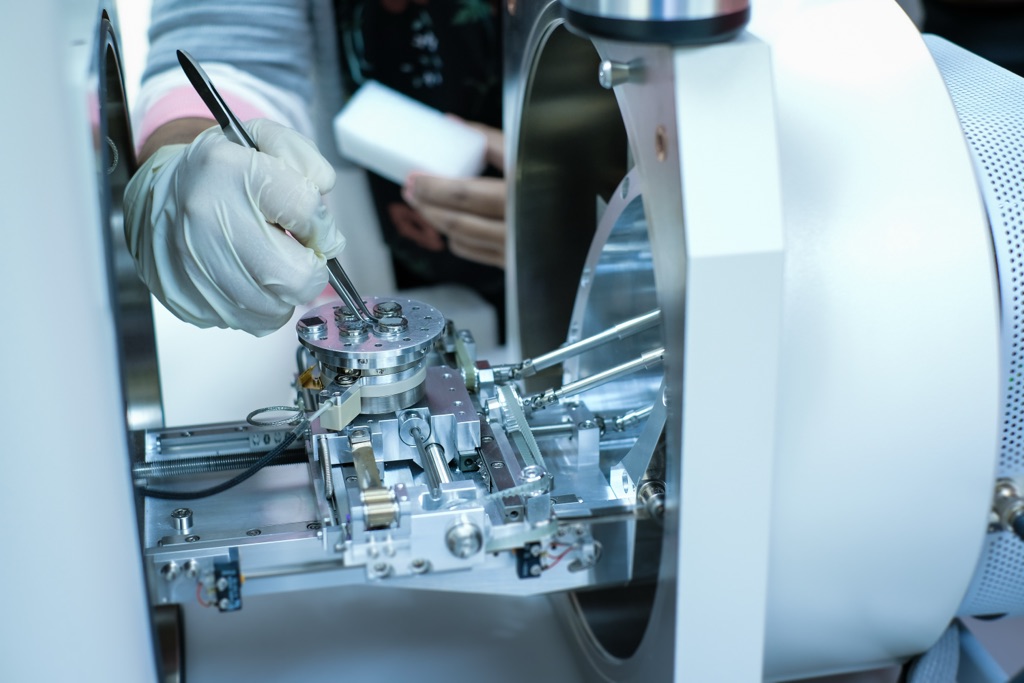
What lies behind forensic failure analysis
Behind forensic failure analysis lies a complex interplay of materials science, engineering and methodical investigative work. This discipline combines technical expertise with investigative skills in order to systematically clarify cases of damage. The aim is to determine the exact causes of failures and to provide well-founded insights for future improvements.
Experts from various fields work hand in hand. Metallurgists, materials engineers, corrosion specialists and forensic scientists contribute their specialised knowledge. This interdisciplinary collaboration enables a holistic view of complex damage cases.
Fundamentals of technical failure investigation
Technical failure investigation is based on scientifically sound methods. It analyses materials, designs and operating conditions in a systematic manner. Forensic materials testing uses a broad spectrum of procedures that deliver precise results.
The investigation methods can be divided into two main categories. Non-destructive testing methods preserve the integrity of the examined components. Destructive methods, on the other hand, provide in-depth insights into material properties.
- Ultrasonic testing for the detection of internal material defects
- X-ray examinations to reveal hidden structures and internal material defects
- Magnetic particle testing or dye penetrant testing to locate surface cracks
- Thermography to identify temperature anomalies
- Determination of the mechanical-technological material properties through tensile tests, notched bar impact tests and hardness tests
- Analysis of the microstructure through metallographic examinations
- Determination of the material composition through chemical analyses
Root cause analysis follows a structured process. First, comprehensive data collection and documentation of the damage case takes place. Every detail is recorded photographically and logged.
In the next step, experts systematically examine the physical evidence. In doing so, they apply various testing methods of forensic materials testing. The data obtained forms the basis for well-founded hypotheses.
Hypothesis formation is based on the collected findings. Experts develop possible explanatory models for the course of the damage. These hypotheses are then verified or refuted through targeted tests.
When forensic investigations become necessary
Forensic investigations are used in various situations. Unexpected plant failures that lead to production stoppages require rapid clarification. Material failure with safety risks makes a thorough accident investigation essential.
- Sudden component fractures without any recognisable external influence
- Recurring quality problems in production batches
- Disputes between contracting parties over the causes of damage
- Liability questions following operational accidents or product damage
The chain of evidence must be documented seamlessly from the very beginning. Traces and evidence can be lost through improper handling. Specialised investigation teams have the experience to work on site even under difficult conditions.
Forensic analyses serve not only to clarify damage. They can also be used preventively to minimise risks. Assessing ageing plant components helps to anticipate failures.
The validation of new materials and designs also benefits from forensic methods. Root cause analysis reveals weak points before critical situations arise. This proactive approach saves costs and increases operational safety.
In accident investigation, experts work together with various parties. Insurers, authorities and companies require reliable expert reports. The multidisciplinary analysis provides objective findings that also stand up in legal disputes.
Specialised laboratories provide the technical infrastructure for comprehensive analyses. Modern testing facilities enable precise measurements and examinations. The combination of laboratory analyses and on-site investigations ensures complete clarification.
Forensic Analysis and Failure Investigation: The path to identifying the cause
When a plant fails or a component breaks down, the methodical search for the true cause begins. The path to identifying the cause follows a proven process that combines scientific precision with practical experience. This holistic approach ensures that no important clues are overlooked and that the damage reconstruction is based on solid facts.
Every professional investigation takes the entire system into account and delivers well-founded technical conclusions. From the initial inspection to the final expert report, experts work systematically to identify the failure mechanism and to point out concrete solutions.
Systematic analysis from damage to solution
Root cause analysis starts with a thorough consultation on the investigation requirements. Together with those involved, experts define the scope of the investigation and establish control mechanisms. This planning phase creates the basis for all subsequent steps.
Subsequently, specialists coordinate site visits in order to inspect the damage location directly. During these visits, they document every relevant aspect photographically and take samples for later laboratory analysis. Sampling is carried out extremely carefully in order to preserve the integrity of the evidence.
In specialised laboratories, experts examine the collected samples using various procedures. Depending on the question to be answered, non-destructive methods are used:
- Ultrasonic testing for the detection of internal material defects
- X-ray examinations to reveal hidden structures and internal material defects
- Magnetic particle testing or dye penetrant testing to locate surface cracks
In many cases, destructive methods supplement the range of investigations. Metallographic sections, fractographic examinations of fracture surfaces, hardness measurements, tensile tests and chemical analyses provide detailed information about material properties and possible deviations from specifications.
Root cause analysis combines all the data obtained with operating histories, maintenance records and design documents. Experts from various disciplines work together to determine the failure mechanism. In doing so, they check whether, for example, fatigue, corrosion, overload, wear, ageing or a combination of different factors is present.
Reconstruction and practical solution paths
Damage reconstruction uses all available information to trace the sequence of the damage event. Fracture surfaces provide characteristic indications that allow conclusions to be drawn about the type of load, the stress level and the failure mechanism. Experts analyse these features in order to draw conclusions about how the damage developed.
In the event of material failure, specialists compare the actual material properties with the specifications. This comparison shows whether the material met the requirements or whether deviations already existed during manufacture. Finite element analyses additionally help to simulate stress distributions and to identify critical areas.
The reconstruction also takes operating conditions into account, such as temperature, pressure, chemical environment and load cycles. In practice, experts develop various hypotheses and systematically verify them through further investigations. This evidence-based approach excludes assumptions that are not supported by facts.
The holistic view of the entire system is decisive for success. Often the causes lie in interactions between different components or in systemic problems. Multidisciplinary root cause analyses bring together specialists from various disciplines in order to uncover these complex interrelationships.
In the end, there is a well-founded expert report that describes the failure mechanism and identifies the root cause. It contains concrete recommendations for corrective measures, which can range from design changes and material substitution to optimised maintenance strategies. In legal disputes, the experts are available with expert reports and support the determination of causes.
Immediate on-site response: rapid help in emergencies
When a plant fails, every minute counts – rapid help on site can save thousands of euros. Technical failures and production disruptions often occur unexpectedly and require immediate action. The speed of the response is a decisive factor in how large the financial losses become and how quickly normal operation can be restored.
A production incident causes not only direct costs due to the production downtime. There are also possible contractual penalties, reputational damage and long-term customer relationships that are jeopardised. This is why the rapid availability of forensic experts is a decisive competitive factor for modern industrial companies.
Round-the-clock availability for critical situations
Technical problems do not keep to office hours. A 24/7 service ensures that qualified specialists are reachable at any time – including at night, on weekends and on public holidays. This continuous availability is particularly indispensable in safety-critical industries, where any delay can have serious consequences.
The immediate on-site response begins with the mobilisation of experienced specialists within the shortest possible time. The experts travel to the damage location with mobile testing equipment and documentation equipment. There they carry out initial assessments, secure critical evidence and recommend immediate measures.
A global network makes it possible to bring in additional specialists from various disciplines when needed. This collaboration ensures that the right expertise is available even in complex damage cases. Coordination takes place seamlessly in order to guarantee consistency and safety throughout the entire investigation process.
Minimising production downtime through rapid response
The faster the cause of an emergency is identified, the more targeted the repair measures that can be initiated. On-site assignments make it possible to carry out important investigations while the plant is still shut down, which would no longer be possible later. Operating states are documented, volatile evidence is secured and temporary measuring devices are installed.
Rapid intervention also prevents important traces from being destroyed by uncoordinated clean-up work. Forensic experts coordinate the securing of the damage location and ensure that all relevant information is preserved. This is particularly important when legal disputes are to be expected – a seamless chain of evidence must be guaranteed from the very beginning.
The economic benefits are considerable: in the process industry, a plant shutdown can cost tens of thousands of euros per hour. A rapid forensic analysis often makes it possible for parts of the plant to continue operating. Repairs can begin in parallel with the further investigation, which significantly reduces the downtime.
Already on site, the specialists assess whether components need to be repaired or replaced. They check whether similar components are also at risk and develop interim solutions. This rapid assessment helps to get production up and running again as quickly as possible and to prevent further damage.
Fields of application and modern investigation methods
A wide variety of fields of application benefit from the findings of forensic failure analyses. Technical failure analysis is used in almost all industrial sectors in which material failure can have serious consequences. The spectrum of examined objects ranges from complex industrial plants to medical implants.
Areas of use in industry and production
In the energy sector, forensic materials testing plays a central role. Offshore and onshore production facilities are among the most frequently examined objects. FPSO systems, which produce, store and offload oil on the high seas, are subject to extreme stresses from salt water, pressure and mechanical loading.
Wellbore equipment such as drill strings, valves and pumps must function under the harshest conditions. A failure can lead to production losses or environmental disasters. Pipelines for the transport of oil, gas and chemical products are regularly examined for corrosion, cracks and material fatigue.
Refineries and petrochemical plants place particular demands on materials testing. Processing plants such as distillation columns, cracking plants and hydrotreaters operate at extreme temperatures and pressures. Boilers, heat exchangers and reformers are critical components whose failure can have catastrophic consequences.
- Polymerisation plants for plastics manufacturing
- Ethylene crackers for feedstock production
- LNG plants for liquefied natural gas
- Fertiliser plants with corrosive media
- Acetic acid plants under special chemical loads
Power plant technology requires the highest safety standards. Steam turbines, gas turbines and nuclear power plants are regularly inspected. Rotating machines such as pumps, compressors and their sealing systems are frequent subjects of analysis.
In the construction sector, building collapses, bridge failures and problems with concrete structures are investigated. Building services such as heating, ventilation and air conditioning systems can also be the subject of forensic investigations. Lifting and safety equipment such as cranes and ropes require particular attention, as human lives depend on them.
Maritime applications include hull damage, engine failures and container damage. Cargo contamination and tank ruptures are analysed, as are crane failures on ships. In aviation, forensic methods are used in cases of engine failures, airframe failures and glider accidents.
Even in medical technology, forensic materials testing finds application. Artificial joints, surgical instruments and implants are examined for material failure. Quality assurance in this field saves lives and prevents patient suffering.
Modern testing methods of forensic analysis
Non-destructive testing methods enable the examination of components without damage. These methods are particularly valuable when the component is to continue to be used after testing. They provide important information about internal and external material conditions.
Ultrasonic testing can detect internal defects such as cracks, voids and inclusions. Sound waves penetrate the material and are reflected at flaws. X-ray and computed tomography create two- and three-dimensional images of structures and reveal hidden (volume) defects.
Magnetic particle testing and dye penetrant testing make surface cracks visible. In magnetic particle testing, ferromagnetic components are magnetised. Cracks interrupt the magnetic flux and are made visible by iron particles. In this way, near-surface cracks that are not open to the surface can also be detected. Dye penetrant testing, on the other hand, uses low-viscosity penetrants that penetrate into the flaws open to the surface through capillary action. Excess penetrant is then removed. By applying a developer, surface-open cracks, pores and lack-of-fusion defects are made visible.
Eddy current testing detects material changes and cracks in electrically conductive materials. A test coil generates eddy currents in the material. Defects change these currents measurably.
- Metallographic examinations show the microstructure as well as crack paths and provide indications of heat treatment defects
- Mechanical tests such as tensile tests, notched bar impact tests and hardness measurements characterise the strength values
- Chemical analyses by means of spectroscopy confirm the exact material composition
- Scanning electron microscopy enables high-resolution images of fracture surfaces (fractography) and allows further conclusions about failure mechanisms such as fatigue or overload
Modern forensic data analysis supplements the physical examinations. Process data, maintenance records and operating histories are evaluated systematically. Patterns can point to systematic problems before major damage occurs.
Digital forensics is used when control systems or possible data manipulation have to be investigated. eDiscovery procedures secure electronic evidence. This combination of classic materials analysis and digital forensics enables comprehensive investigations.
Documentation and preparation of expert reports
Comprehensive documentation makes every step of the technical failure analysis traceable. Photographic records document the initial condition before any change. Detailed logs systematically record all tests carried out.
Measurement results, analysis data and microscopic images are compiled in a structured manner. Each sample is given a unique identification. The seamless chain of evidence is particularly indispensable in legal disputes.
The final expert report follows a clear structure for maximum comprehensibility. The initial situation and the question to be answered are described precisely. A detailed description of the examined objects follows, with complete technical specifications.
The investigation methods applied are documented with references to standards. The findings are presented in detail and visualised with images, diagrams and tables. The results are interpreted on the basis of scientific knowledge and practical experience.
Conclusions on the cause of failure are derived and justified logically. Recommendations for corrective measures and prevention help to avoid future damage. These action-oriented notes are particularly valuable for operators.
Quality assurance plays a central role in the preparation of expert reports. All tests must be carried out in accordance with recognised norms and standards. The calibration of the testing equipment is verified by certificates.
The competence of the testers must be demonstrated by appropriate qualifications. Many forensic laboratories work with accredited testing procedures in accordance with DIN EN ISO/IEC 17025. Accreditation in accordance with DIN EN ISO/IEC 17025 is not a mandatory prerequisite for failure analyses, but it does represent the internationally recognised benchmark for methodical competence and traceability. It underlines the reliability and international recognition of the results.
In legal disputes, the expert report must meet the highest requirements. Objectivity, traceability and a scientific basis are indispensable. The documentation must still be comprehensible and verifiable even years later.
Modern forensic materials testing combines highly developed testing technology with sound material knowledge. The systematic documentation safeguards the quality and usability of the results. This holistic approach serves quality assurance and helps to avoid future damage.
The use of modern testing methods and scientifically sound methods enables a reliable identification of error sources. Rapid on-site assignments and 24/7 services minimise production downtime and secure important evidence.
Forensic failure analysis creates long-term added value through optimised maintenance strategies and improved plant availability. Targeted investments in critical areas sustainably increase operational safety.
Companies that use forensic investigations for continuous improvement develop greater resilience to technical failures. A well-managed incident enables organisations to seize riskier opportunities and to recognise future threats more quickly.
The comprehensive documentation and preparation of expert reports offers legal certainty in liability questions. In the complex industrial landscape, failure investigation is an indispensable tool for sustainable quality assurance and operational safety.