How can manufacturing companies compete globally while increasing their efficiency at the same time?
The answer lies in systematic manufacturing process analysis and the continuous improvement of operational workflows. This article shows in practical terms how companies can make their production processes transparent and optimise them in a targeted way through data-driven methods.
Many manufacturing companies already collect large volumes of data today, yet do not use it effectively to improve their processes. Instead, they often merely react to current problems without identifying the underlying causes.
Modern production environments offer entirely new possibilities by connecting machines, systems and real-time data. This transparency helps to identify bottlenecks, reduce waste and measurably increase product quality.
The journey to competitiveness begins with the first step – and this guide accompanies companies along the way to more efficient manufacturing workflows.
- Optimised manufacturing processes are crucial for competitiveness in modern industry
- Systematic process analysis reveals bottlenecks and waste in production workflows
- Real-time data and defined key figures enable well-founded decisions in manufacturing
- Digitalisation creates transparency across all production processes
- Continuous improvement is not a one-off measure but a permanent process
- Data-driven approaches measurably improve product quality and delivery reliability
Understanding the fundamentals of manufacturing process analysis
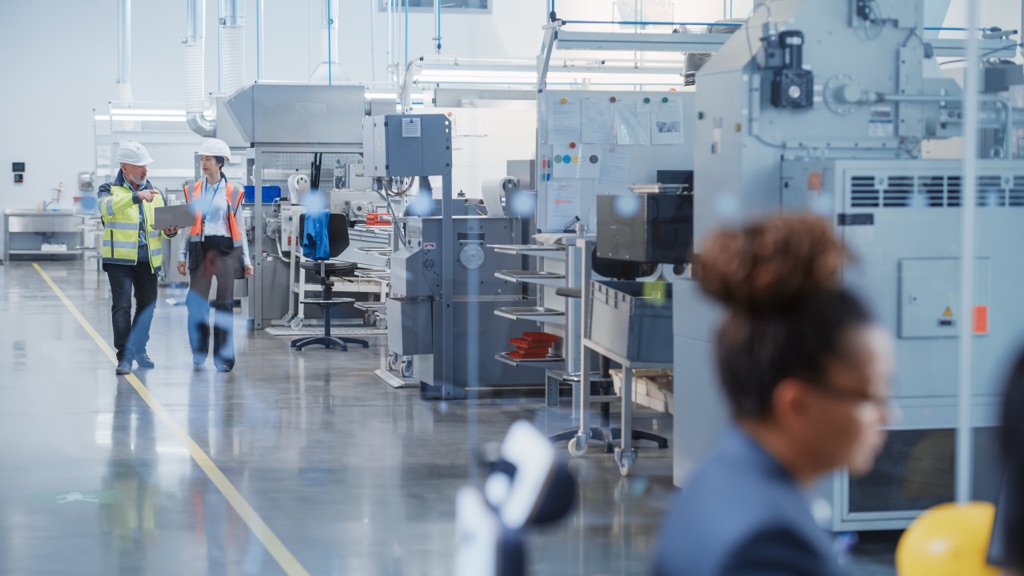
Modern manufacturing companies face the challenge of constantly questioning and improving their processes. Manufacturing process analysis provides exactly the tools needed for this. It enables companies to make their production transparent and to uncover hidden weak points.
Anyone who truly wants to understand their production workflows needs a solid foundation. This begins with knowing how analyses work and what added value they provide. Only then can targeted improvements be implemented that deliver measurable results.
How systematic process analysis works
Manufacturing process analysis begins with comprehensive data collection from all production steps. Modern sensors continuously monitor machine conditions and provide valuable information. Networked systems capture cycle times, quality values and resource consumption in real time.
This collected data is then structured and evaluated. The goal is a complete picture of the entire manufacturing operation. Digital tools help to recognise patterns and understand relationships.
Three central steps characterise the analysis process:
- Collection of relevant production data through sensors and digital systems
- Structuring and preparation of the information for evaluation
- Assessment of the results to identify improvement potential
Concrete benefits for manufacturing companies
Transparent processes bring measurable improvements in all areas. Bottlenecks are identified more quickly and can be resolved promptly. Production planning becomes more precise because it is based on real data rather than estimates.
Reject rates drop significantly when deviations are detected early. Overall efficiency increases because waste is systematically minimised. Companies can respond more flexibly to market changes and strengthen their competitive position sustainably.
The most important benefits at a glance:
- Reduction of production costs through less waste
- Increase in quality standards thanks to early defect detection
- Improvement of delivery reliability through optimised planning
- Enhanced adaptability to customer requirements
External expertise through materials specialists
Materials engineering consulting complements data-driven analysis with valuable specialist knowledge. External specialists bring a deep understanding of materials that internal teams often lack. They recognise material-specific problems that may be overlooked in pure data analysis.
These experts have scientific insights and practical experience from various industries. Their outside perspective helps to break up entrenched ways of thinking. They can propose unconventional solutions that were not considered internally.
Materials engineering consulting is particularly helpful with:
- Analysis of complex material behaviour in manufacturing processes
- Identification of optimisation potential in material selection
- Assessment of process parameters from a materials science perspective
- Development of tailor-made improvement strategies
Applying systematic methods for process analysis
Manufacturing companies that want to optimise their workflows first need a structured analysis method. Without a systematic approach, weak points often remain undetected. Modern manufacturing companies therefore rely on proven tools and data-supported procedures.
These methods create transparency and show exactly where improvement potential lies. The combination of automated data collection and specialist expertise forms the basis for sustainable optimisation.
Successfully implementing the analysis & optimisation of manufacturing processes
Successful companies know: the analysis & optimisation of manufacturing processes requires structured action. After the thorough examination of your production workflows, the exciting phase of practical improvement begins. Now you turn the insights you have gained into measurable success.
Optimisation enables manufacturing companies to significantly reduce waste and serve customers better. At the same time, you lower costs and increase the quality of your products. This dual effect makes optimisation projects particularly valuable for your company.
Developing and carrying out targeted improvements
As soon as you have identified weak points, concrete improvement measures must follow. This can include the reorganisation of workflows or the adjustment of important machine parameters. Improving the material supply also often plays a central role.
Introduce improvements step by step so that their effect remains measurable. Changes that are too rapid make it difficult to assess individual measures. Actively involve your teams in the improvement process – they often provide the best insights into practical solutions.
A structured approach helps you with systematic implementation. The following five steps have proven themselves in practice:
- Take measures to track and analyse production data
- Identify opportunities for optimisation and prioritise them
- Automate first, then expand – not the other way around
- Use modern technology in a targeted way to improve workflows
- Continuously measure and document progress over time
Increasing production efficiency with proven methods
Proven strategies help you to increase production efficiency. Reducing setup times is one of the most effective levers in many companies. Every minute saved during changeover means more productive time on your machines.
Avoid unnecessary waiting times between individual production steps. An optimised material flow ensures that machines do not have to stand idle. Improving the first-pass yield reduces rework and saves valuable resources.
Lean principles such as the elimination of waste have proven themselves many times. The standardisation of workflows creates transparency and makes it easier to train new employees. Always focus on quality – high-quality products on the first pass save more than rework.
The benefits of successful optimisation become apparent in several areas:
- Improved product quality through real-time monitoring
- Cost reduction by minimising rejects and optimising resource use
- Increased flexibility through faster responsiveness to customer requirements
- Efficiency gains through automation of repetitive tasks
Step-by-step implementation ensures sustainable success
Process optimisation in manufacturing is not a sprint but a marathon. At the start, a thorough inventory should be taken in order to understand the current level of maturity. Only in this way will you recognise where you stand and which goals are realistic.
Set clear priorities: which improvements bring the greatest benefit for your company? Not every optimisation is equally important or urgent. First concentrate on areas with the highest improvement potential.
Pilot projects in selected areas allow you to gather valuable experience. You can refine the approach before rolling it out to the entire operation. This approach minimises risks and increases acceptance among your employees.
Regular reviews ensure that the improvements have a lasting effect. Measure the results and compare them with your original goals. If necessary, you can make adjustments in order to achieve the desired effects.
Carefully document every step of your process optimisation in manufacturing. These records serve as a basis for future projects and help to train new team members. They also create the basis for a continuous improvement process that strengthens your company in the long term.
Using the digitalisation of manufacturing processes profitably
The digitalisation of manufacturing processes enables companies to design production workflows more intelligently and to achieve sustainable competitive advantages. Modern digital technologies create transparency in manufacturing and provide valuable insights into every process step. As a result, manufacturing companies can respond more quickly to changes and continuously increase their efficiency.
The path to digital manufacturing may seem complex at first. However, with the right tools and a well-thought-out strategy, this transformation can be shaped step by step and successfully. The investment in digital solutions pays off through measurable improvements in quality, speed and cost efficiency.
Modern technologies for intelligent manufacturing control
A Manufacturing Execution System (MES) forms the digital backbone of modern production environments. This platform connects machines and people with one another and tracks production data throughout the entire manufacturing process. Order information, machine data and quality key figures are brought together in a central system.
The Internet of Things (IoT) considerably extends these possibilities. Small networked sensors continuously collect operating data from machines, monitor environmental conditions and track material flows in real time. This information enables proactive manufacturing control that responds to deviations before larger problems arise.
Artificial intelligence (AI) takes data usage to a new level. AI systems can recognise complex patterns in large volumes of data that would often escape human analysts. They sort information, reveal trends and identify likely causes of failures or quality fluctuations.
Predictive maintenance is particularly valuable. AI can predict when a machine is likely to fail, so that maintenance work can be carried out preventively. This avoids unplanned downtime and considerably reduces repair costs.
Introducing automation to increase efficiency
Automation does not mean replacing people, but freeing them from repetitive and error-prone tasks. The automation of manual, repetitive activities leads to considerable efficiency gains throughout production. As a result, employees can concentrate on value-adding activities that require creativity and sound judgement.
Automatic data collection eliminates manual input errors and ensures reliable information. Sensors capture process parameters directly at the source and transmit them in real time to higher-level systems. This creates a reliable data basis for all further analyses and decisions.
Automated quality inspections through image processing and computer vision detect defects faster and more reliably than manual checks. These systems work around the clock with consistent precision. They detect even the smallest deviations that could easily escape the human eye.
Robots increasingly take over monotonous or dangerous activities in production. They work in environments with extreme temperatures, handle heavy loads or carry out precise movements with high repeat accuracy. People remain responsible for demanding tasks that require problem-solving competence and flexibility.
Integrating digital tools into existing production systems
The successful digitalisation of manufacturing processes requires careful integration of new technologies into existing infrastructures. New systems must fit seamlessly into existing production environments without interrupting ongoing operations. A well-thought-out integration strategy minimises risks and maximises the benefit of the investment.
Open interfaces and APIs (Application Programming Interfaces) play a central role here. They enable the connection of different systems and the smooth exchange of data between different platforms. Industry 4.0 technologies such as IoT, computer vision and edge computing offer great potential when they are networked correctly.
A step-by-step introduction of digital tools has proven itself in practice. Pilot projects in individual production areas make it possible to gather experience and adjust processes before the solution is rolled out company-wide. This approach reduces interruptions and enables teams to gradually get used to new ways of working.
Training employees is a decisive success factor. Only when staff understand how digital tools work and what benefit they bring will these systems be used effectively. Regular training sessions and practical introductions create acceptance and enable teams to exploit the full potential of the new technologies.
The implementation of an MES system ensures that production data is available in a centralised and networked way. All relevant information is available to the right people at the right time. This transparency forms the basis for data-supported decisions and continuous improvements in manufacturing.
Establishing a continuous improvement process and quality control
Quality grows when companies never stop questioning their processes. A one-off optimisation is not enough to remain competitive in the long term. Instead, a systematic approach is needed that makes improvement a daily routine.
The continuous improvement process forms the foundation for sustainable success in manufacturing. It combines analysis, adjustment and control into a closed loop. This creates a corporate culture that understands standstill as the greatest risk.
Building a successful cycle of further development
The continuous improvement process is based on a simple conviction: many small steps lead to great success. Instead of relying on radical upheavals, companies work continuously on detailed improvements. Over time, these add up to considerable efficiency gains.
The PDCA cycle structures this approach into four clear phases. In the planning phase (Plan), teams identify improvement potential and develop concrete proposed solutions. The implementation phase (Do) first tests these ideas on a limited scale in order to minimise risks.
In the checking phase (Check), employees review the results on the basis of measurable key figures. Was the change successful? Did it bring about the desired effects? This critical assessment decides the next step.
The action phase (Act) closes the loop. Successful improvements are standardised and rolled out throughout the operation. Less successful approaches are adjusted or discarded – and the cycle begins again.
Decisive for success is the involvement of all employees. They know the daily challenges best and often have the most practical solution ideas. When production employees can actively propose improvements, not only efficiency but also motivation increases.
An open error culture forms the backbone of the continuous improvement process. Errors are regarded as valuable learning opportunities, not as a reason for assigning blame. This attitude encourages teams to take new paths and to try out innovative solutions.
Objective assessment through peer review
Peer review brings fresh perspectives into process assessment. Colleagues from other departments or external experts analyse the workflows objectively. This outside view uncovers optimisation potential that is often overlooked in day-to-day business.
Operational blindness is a real danger in every manufacturing company. What has worked for years is rarely questioned. A peer review breaks through this routine and puts familiar workflows to the test.
Teams from different areas can learn from one another. Quality assurance can give manufacturing valuable hints, while production offers logistics practical insights. This exchange of knowledge across departmental boundaries strengthens the entire company.
External audits by independent experts usefully complement internal peer review. They bring industry experience and best practices from other companies. These additional impulses accelerate development and prevent companies from remaining stuck in their own bubble.
Transparency is a further advantage of the peer review approach. When processes are regularly reviewed, a culture of openness emerges. Weak points are not hidden but understood as a common challenge.
Lasting quality through systematic control
Quality is not a goal that is achieved once and then ticked off. It requires continuous attention and regular adjustments. Every shift, every week offers new opportunities to make production a little better.
Regular measurements of quality key figures show whether improvements actually have a lasting effect. Reject rates, cycle times and error rates should be systematically recorded and evaluated. This data forms the basis for well-founded decisions.
A Manufacturing Execution System (MES) plays a central role here. It provides comprehensive real-time data on all production workflows. This information makes it possible to recognise trends early and to counteract them before problems escalate.
The combination of a continuous improvement process, data-supported analysis and systematic quality control makes quality a firm part of the corporate culture. It is no longer seen as an additional task but as a self-evident part of every activity.
In the long term, this approach leads to measurable benefits. Customer satisfaction increases, complaints decline and the market position becomes stronger. Companies that consistently live quality build a sustainable competitive advantage for themselves.
The most important success factors for long-term quality improvement can be summarised as follows:
- Continuous optimisation instead of one-off adjustments
- Involvement of all employees in improvement processes
- Regular measurement of relevant quality key figures
- Use of digital systems for real-time monitoring
- Open error culture as a basis for innovation
Success in the analysis & optimisation of manufacturing processes depends on several factors. Qualified employees, clear objectives and the targeted use of digital tools create the basis. Anyone who combines these elements can increase production efficiency and improve quality at the same time.
Particularly important is the insight: optimisation never ends. The continuous improvement process secures long-term success and keeps companies competitive. Every improvement brings new insights and opens up further potential.
Manufacturing companies that invest in modern analysis methods today position themselves strongly for the future. They respond more flexibly to market changes, reduce production costs and increase their delivery capability. The combination of systematic analysis, digital technologies and a strong improvement culture makes the decisive difference in global competition.