How can you ensure that brazed joints in technical applications function reliably over the long term?
This question arises every day in industrial manufacturing, because faulty joints can lead to failures and safety risks.
Systematic procedure qualification covers technical, personnel and documentary requirements. Standardised test procedures enable reproducible and controlled processes and noticeably reduce rejects.
From the content of the standard through practical fields of application to specific test sequences – the following sections provide a comprehensive overview. Particularly interesting: how higher product quality and improved occupational safety go hand in hand.
- The European standard creates uniform standards for brazing processes in industrial manufacturing
- Quality assurance through standardised test procedures considerably increases the reliability of brazed joints
- Systematic procedure qualification covers technical, personnel and documentary requirements
- Companies benefit measurably from fewer rejects and higher product quality
- The standard is equally relevant for manufacturers and testing institutions
- Reproducible brazing processes sustainably improve occupational safety and product liability
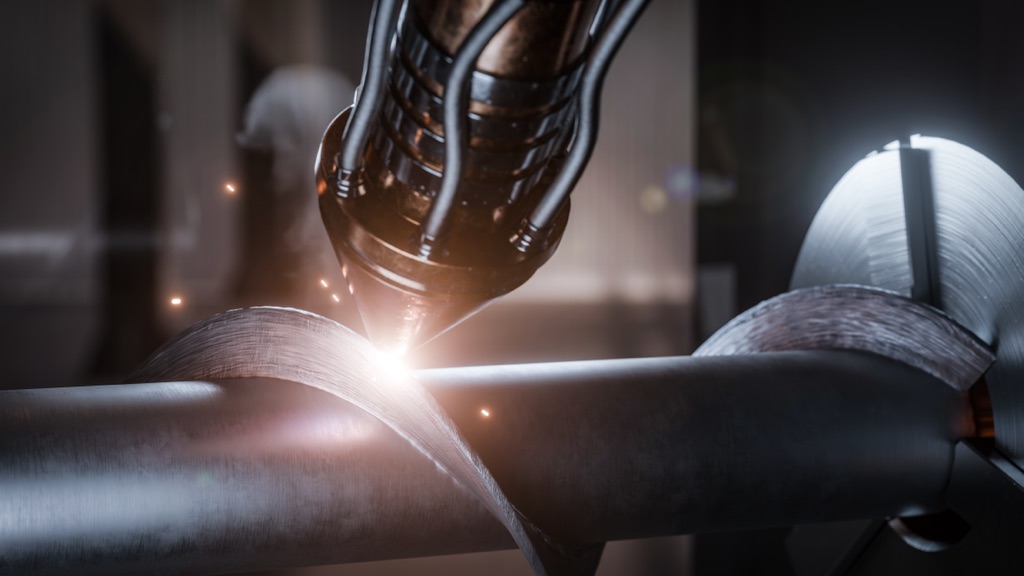
What does the DIN EN 13134 standard govern?
The standard creates uniform requirements for the qualification of brazing procedures in industrial manufacturing. It defines specific requirements for procedure qualification and stipulates how companies must systematically test and approve their brazing processes. This ensures that brazed joints meet the required quality characteristics.
DIN EN 13134 applies to brazing processes. It covers manual and automated brazing procedures equally. This makes it a flexible tool for different production environments.
Fundamentals of the European brazing standard
As a harmonised standard, DIN EN 13134 applies in all EU member states. It creates a common basis for the qualification of brazing procedures across national borders. Companies benefit from this harmonisation through mutual recognition of their qualifications.
The standard precisely defines technical parameters. These include temperature control, filler metals and fluxes. Process parameters such as brazing time and cooling behaviour are also defined.
The test criteria for brazed joints are particularly important. The standard assesses strength, leak-tightness and metallurgical properties. A risk-based approach ensures that safety-critical applications are subject to stricter tests than less critical joints.
Distinction from other brazing standards
DIN EN 13134 focuses exclusively on the procedure qualification of brazing processes. This sets it apart from other standards covering related topics.
DIN EN ISO 13585 specifically governs the qualification testing of brazers and brazing operators.
The advantage of DIN EN 13134 lies in its process orientation. It enables companies to qualify their brazing processes independently of the personnel carrying them out. This creates legal certainty and facilitates quality assurance in series production.
Fields of application and scope of the standard
Different brazing procedures and a wide range of industries benefit from the uniform quality standards of DIN EN 13134. The standard covers brazing processes and is applied wherever reliable joints are required. Particularly in safety-relevant areas, it forms the basis for quality-assured manufacturing.
High-temperature joints in technical applications
Brazing is carried out at temperatures above 450 °C and produces joints capable of bearing high mechanical loads. The qualification of the brazing procedure according to DIN EN 13134 is used above all where extreme stresses occur. This joining technique offers an alternative to welding when dissimilar materials have to be joined.
Typical fields of application for brazed joints include:
- Heat exchangers and piping systems in plant engineering
- Components for aerospace applications
- High-temperature-resistant components in the petrochemical industry
- Turbine blades and cooling circuits in power plants
Industries with mandatory qualification
In certain sectors, the brazing procedure qualification according to DIN EN 13134 is mandatory or strongly recommended. The Brazing Procedure Specification (BPS) requires documented qualification here. Conformity with the standard is often a prerequisite for approval.
The following industrial sectors apply the standard on a mandatory basis:
- Energy generation: power plants, turbine installations, high-pressure systems
- Medical technology: surgical instruments, implants, diagnostic devices
- Automotive industry: cooling systems, sensor technology, air conditioning systems
- Refrigeration and air-conditioning technology: refrigerant circuits, evaporators
- Rail vehicle construction: braking systems, air-conditioning components
Brazing procedure qualification according to DIN EN 13134: requirements and prerequisites
Companies wishing to carry out a brazing procedure qualification according to DIN EN 13134 must observe several fundamental requirements. The standard defines clear specifications for the technical equipment, the qualification of the personnel and the required documentation. Only if all three areas are carefully prepared can the test deliver meaningful and usable results.
Technical prerequisites for the test
The technical infrastructure forms the foundation of every successful procedure qualification. Companies need suitable brazing equipment that corresponds to the later production process.
These include:
- Brazing furnaces, torches or induction units depending on the application
- Calibrated measuring instruments for precise temperature recording and control
- Tools for proper specimen preparation
- Test equipment for mechanical and non-destructive testing
All equipment used must be calibrated and documented. The selection of materials – i.e. base materials, filler metals and fluxes – must correspond exactly to the later production conditions. Only under realistic conditions can reliable conclusions be drawn about the quality of the brazing procedure.
Personnel qualifications
Qualified personnel are indispensable for a brazing process qualification compliant with the standard. The brazing specialists carrying out the work should have completed training in accordance with DIN EN ISO 13585 or hold comparable qualifications.
The test itself must be supervised by competent personnel. These persons must be familiar with the requirements of the standard and able to assess the results competently. Welding engineers or brazing engineers often take on this responsible task.
Documentation requirements
Every brazing procedure qualification according to DIN EN 13134 requires complete documentation. This begins as early as the planning phase and accompanies the entire process.
The following documents are required:
- Brazing Procedure Specification (BPS)
- Detailed test plans with defined test steps
- Measurement and test reports for all tests carried out
- Material certificates for the materials and filler metals used
The documentation serves as official evidence for customers, certification bodies and authorities. It must be archived for a defined period. Careful documentation ensures not only traceability but also the reproducibility of the entire procedure.
The procedure qualification process step by step
The systematic execution of the procedure qualification is divided into three essential sections. Each step builds on the previous one and contributes to a successful qualification. Complete documentation accompanies the entire process.
Planning the test parameters
At the beginning is the precise definition of all relevant test parameters. This phase forms the foundation for the entire qualification of the brazing procedures. Without careful planning, later results cannot be meaningful.
The following elements must be defined:
- Selection of the materials to be joined and their specifications
- Determination of brazing temperature, holding time and cooling conditions
- Determination of the suitable filler metal and flux
- Preparation of a detailed test plan with the number of specimens
- Definition of the tests to be carried out and the assessment criteria
Preparation also includes providing all specimens. All measuring and test equipment is calibrated and checked for proper functioning.
Practical implementation of the brazing operations
The actual brazing operation is carried out exactly according to the previously prepared procedure specification. The specimens go through several work steps under controlled conditions. Throughout the entire procedure qualification, all parameters are continuously monitored.
The execution comprises the following work steps:
- Preparation and cleaning of the specimens
- Preheating to the defined temperature (if required)
- Carrying out the brazing operation according to the procedure specification
- Controlled cooling under defined conditions
- Recording of all process parameters
As a rule, several specimens are produced. This ensures statistical significance and enables various tests.
Assessment of joint quality
After the brazing operations are completed, the comprehensive testing of the results begins. First, a thorough visual inspection for external defects is carried out. This identifies pores, cracks or incomplete wetting.
Subsequently, destructive and non-destructive testing methods are used. Tensile, shear and bend tests provide mechanical characteristic values. X-ray, ultrasonic or dye penetrant testing complements the assessment.
The values determined are compared with the normative limit values. Only when all criteria are fully met is the qualification of the brazing procedure considered passed. The brazing procedure then receives approval for use in production.
Certification and validity of the brazing process qualification
A successful procedure qualification is the first step towards a lasting brazing process qualification in operation. The formal recognition of the tested process creates legal certainty and forms the basis for high-quality brazed joints. Companies thereby obtain verifiable evidence of their technical competence.
Official documentation of the qualified procedure
After passing the test, a recognised testing body or a qualified expert issues a procedure qualification certificate. This certificate contains all essential information about the qualified process. This includes the tested material combinations, the brazing parameters used and the filler materials employed.
The test results are documented in detail and provided with a validity date. The signature of the responsible examiner makes the document legally binding. This official evidence confirms that the brazing procedure was tested under controlled conditions and meets all requirements of DIN EN 13134.
Time limitation and necessary renewals
The brazing process qualification has a limited period of validity, usually two to five years. The exact duration depends on the respective application and the contractual agreements. In the case of significant changes to the procedure, a new test becomes necessary.
Such changes include the use of different materials, modified brazing parameters or new equipment. Even without process changes, regular repeat tests must take place. These checks ensure the ongoing quality and reliability of the brazing process.
Added value through qualified processes
A certified brazing procedure qualification offers numerous practical advantages for companies:
- Significantly increased product safety and consistently high quality
- Reliable compliance with legal and normative requirements
- Noticeable competitive advantages in public and private tenders
- Strengthened trust among customers, purchasers and clients
- Noticeably reduced liability risks through documented process reliability
The qualification effectively supports the company’s quality management system. It contributes to continuous improvement and is far more than an administrative document.
For companies in safety-relevant areas, the procedure qualification represents genuine added value. It increases process reliability, reduces rejects and minimises liability risks. Testing according to this standard creates measurable quality improvements.
Through successful qualification, companies demonstrate their professionalism to customers and partners. The investment in testing compliant with the standard pays off through higher customer satisfaction and increased competitiveness.
The regular repeat test secures the quality of brazed joints over the long term. Companies thereby stay at the current state of the art and can implement continuous improvements. DIN EN 13134 thus forms a solid basis for lasting quality assurance and successful business relationships in quality-critical markets.