Why do bridges, pipelines and industrial plants fail through corrosion despite modern construction technology?
This article provides a comprehensive insight into the fundamental processes of material degradation, the electrochemical mechanisms behind them and effective protection methods. Corrosion causes billions in damage to industry every year and jeopardises the safety of critical infrastructure. Yet with sound knowledge of material selection, design configuration and targeted protective measures, this damage can be sustainably avoided.
The decomposition of metallic materials affects almost every field of engineering. From the chemical industry to shipbuilding, electrochemical processes are responsible for the dissolution of metal.
Modern corrosion engineering combines chemistry, physics and materials science. This interdisciplinary approach enables not only the repair of damage but, above all, its prevention through intelligent planning.
- Corrosion affects metallic materials in all industrial sectors and causes considerable economic damage
- Electrochemical processes form the basis for most corrosion phenomena on metals
- Corrosion protection requires interdisciplinary knowledge from chemistry, physics and materials science
- Through targeted material selection and design measures, corrosion damage can be effectively prevented
- Modern protection methods work proactively and not merely reactively when remedying damage
- Understanding corrosion mechanisms is indispensable for durable engineering structures
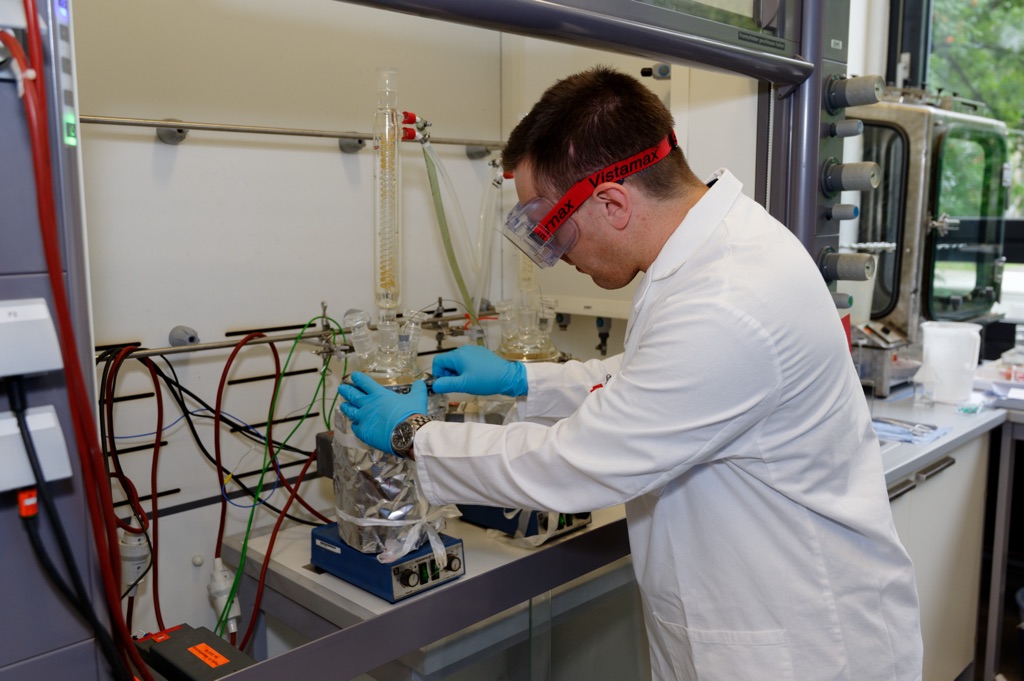
Fundamentals of corrosion and its effects on materials
Metals react with their environment – a phenomenon we know as corrosion. This process affects almost all metallic materials and can have a considerable impact on their properties. Understanding the underlying mechanisms forms the basis for effective corrosion protection & surface engineering.
Corrosion is more than just rust on a metal surface. It represents a complex process that jeopardises the structural integrity of components. The effects range from visual impairments to catastrophic failures in critical infrastructure.
What happens during corrosive processes?
During corrosion, a chemical or electrochemical reaction takes place between the metal and its environment. In the process, the metal gives off electrons and is oxidised. This process converts the metal into chemical compounds that lose its original properties.
The reaction can occur uniformly across the entire surface. In other cases, it concentrates on specific areas. The type of attack depends on the material and the environmental conditions.
A simple example illustrates the process: iron reacts with oxygen and water to form iron oxide. We know this product as rust. The loose, porous structure of rust offers no protection against further attack.
The chemical processes take place in several sub-steps:
- Detachment of metal atoms at the surface
- Transport of ions through the environment
- Formation of corrosion products
- Deposition or removal of these products
Material fatigue caused by corrosion and its consequences
Material fatigue caused by corrosion often develops gradually and initially goes unnoticed. Yet even small amounts of damage can lead to serious problems over time. The mechanical properties of the material deteriorate continuously.
Corrosion considerably reduces the load-bearing capacity of components. The original strength decreases. At the same time, weak points develop where stresses can concentrate.
It becomes particularly critical when corrosion and mechanical loading act together. Cracks can then spread more rapidly. The service life of a component is drastically shortened.
Practical examples show the scale of the problem:
- Bridge girders lose cross-section through progressive corrosion and can fail suddenly
- Pipelines are weakened by internal and external attack and can burst
- Fastening elements such as screws and bolts lose their holding force
- Structures in shipping are continuously degraded by salt water
The economic consequences are immense. Repairing and replacing corroded components costs billions. Even more serious are the potential safety risks to people and the environment.
Environmental influences on the corrosion rate
The speed of corrosive processes depends heavily on the environmental conditions. Different factors interact and influence one another. Understanding these influences is decisive for effective protective measures.
Moisture plays a central role in most types of corrosion. Water acts as an electrolyte and enables electrochemical reactions. Even atmospheric humidity can be sufficient to start corrosion processes.
Elevated temperature accelerates chemical reactions considerably. As a rule of thumb, a temperature increase of 10 degrees often doubles the reaction rate. In cold environments, metals tend to be more resistant.
The pH value of the environment determines the aggressiveness towards metals. Acidic conditions promote the dissolution of many materials. But strongly alkaline media can also attack certain materials.
Salt content increases the conductivity of solutions and accelerates electrochemical processes. Coastal regions and roads in winter therefore present particular challenges.
Further important environmental influences include:
- Presence of aggressive chemical substances such as chlorides or sulphates
- Flow velocity of liquids at the metal surface
- Availability of oxygen for oxidation reactions
- Mechanical loads and vibrations
Different environments produce completely different corrosion behaviour. A steel structure in dry desert air shows hardly any damage. The same structure corrodes rapidly in humid sea air.
The combination of several unfavourable factors multiplies the danger. Salt-laden spray at high temperatures represents one of the most aggressive environments. Such conditions require particular attention in material selection and in the protection concept.
Corrosion engineering: understanding mechanisms, electrochemistry and corrosion protection
Understanding corrosion processes is based on integrating knowledge from various technical and scientific fields. Corrosion engineering combines expertise from several disciplines into a comprehensive method. This holistic approach enables specialists to effectively prevent material damage and develop long-term solutions.
Successful corrosion protection arises from linking theoretical knowledge with practical application. Engineers analyse complex relationships and develop strategies that take technical and economic aspects into account. The ability to adopt different perspectives is indispensable here.
The interdisciplinary approach in corrosion engineering
Corrosion problems can only be solved effectively through the collaboration of various specialist fields. Chemists investigate the reaction mechanisms, while physicists analyse the transport processes at surfaces. Materials engineers assess the material properties and mechanical engineers design corrosion-appropriate structures.
This cross-disciplinary collaboration creates a comprehensive understanding of corrosion mechanisms. Each discipline contributes important insights that would be incomplete when considered in isolation. The integration of these perspectives enables precise diagnoses and tailored solution approaches.
Economic considerations also play a central role in corrosion engineering. Engineers must weigh the costs of protective measures against potential damage costs. A sound risk analysis helps to deploy resources optimally and to implement economically viable solutions in the long term.
The interdisciplinary nature requires specialists to undergo continuous training and remain open to new findings. Technological developments in one field can inspire innovative solutions for corrosion problems in other fields. This dynamic networking of knowledge drives progress in corrosion prevention.
Interplay of chemistry, physics and materials science
Chemistry provides the fundamental understanding of the reactions between metals and their environment. Oxidation and reduction processes determine how quickly and in what form material degradation takes place. Knowledge of chemical reactions is essential in order to understand and influence corrosion processes.
Physical processes such as diffusion and mass transport considerably influence the speed of corrosion reactions. The movement of ions through electrolytes or protective layers follows physical laws. Temperature, pressure and flow conditions permanently alter material behaviour in corrosive environments.
Materials science studies the internal structure of materials and its effect on corrosion resistance. Microstructure, grain boundaries and alloy composition determine the susceptibility to various types of corrosion. Through targeted material selection and heat treatment, certain properties can be optimised.
Only through the interplay of these three disciplines do effective protection concepts emerge. An engineer must understand how chemical reactions proceed, which physical conditions favour them and how material properties influence the result. This holistic view enables the development of robust and durable solutions.
Prediction and assessment of corrosion risks
The early detection of potential corrosion risks is decisive for planning safe and durable installations. Engineers use various methods to identify hazards as early as the design phase. Experimental procedures, numerical simulations and empirical models complement one another in this respect.
Laboratory tests under accelerated conditions provide valuable data on material behaviour in aggressive environments. Electrochemical measurements provide information on corrosion rates and protection mechanisms. These insights feed into the assessment of corrosion risks and help in the selection of suitable materials.
Computer-aided simulations enable the modelling of complex corrosion mechanisms under various operating conditions. These virtual tests save time and costs by uncovering weak points at an early stage. The combination of experimental data and simulation results considerably improves prediction accuracy.
Preventive measures based on sound risk analyses avoid costly failures and repairs. The systematic assessment of corrosion risks leads to informed decisions in material selection, design and maintenance strategy. This proactive approach safeguards investments and sustainably increases the reliability of technical systems.
Electrochemistry as the key to understanding corrosion
Electrochemistry provides the key to understanding why metals corrode. Many corrosion processes proceed according to electrochemical principles. In the process, electrons migrate from one place to another and chemical reactions take place.
These processes resemble the operating principle of a battery. The metal surface becomes the stage for complex interactions between material and environment. Anyone who knows these relationships can better predict and prevent corrosion.
Electrochemical reactions at metal surfaces
At metal surfaces, electrochemical reactions constantly occur whenever an electrolyte is present. These reactions are divided into two areas: the anode and the cathode.
At the anode, the metal gives off electrons and goes into solution. This process is called oxidation. The metal ions go into solution as positively charged ions.
The electrons thus released are then immediately taken up again by a reduction reaction in the environment by another species. In neutral or slightly basic aqueous media, oxygen is usually reduced. It takes up the electrons and thus acts as an oxidising agent. This process is called reduction and can take various forms. In aqueous solutions, oxygen and water react to form hydroxide ions, which can subsequently react with the metal ions. In the case of iron, this process leads to the formation of the familiar red rust layers.
The combination of oxidation and reduction drives one another and thus the corrosion process forward.
Corrosion can therefore be thought of as an electrochemical cell. Anode and cathode exist on the same metal surface, sometimes only micrometres apart. The flow of electrons between the two areas enables continuous material removal.
Galvanic corrosion between different metals
Galvanic corrosion arises when two different metals are in direct contact. In addition, an electrolyte must be present, such as moisture or salt-containing solutions. The less noble metal then assumes the role of the anode and corrodes more strongly.
The more noble metal acts as the cathode and remains protected. This form of corrosion can proceed considerably faster than normal uniform corrosion. The corrosion rate depends on the potential difference between the two metals.
A classic example is the connection of steel with copper. Copper is more noble than steel and is therefore not attacked. The steel, on the other hand, corrodes at the contact point much faster than without contact with copper.
The size ratios also play an important role. A small anode in combination with a large cathode dramatically accelerates galvanic corrosion. The current density at the smaller anode rises sharply.
In practice, problematic material combinations are avoided through careful planning. Insulating intermediate layers separate the metals electrically from one another. Alternatively, materials with similar electrochemical properties are selected.
The electrochemical series and its practical application
The electrochemical series ranks metals according to their reactivity. Each metal has a characteristic electrochemical potential. This potential indicates how readily a metal gives off or takes up electrons.
Base metals such as magnesium or zinc are at the start of the series. They readily give off electrons and corrode more easily. Noble metals such as gold or platinum are at the other end and are very corrosion-resistant.
The series helps engineers in selecting materials for corrosive environments. When two metals have to be combined, the series shows which one preferentially corrodes. The distance between the metals in the series determines the intensity of the galvanic corrosion.
In practice, the series is also used for cathodic protection methods. Here, the metal to be protected is connected to a less noble material. The less noble metal sacrifices itself and protects the more valuable component from corrosion.
However, the series only takes standard conditions into account. Temperature, pH value and the composition of the electrolyte can shift the actual potentials. For this reason, engineers must analyse the specific operating conditions precisely.
Modern corrosion protection concepts are based on this electrochemical knowledge. The targeted influencing of the potentials enables effective protection. In this way, pipelines, ships and structures are protected from material loss in the long term.
Various corrosion mechanisms and their characteristics
Metal surfaces can corrode in various ways, with each mechanism carrying its own risks. The various corrosion mechanisms differ fundamentally in their appearance and their effects on the material. A deep understanding of these variants makes it possible to detect damage at an early stage and to develop targeted protective measures.
Some forms of corrosion attack locally and selectively, while others advance uniformly across the entire surface. Knowledge of the characteristic features of each type of corrosion forms the basis for effective material selection and damage prevention. Engineers and technicians must be able to recognise these mechanisms in order to respond appropriately.
Pitting corrosion and local attack
Pitting corrosion is one of the most insidious forms of material damage. This type of corrosion attacks the metal at individual, often tiny spots, while the surrounding surface remains largely intact. The points of attack develop into deep pits that can penetrate the material.
Passive-layer-forming metals such as stainless steel are particularly susceptible to pitting corrosion. The protective passive layer is broken through at certain points, usually by aggressive chloride ions. In chloride-containing environments such as seawater or under the influence of de-icing salt, a local corrosion element forms.
The danger lies in the difficulty of early detection. On the surface, the material appears intact while deep damage is already spreading inside.
Structural components can lose their load-bearing capacity through these local attacks. A single hole can be enough to make a pipe leak or to penetrate a vessel. The selective nature makes this form of corrosion particularly critical for safety-relevant components.
Stress corrosion cracking under mechanical load
Stress corrosion cracking arises from the dangerous interplay of tensile stress and corrosive environment. Neither the mechanical load alone nor the corrosion on its own would be sufficient to cause damage. Only the combination of both factors leads to crack formation.
The cracks often form without recognisable advance warning and spread rapidly. They usually run perpendicular to the direction of tensile stress and can grow both transcrystalline and intercrystalline. This form of corrosion typically occurs with certain material-environment combinations.
In industry, stress corrosion cracking is seen, for example, in austenitic stainless steels in chloride-containing solutions. High-strength aluminium alloys can be affected in a humid atmosphere. Brass fittings develop cracks in ammonia-containing environments.
The danger lies in the sudden failure of components. Without visible signs, load-bearing structures can lose their strength. Regular inspections and non-destructive testing procedures are indispensable here.
Designers must avoid stress concentrations and select suitable materials. Reducing residual stresses through heat treatment can lower the risk. Controlling the environmental conditions represents a further important preventive measure.
Uniform corrosion and even material removal
Uniform corrosion removes material evenly across the entire exposed surface. In contrast to local corrosion mechanisms, this form is easier to predict and monitor. The removal rate remains relatively constant across the surface.
Galvanised steel sheets in outdoor areas typically show uniform material removal. The corrosion rate depends on environmental factors such as humidity, temperature and atmospheric contaminants. Engineers can estimate the service life through corrosion rate calculations.
Despite its predictability, uniform corrosion can lead to considerable material loss. Thin-walled components lose their structural integrity. Regular thickness measurements help to monitor the condition and to define maintenance intervals.
Protective measures such as coatings or platings slow down the uniform removal. The choice of corrosion-resistant alloys extends the service life. Appropriate dimensioning takes the expected material removal over the planned operating period into account.
Intercrystalline and selective corrosion
Intercrystalline corrosion runs along the grain boundaries in the metal microstructure. These boundary surfaces between the individual crystallites have a different chemical composition than the grain interior. Certain heat treatments can increase the susceptibility.
In stainless steels, improper welding leads to chromium depletion at the grain boundaries. The resulting sensitisation makes the material susceptible to intercrystalline attack. The microstructure loses its cohesion, although the grains themselves remain largely intact.
Selective corrosion preferentially attacks certain alloy constituents. In brass, zinc can be leached out while copper remains. This process is referred to as dezincification and leaves a porous, mechanically weakened structure.
Cast iron frequently shows graphitic corrosion, in which iron is dissolved and graphite remains. The component retains its shape but loses its strength. Such damage is often difficult to detect externally.
Avoiding these corrosion mechanisms requires careful material selection and controlled manufacturing processes. Stabilised stainless steel grades resist intercrystalline corrosion better. Adapted alloy compositions reduce the susceptibility to selective attack. Post-treatments such as solution annealing can regenerate sensitised areas.
Effective strategies for corrosion protection
The range of protection strategies against corrosion extends from electrochemical procedures to chemical and mechanical solutions. Each method brings specific advantages and is suited to different areas of application. The selection of the appropriate strategy depends on numerous factors, including the type of metal, the environmental conditions and the economic framework conditions.
Modern approaches in corrosion protection & surface engineering frequently combine several procedures in order to achieve a maximum protective effect. The following sections present proven methods that are successfully used in industrial practice.
Corrosion prevention in industry and material selection
A holistic strategy for corrosion prevention links intelligent material selection with design solutions. Many corrosion damages do not arise from unforeseeable events but from avoidable planning errors. Corrosion prevention in industry therefore requires a systematic approach that begins as early as the design phase.
Successful prevention combines three essential elements: the selection of suitable materials, well-thought-out design configuration and continuous monitoring. These three pillars complement one another and create a robust protection concept. Only through their interplay can the service life of installations be maximised.
The basis for successful corrosion protection is the understanding of electrochemical processes at metal surfaces. Various corrosion mechanisms such as pitting corrosion, stress corrosion cracking and uniform corrosion each require specific protection strategies. The right material selection plays a central role in avoiding corrosion damage.
A comprehensive protection concept combines several approaches: cathodic protection through impressed current or sacrificial anodes protects large-area structures. Surface treatments such as coatings form effective barriers against aggressive media. Inhibitors slow down corrosive processes in liquids. Design measures prevent critical material accumulations and moisture build-up.
Regular monitoring enables the early detection of corrosion damage. Inspections should be carried out throughout the entire life cycle of components. This continuous approach safeguards the durability of structures.
The practical application of this knowledge creates safe and economical solutions. Corrosion protection requires interdisciplinary thinking and the combination of various protection procedures. With sound knowledge, corrosion risks can be minimised and operating costs reduced.